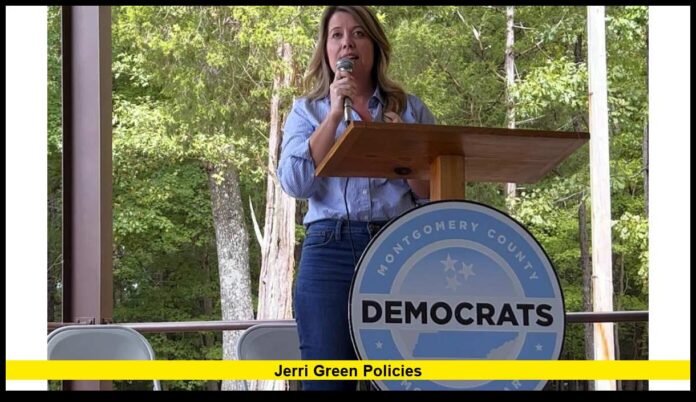

Jerri Green policies are of interest to voters looking to understand her political priorities, public positions, and approach to issues affecting local communities. Her policy record, campaign commitments, and public statements are important considerations for evaluating her political platform and potential influence on government decisions.
When examining Jerri Green’s political positions, it is important to distinguish between policies she has explicitly supported, proposals associated with her campaign, and issues for which a detailed official position has not been publicly confirmed. This distinction helps voters understand what she has actually committed to rather than relying on assumptions or general political labels.
Who Is Jerri Green?
Jerri Green is a Tennessee attorney, public servant, and Democratic politician from Memphis. She has built her public career around issues involving working families, public education, health care access, public safety, and economic opportunity.
Green has served on the Memphis City Council representing District 2 since January 2024. Her professional background also includes legal advocacy, public administration, and work on policy issues affecting Shelby County residents. She earned her law degree from Georgetown University Law Center and has worked with communities facing economic and legal challenges.
In 2026, Green became the Democratic nominee for governor of Tennessee after winning her party’s gubernatorial primary. Her campaign centers on the argument that state government should do more to support ordinary families, strengthen public services, and protect individual freedoms.
The Jerri Green policies platform reflects these priorities through proposals involving taxes, education funding, health care, housing affordability, gun safety, immigration enforcement, and environmental protection.
Her campaign’s proposals are intended to influence statewide policy rather than remain limited to the concerns of Memphis and Shelby County.
Jerri Green Policies on the Economy, Taxes, and Jobs
Economic affordability is one of the most prominent themes in Green’s political platform. She argues that working families face financial pressures from grocery bills, housing expenses, child care, health care, and other essential costs.
Her proposals focus on reducing household expenses while encouraging employers and businesses to contribute more toward the state’s economic development.
Ending Tennessee’s Grocery Tax
Green supports eliminating Tennessee’s state grocery tax and shifting more of the tax burden toward corporations. Her campaign presents this as a way to provide financial relief to households that spend a substantial portion of their income on food.
The proposal would require legislative and fiscal decisions about how the state replaces the revenue currently collected through grocery taxation. Its final effect would depend on the details of any enacted legislation and the treatment of other applicable taxes.
Higher Wages and Worker Protections
Green supports establishing a higher state minimum wage, with a campaign goal of at least $20 an hour. She also advocates paid family and medical leave, stronger labor protections, and collective bargaining rights.
These policies are intended to help workers maintain financial stability while balancing employment with family responsibilities, illness, or caregiving.
Green also supports vocational training, workforce development, and investment in small businesses, particularly in underserved communities. These priorities connect job creation with practical training and improved access to employment opportunities.
Affordable Housing and Household Expenses
Housing affordability is another important part of the platform. Green proposes increasing state support for affordable housing and using $10 million in Temporary Assistance for Needy Families funding to help eligible families with security deposits.
Her campaign describes the initiative as a way to improve housing access for as many as 100,000 Tennessee families. The actual number of households served would depend on eligibility rules, implementation costs, and available funding.
She also proposes using existing public resources to address child care expenses and certain medical debts rather than requiring families to absorb those costs without assistance.
Jerri Green Policies on Public Education
Public education is one of Green’s central campaign priorities. She supports stronger investment in public schools, better compensation for teachers, and additional resources for students who need academic, health, or special education services.
Her education platform contrasts with policies that direct public funding toward private school voucher programs.
Funding Public Schools and Raising Teacher Pay
Green supports fully funding K–12 public education and increasing teacher salaries. She argues that schools need reliable resources to recruit and retain qualified educators, maintain classroom quality, and provide students with appropriate learning materials.
She also proposes expanding access to school counselors, nurses, and other support professionals.
These measures are intended to address educational needs beyond classroom instruction, including student well-being and access to essential support services.
Universal Pre-K and Special Education
Green supports expanding universal prekindergarten, investing in rural schools, and improving services for students with disabilities.
Her proposals include creating a Special Education Equity Fund and establishing a fellowship to encourage more teachers to specialize in special education.
She also supports making greater use of eligible Medicaid funding within schools to provide services for students who qualify.
Child Care and Early Learning
Green’s education agenda extends to early childhood development. She proposes a dedicated child care and early education fund, including after-school and summer programs for qualifying households earning less than $75,000 annually.
Her campaign has also proposed allocating $50 million in TANF funding to clear child care waiting lists.
The broader goal is to help parents remain employed or pursue education and training without being forced to choose between earning an income and finding suitable care for their children.
Green additionally supports waiving GED testing fees and improving access to testing across Tennessee.
Jerri Green Policies on Health Care Access
Health care is another major component of the platform. Green argues that access to medical services should not depend excessively on a person’s income or ZIP code.
Her proposals emphasize expanding coverage, supporting rural hospitals, lowering prescription drug costs, and strengthening maternal health services.
Medicaid Expansion and TennCare
Green supports expanding Medicaid eligibility to cover more working families and improve access to care in underserved areas.
She also supports protecting and improving TennCare, Tennessee’s Medicaid program.
The campaign argues that broader coverage could help rural hospitals that face financial challenges and make it easier for residents to obtain preventive and ongoing medical treatment.
Any expansion would require decisions about eligibility, state financing, federal participation, and program administration.
Prescription Drug Costs
Green wants to reduce prescription drug costs and increase transparency in the pharmaceutical supply chain.
Her proposals include addressing hidden markups imposed by intermediaries and ensuring patients benefit from available drug price savings.
These measures are intended to reduce the financial pressure on people who rely on regular prescriptions, particularly families managing long-term medical needs.
Mental Health and Addiction Recovery
Green supports expanding mental health services and addiction recovery programs. Her platform also includes legalizing marijuana for both medical and recreational purposes.
She presents these policies as part of a broader approach to public health, treatment access, and reducing reliance on opioids.
Legalization would require a legislative and regulatory framework addressing licensing, public health safeguards, taxation, and enforcement.
Maternal Health and Reproductive Freedom
Green supports restoring reproductive health care access and repealing Tennessee’s near-total abortion ban. She also advocates protecting access to contraception, in vitro fertilization, and miscarriage management.
Her proposals include issuing an executive order intended to protect doctors providing women’s health care and declaring a maternal health crisis to mobilize resources for prenatal and postpartum services.
The practical reach of executive action would depend on the governor’s legal authority, applicable state laws, and potential judicial review.
Jerri Green Policies on Gun Safety and Public Safety
Green supports stronger gun safety requirements while stating that responsible gun ownership and public safety should be addressed together.
Her campaign proposes several measures designed to reduce access to firearms by people considered to pose a serious risk of violence.
Key elements of her platform include:
- Universal background checks for gun sales.
- Red flag laws allowing appropriate legal intervention when someone presents a serious risk.
- Closing loopholes involving domestic violence.
- Providing free gun locks and promoting safe firearm storage.
- Restoring training and testing requirements for responsible gun ownership, particularly for concealed-carry permits.
Green has also highlighted her previous public service work involving gun safety. Her campaign says she helped establish a free gun-lock-by-mail program in Shelby County that was subsequently adopted statewide through the Safe Store Tennessee initiative.
Her approach emphasizes preventive measures, community safety, and responsible firearm handling.
Jerri Green Policies on Immigration and Civil Rights
Green’s platform includes proposals to change how Tennessee agencies cooperate with federal immigration enforcement.
She supports ending cooperation between state and local law enforcement agencies and U.S. Immigration and Customs Enforcement, commonly known as ICE, in the areas identified by her campaign.
She has proposed executive action restricting ICE access to state buildings and limiting the sharing of immigration-status information by state employees, subject to applicable legal requirements.
Her platform also calls for state-funded legal assistance for immigrants facing deportation and educational programs explaining their legal rights.
These proposals represent a significant policy difference between Green and candidates who favor closer cooperation with federal immigration authorities.
LGBTQ+ Rights and Equal Treatment
Green supports protections for LGBTQ+ residents and opposes legislation she considers discriminatory.
Her proposals include funding nonprofit organizations that provide housing, health care, and mental health services to LGBTQ+ communities. She also supports access to affirming counselors in public high schools and expanding free HIV testing by mail.
More broadly, her platform emphasizes protections for women, immigrants, people with disabilities, and other marginalized communities.
The implementation of these proposals would depend on state authority, available funding, and the legal requirements governing public agencies.
Jerri Green Policies on the Environment and Energy
Environmental protection is a central element of Green’s approach to long-term economic and public health policy.
She supports stronger enforcement of clean-air and clean-water standards, investment in renewable energy, and measures intended to improve Tennessee’s resilience to extreme weather and other environmental challenges.
Clean Water and Pollution Control
Green proposes protecting rivers, forests, farmland, and public lands from pollution and overdevelopment.
Her platform emphasizes enforcement in communities disproportionately affected by environmental hazards. She argues that environmental protections should benefit residents across the state rather than concentrate economic advantages in selected areas.
Tennessee Valley Authority and Electricity Costs
Green supports keeping the Tennessee Valley Authority, or TVA, a public utility rather than pursuing privatization.
She also proposes supporting local energy storage projects to help limit electricity bill increases during periods of extreme weather.
Her campaign’s broader energy strategy combines public oversight, household affordability, renewable energy investment, and environmental protection.
Data Centers and Water Consumption
Green has proposed a statewide moratorium on new data centers and an end to state incentives for their construction.
Her concerns include the electricity and water required to operate large computing facilities and the possibility that these demands could increase costs for surrounding communities.
She also supports requiring technology companies to use recycled water for server cooling where applicable and preventing households from bearing an unfair share of the infrastructure costs associated with artificial intelligence facilities.
A statewide moratorium would require legally effective action, and its scope would depend on the specific measures adopted.
Jerri Green Policies on Artificial Intelligence
Green’s technology agenda focuses on the effect of artificial intelligence on employment, public services, privacy, and the environment.
She argues that AI systems should serve residents without removing meaningful human oversight from consequential decisions.
Her proposals include introducing AI literacy in schools so students can recognize deepfakes and understand potential digital risks.
She also supports giving people the right to appeal certain AI-based decisions involving employment, housing, or medical care to a human decision-maker.
Other proposals include:
- Funding worker retraining when large companies replace substantial numbers of employees with AI.
- Restricting AI use in bail, sentencing, and parole decisions.
- Requiring digital watermarks in metadata to help identify deceptive or illegal content.
- Protecting consumers from higher electricity and water costs associated with large data centers.
- Reconsidering tax incentives for companies that replace promised jobs with automation.
These ideas would require careful policy design, particularly where state regulation intersects with federal law, employment contracts, privacy protections, and technology standards.
The AI section distinguishes Green’s platform from traditional campaign agendas that focus primarily on taxes, education, and health care.
Jerri Green Policies on Housing, Families, and Veterans
Green’s family policy proposals are closely connected to her economic and health care agenda.
She supports more affordable child care, paid leave for parents and caregivers, assistance for older residents, and measures to reduce the costs associated with raising children.
Her campaign also proposes ending taxes on diapers and menstrual products and establishing assistance programs for low-income parents who need basic supplies.
Housing and Medical Debt Relief
Green proposes using $10 million in TANF funding for housing security deposits and another $10 million to purchase and eliminate certain predatory medical debts.
The campaign says the debt initiative could benefit more than 100,000 Tennesseans. That figure is a campaign projection, not a confirmed outcome.
Eligibility, debt purchasing arrangements, and the amount of debt available for acquisition would affect the final results.
Support for Veterans
Green’s platform includes converting vacant state-owned housing into units prioritized for veterans.
She also supports expanding homelessness prevention, improving mental health outreach, and helping veterans translate military training into civilian professional qualifications.
Additional proposals include incentives for employers hiring veterans, support for veteran-owned businesses, and property tax reductions based on the percentage of service-connected disability.
These measures aim to improve housing stability, employment opportunities, and access to services for former service members.
Jerri Green Policies on Government Accountability and Local Communities
Green advocates a more transparent approach to state spending and public administration.
One proposal would establish an online public report card showing state contracts and grants, their intended outcomes, and whether the funded projects meet their objectives.
She also supports appointing agency leaders based on professional qualifications and expertise rather than political loyalty.
Her platform proposes ending state contracts with private prison operator CoreCivic when those contracts come up for renewal. She has also called for addressing the state-sanctioned health care monopoly associated with Ballad Health in East Tennessee.
Support for Cities and Towns
Green argues that municipal governments need sufficient resources to maintain roads, public safety, infrastructure, and essential local services.
She supports restoring the historic practice of sharing the final 1% of state sales tax revenue with cities and towns and opposes state-imposed property tax caps that could constrain local government finances.
Her local government proposals are intended to give communities more flexibility to respond to their own needs rather than relying entirely on decisions made at the state level.
How Jerri Green Proposes to Fund Her Policies
The affordability proposals in Green’s platform raise an important budget question: how would Tennessee pay for the initiatives?
Her campaign points to several potential funding sources, including changes to corporate taxation, the use of existing TANF resources, and changes in spending priorities.
Green argues that closing corporate tax loopholes could provide additional state revenue while reducing the financial burden on households.
She also opposes public funding for private school voucher programs, arguing that the money should instead support public education.
Her campaign proposes redirecting portions of unspent TANF funds toward housing assistance, child care, and medical debt relief.
However, these funding proposals are not equivalent to enacted appropriations. Their feasibility would depend on state budget decisions, applicable federal restrictions, legislative approval, and the actual availability of revenue.
Evaluating the full platform therefore requires considering both its proposed benefits and the administrative, legal, and financial challenges involved in implementation.
Latest Updates on Jerri Green and Her Political Platform
As of the latest available information on November 3, 2026, Jerri Green is the Democratic nominee in Tennessee’s gubernatorial election. She won the Democratic primary on August 6, 2026, and is running against Republican nominee Marsha Blackburn and independent candidates.
The general election is taking place on November 3. Available election reporting indicates that final results have not yet been confirmed in the information reviewed for this article. Green’s election outcome should therefore not be presented as a victory or defeat without verified results.
Her campaign continues to center on affordability, public education, health care, reproductive freedom, gun safety, environmental protection, and government accountability.
For voters assessing the Jerri Green policies platform, the distinction between campaign promises and enacted law remains essential. The proposals describe what she intends to pursue if elected, but they do not establish that the measures have already been implemented.
The governor’s ability to carry out individual policies would also depend on the Tennessee General Assembly, executive authority, court decisions, budget constraints, and cooperation from relevant agencies.
Final Thoughts on Jerri Green Policies
Jerri Green’s political platform presents an extensive agenda focused on working families, public services, economic affordability, and individual rights. Her priorities include lowering household expenses, strengthening public schools, expanding health care access, improving gun safety, protecting reproductive freedom, and increasing transparency in state government.
The platform also addresses emerging concerns involving artificial intelligence, data center development, environmental sustainability, and the cost of essential infrastructure.
For Tennessee voters, the most important consideration is how these proposals compare with competing policy approaches and whether the suggested funding and implementation plans can deliver their intended results.
Understanding the Jerri Green policies platform provides a clearer picture of the changes she would seek to make in Tennessee and the priorities likely to shape her approach to state leadership.
Share your thoughts in the comments and stay updated on the latest developments in Tennessee politics and Jerri Green’s policy proposals.