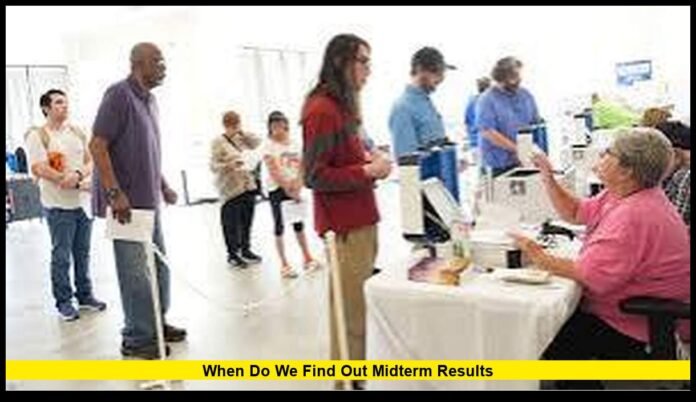

The question of when do we find out midterm results is attracting significant attention as Americans follow the November 3, 2026, U.S. midterm elections. Millions of voters are participating in congressional, gubernatorial, state legislative, and local contests that could influence the country’s political direction for the remainder of the presidential term. Although election night is when the first major updates are expected, the complete outcome may take considerably longer to establish.
Election officials begin reporting preliminary vote totals after polling places close in their respective jurisdictions. However, the United States does not have one nationwide reporting schedule. Every state follows its own election laws, ballot-processing procedures, and certification deadlines. Consequently, voters in some states may see substantial results on election night, while residents elsewhere may need to wait several days for a clearer picture.
The 2026 midterm elections are particularly important because all 435 voting seats in the House of Representatives and 35 Senate seats are scheduled to be contested. The results will determine the membership of Congress and help establish which political party controls each chamber. Numerous state and local elections will also shape government decisions affecting communities throughout the country.
Understanding the difference between initial vote counts, election projections, outstanding ballots, and certified results is essential when following election coverage. A candidate leading early does not automatically mean that the contest has ended. The final outcome depends on the complete counting and verification process.
2026 Midterm Election Day and the Beginning of Results Reporting
Election Day for the 2026 midterm elections is Tuesday, November 3, 2026. Registered and eligible voters across the country are participating according to their state and local election schedules.
Results reporting generally begins after polling locations close. Election administrators then release preliminary information as they receive and process returns from participating jurisdictions.
Some counties may publish their first totals shortly after voting ends. Other election offices may need additional time to complete administrative procedures, process eligible ballots, and transmit information.
This difference explains why election results do not appear simultaneously across the United States.
For example, voters in Eastern Time Zone states may begin seeing election updates while voting continues in parts of the country farther west. National news coverage often follows this staggered schedule, providing updates as individual states close their polls.
However, the first reported totals represent only the ballots included in those particular updates. They should not automatically be interpreted as the final outcome.
Election officials continue updating preliminary results as additional eligible votes enter the count.
When Do We Find Out Midterm Results on Election Night?
The first major election updates are expected on November 3 after polling places close in individual states. The exact timing depends on local polling hours and the procedures used by election administrators.
There is no confirmed nationwide hour when every 2026 midterm election result will become available.
In some contests, the initial returns may provide enough information for news organizations to identify a likely winner relatively early. Other races may remain too close to call even after most election night reporting has taken place.
Several factors influence how quickly voters receive meaningful updates:
- The closing time of polling locations.
- The number of counties reporting results.
- The volume of early and absentee ballots.
- State rules governing ballot preparation and counting.
- The number of outstanding ballots.
- The margin separating the leading candidates.
- Administrative reviews and verification requirements.
A competitive statewide Senate election may require more time to resolve than a congressional district where one candidate establishes a substantial lead and relatively few ballots remain outstanding.
Similarly, a large state with many counties may report results at different speeds depending on its local election administration arrangements.
For voters following national election coverage, the most useful approach is to monitor individual races rather than expect the entire national picture to become clear at one particular moment.
How Poll Closing Times Affect the 2026 Election Results
Polling hours vary throughout the country. Some states have different closing times across counties, while others follow statewide schedules.
Because the United States uses multiple time zones, election results typically arrive in stages.
Eastern Time Zone
Several states in the eastern United States finish voting earlier than jurisdictions in the central, mountain, and Pacific time zones. Initial results may therefore appear from parts of the East while voting continues elsewhere.
Central Time Zone
Central Time states contribute another significant group of election updates as their polling locations close. Some jurisdictions may release preliminary totals soon after voting ends, while others continue reporting as their local offices complete their procedures.
Mountain Time Zone
Mountain states generally begin reporting after their respective polling locations close. Their results can become particularly important in competitive statewide and congressional contests.
Pacific Time Zone
California, Washington, Oregon, and other Pacific jurisdictions have later polling closing times than eastern states. Their initial results therefore arrive later during national election night coverage.
Alaska and Hawaii
These states also follow their own local election schedules. Their polling hours and reporting procedures mean that their results may enter national coverage later than those from many mainland jurisdictions.
The important point is that national election coverage follows local election schedules. A national television network may report results from one state while another state is still conducting voting.
Why the First Election Results May Not Show the Final Outcome
One of the biggest mistakes voters can make during election night is treating an early vote lead as a guaranteed victory.
Election officials release preliminary totals as ballots are counted and reported. Those totals may not include every eligible ballot.
The composition of the reported vote can also change throughout the evening.
For example, a county might report its Election Day in-person ballots before completing the reporting of other eligible ballots. Another jurisdiction might report early voting totals first.
If the remaining ballots come from areas where the candidates have different levels of support, the overall margin may change considerably.
This does not automatically indicate an irregularity. It reflects the fact that different groups of ballots enter the reporting system at different times.
Voters should therefore pay attention to the following information:
Reported vote totals: These show how many votes have been included in the latest available results.
Outstanding ballots: These represent eligible ballots that have not yet been included in the reported totals, where election officials provide such estimates.
County reporting progress: The number of reporting counties can help explain how complete a statewide result appears, although counties differ significantly in population and ballot volume.
Candidate margins: The difference between candidates matters, but it must be considered alongside the remaining ballots.
A candidate’s early lead may grow, shrink, or disappear as additional votes are reported. The final outcome becomes clearer only after election officials complete the applicable counting procedures.
When Will We Know the House of Representatives Election Results?
The 2026 midterm elections include all 435 voting seats in the U.S. House of Representatives.
House elections take place in individual congressional districts. Each district elects one representative, meaning voters across the country are participating in separate contests rather than one nationwide House election.
Some districts may produce clear outcomes relatively early on election night. Others may remain competitive because the candidates receive similar levels of support.
The national balance of power depends on the combined results of these individual contests.
If one party wins enough seats to secure a majority, it can control the House leadership and influence the chamber’s legislative agenda. If the results are closely divided, even a small number of unresolved districts may determine which party gains control.
This is why election coverage may continue discussing House control even after many individual winners have been identified.
A media organization may project winners in numerous districts without having enough information to determine the final balance of the chamber.
Close House contests may also require additional ballot counting or a recount under applicable state law.
Therefore, the time when voters learn the winner of an individual congressional race may differ from the time when the overall House majority becomes clear.
When Will We Know the Senate Election Results?
The 2026 elections also include 35 U.S. Senate seats.
Unlike House contests, Senate elections take place statewide. Candidates compete for the support of voters across their respective states.
Some Senate races may become clear on election night if the available results establish a sufficiently decisive outcome. Other contests may remain unresolved while officials count outstanding ballots.
The Senate balance is especially important because the chamber has a major role in considering federal legislation, confirming presidential appointments, and conducting other constitutional responsibilities.
If the party control of the Senate depends on several competitive contests, the national outcome may remain uncertain until those races are resolved.
A candidate leading in a Senate race does not necessarily represent a final victory. Officials must complete the required counting, canvassing, and any applicable recount procedures.
The same distinction applies to the national Senate majority. Election night projections can provide a useful indication, but official results follow the established state certification process.
How Early Voting Affects Midterm Election Results
Early voting is an important part of the American election system. Many states allow eligible voters to cast ballots before Election Day through in-person early voting or absentee voting.
These ballots can influence the speed and pattern of election night reporting.
However, the rules for processing early ballots differ by state.
Some jurisdictions permit election administrators to begin certain preparation procedures before Election Day. These may include verifying ballot envelopes, checking voter information, and preparing accepted ballots for counting.
Other jurisdictions have restrictions on when particular activities can begin.
Where advance preparation is allowed, election officials may be able to incorporate early voting totals into initial election night reports more quickly.
Where preparation must wait until Election Day or later, the process may take additional time.
It is also important to distinguish between preparing ballots and publicly releasing their results. A state may permit certain processing activities before polls close while still prohibiting the publication of vote totals until the legally authorized time.
Consequently, early voting does not guarantee that a state’s election results will become available immediately after polls close.
The number of early ballots, the applicable laws, and the administrative capacity of election offices all influence reporting.
How Mail-In and Absentee Ballots Can Delay Final Results
Mail-in and absentee voting can have a significant effect on election reporting.
Election offices must follow procedures to determine whether submitted ballots meet applicable legal requirements before including them in the count.
Depending on state law, these procedures may involve checking voter information, reviewing signatures where required, examining ballot envelopes, and completing other administrative steps.
Some states allow officials to process eligible mail ballots before Election Day. Others restrict when certain activities can take place.
The deadline for receiving ballots also differs among states. Some jurisdictions require ballots to arrive by Election Day, while others permit qualifying ballots postmarked by the deadline to arrive within a legally established period.
These differences mean that a statewide result may continue changing after election night.
A large number of outstanding mail ballots can also make a close race difficult to resolve quickly.
For example, a candidate may lead after the first election night reports, but the remaining eligible ballots could narrow the margin. Election officials must count those ballots according to the applicable rules before the final result can be established.
A delayed result should not automatically be interpreted as evidence of wrongdoing. It may simply reflect the time required to process and count all eligible ballots.
Provisional Ballots and Their Role in Final Election Results
Provisional ballots provide an additional safeguard in the voting process.
They are used when questions about a voter’s eligibility or registration information must be resolved before the ballot can be included in the final totals.
For example, a voter may encounter a registration-record issue or another circumstance requiring election officials to conduct an additional review.
The voter may be permitted to cast a provisional ballot, but election administrators must determine whether it qualifies for counting under applicable law.
This process takes additional time because officials must examine the relevant records and apply the appropriate eligibility requirements.
Provisional ballots are particularly important in close elections because even a relatively small number of outstanding ballots may affect the final margin.
However, not every provisional ballot is automatically counted. Each must satisfy the applicable legal requirements.
The process helps protect voting rights while maintaining the integrity of election administration.
What Is the Difference Between Election Projections and Official Results?
Election night coverage frequently uses terms that may sound similar but have different meanings.
Understanding these distinctions helps voters interpret updates accurately.
Unofficial election results
These are preliminary vote totals released by election authorities. They may change as additional ballots are counted and results are updated.
Unofficial results provide an early indication of the outcome but are not the final certified totals.
Projected election winners
News organizations may announce a projected winner after examining available vote totals, outstanding ballots, historical voting patterns, and other relevant election information.
A projection is an editorial determination made by the organization reporting the race. It is not an official government certification.
Recounts
A recount involves another examination or tabulation of ballots under the rules established by the relevant jurisdiction.
Recounts may occur automatically when a result meets a statutory margin requirement or following a request that satisfies applicable legal conditions.
Certified election results
Certification is the formal process through which the responsible election authority approves the final results after completing the required canvassing and verification procedures.
Certification is an important step because it establishes the official election outcome under applicable law.
These distinctions matter because a projected winner may be announced before the final certification process is complete.
Voters should not confuse a news organization’s projection with the formal approval of election results by government authorities.
Why Some 2026 Midterm Election Races May Take Longer to Resolve
Not every contest follows the same timeline.
Some races may be decided relatively quickly, while others require additional counting and administrative review.
Several circumstances can extend the process.
Extremely close margins: When candidates receive nearly identical totals, election officials may need to complete additional counting or conduct a legally required recount.
Large numbers of outstanding ballots: A substantial volume of ballots awaiting processing can delay the point when a race becomes clear.
Provisional ballot reviews: Election administrators need time to determine which provisional ballots qualify for inclusion.
Military and overseas voting: Certain ballots from eligible military and overseas voters may be subject to special deadlines and procedures.
Administrative challenges: Technical difficulties, staffing limitations, or other operational issues can affect the speed of reporting.
Legal proceedings: Election-related legal challenges may affect particular procedures or the final resolution of a contest.
The presence of any one of these circumstances does not automatically mean that an election result is invalid.
Election administration involves several stages, and officials must complete the legally required steps before declaring the final outcome.
When Will the 2026 Midterm Election Results Become Official?
The certification process takes place after election officials complete the required counting and canvassing procedures.
Canvassing involves reviewing and reconciling election records and vote totals to establish the results that will be submitted for formal approval.
The responsible authorities follow state-specific requirements and deadlines.
Because these rules differ across the country, there is no single national certification date covering every 2026 midterm contest.
Some results may be certified relatively soon after Election Day. Others may take longer because of recounts, outstanding ballots, legal proceedings, or other circumstances.
Certification also differs from the announcement of a projected winner.
A candidate may be widely recognized as the likely winner before officials formally certify the contest. The official process nevertheless continues according to the law.
This distinction is especially important for congressional elections, where voters may see election night projections well before the final administrative procedures have concluded.
Where Americans Can Follow Reliable Midterm Election Updates
Voters looking for accurate information should begin with official election authorities.
State election websites provide information about statewide contests, preliminary vote totals, reporting schedules, and certification procedures.
County election offices are also valuable because they often publish more detailed information about local ballot counting and individual precinct reporting.
For people following a particular congressional district or local race, the relevant county or state election office may provide more specific information than national coverage.
News organizations can supplement official information with election analysis, candidate projections, and explanations of changing results.
However, voters should always understand whether a reported figure represents an unofficial government total, a media projection, or a certified result.
When checking updates, it helps to examine:
- The time of the latest results update.
- The jurisdiction reporting the figures.
- Whether the totals include early and absentee ballots.
- Whether additional ballots remain outstanding.
- Whether election officials have announced a recount or other review.
- Whether the result has received official certification.
Checking these details can prevent misunderstandings when election totals change during the reporting process.
How the 2026 Midterm Results Could Influence the Federal Government
The 2026 midterm elections will influence the composition of Congress and the balance of political power in Washington.
The House and Senate have different responsibilities, but both play important roles in federal policymaking.
The party controlling the House can influence committee leadership, legislative priorities, and the scheduling of bills for consideration.
The Senate has its own leadership structure and plays a central role in legislation, confirmations, and other constitutional responsibilities.
When different political parties control the two chambers, disagreements may affect the pace and direction of federal policymaking.
When one party controls both chambers, it may have a different set of legislative opportunities, although passing legislation still requires following constitutional and procedural rules.
The election results will also affect the political environment leading into the next congressional session.
Outside Washington, gubernatorial and state legislative elections may influence state budgets, education, transportation, public safety, healthcare policy, and election administration.
The national consequences will depend on the individual outcomes and the final distribution of seats.
What Voters Should Expect After Election Day
Election Day does not mark the end of every election-related activity.
Following November 3, election officials continue the work necessary to complete the count and establish the official results.
This may include processing eligible outstanding ballots, reviewing provisional ballots, reconciling election records, conducting recounts where required, and completing certification.
Voters should expect updates to continue after election night, particularly in jurisdictions with large numbers of outstanding ballots or close contests.
It is also important to remember that different races may reach their final stages at different times.
A gubernatorial contest may be resolved before a competitive House district. A Senate election may remain uncertain even when most other statewide results are known.
The national political picture will become clearer as the outstanding contests are resolved.
Patience and attention to official updates are therefore important parts of following the election responsibly.
Final Thoughts on When Do We Find Out Midterm Results
The answer to when do we find out midterm results depends on the election jurisdiction, the type of contest, and the number of eligible ballots that remain to be counted. Initial unofficial results are expected to appear after polls close on November 3, 2026. Some winners may become clear during election night, while other races may require additional days or longer before the final outcome is established.
The House and Senate results deserve particular attention because they will determine the composition of the next Congress and influence the federal government’s legislative direction. However, the national balance of power may remain uncertain while competitive districts and statewide contests are unresolved.
Voters should distinguish preliminary vote totals from media projections and officially certified results. They should also remember that different states follow different rules for early voting, absentee ballots, provisional ballots, recounts, and certification.
The most reliable way to follow the election is to monitor official state and county updates while considering the number of ballots still outstanding. An early lead does not always determine the final winner, and a longer counting process does not automatically indicate a problem.
Share your views in the comments and stay updated for the latest verified developments in the 2026 U.S. midterm elections.