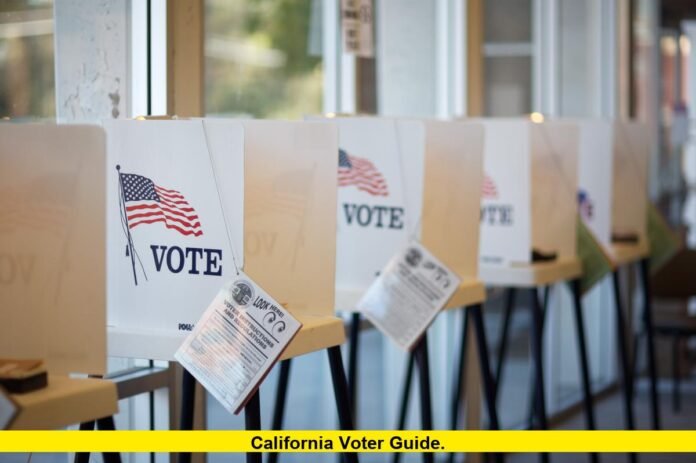

The California Voter Guide provides an overview of the state’s 2026 election, including voting procedures, registration requirements, ballot information, polling locations, mail-in voting, and important election-day rules. With California voters participating in the November 3, 2026, General Election, understanding how the voting process works is essential for eligible residents who want to make their voices heard.
California has one of the largest electorates in the United States, and its elections influence national politics, congressional representation, state leadership, and public policy. Voters may encounter several types of contests on their ballots, including federal, state, and local races, as well as ballot propositions where applicable.
This guide explains the major aspects of voting in California, what voters should know on Election Day, and how to find reliable information about their individual ballots.
California General Election 2026: What Voters Need to Know
Election Day in California is Tuesday, November 3, 2026. Polling locations are scheduled to remain open from 7:00 a.m. to 8:00 p.m. local time. Eligible voters who have not yet cast a ballot can still vote in person, and eligible citizens who missed the regular registration deadline can use California’s conditional voter registration process.
The election includes contests for governor, lieutenant governor, attorney general, secretary of state, state legislative seats, and representatives to the U.S. House of Representatives. Other offices and local measures may also appear, depending on a voter’s residential address and district.
The California Secretary of State administers statewide election information, while county election officials manage local voting operations, ballot processing, and polling locations. This division is important because a statewide guide can explain the general rules, but a county’s election office provides the most specific information about an individual voter’s polling place and ballot.
The main priority for voters today is to confirm their voting location, review their ballot, and understand the applicable deadline for returning it.
California Voter Guide 2026: Important Election Dates and Deadlines
Although several early voting deadlines have passed, voters still have options on Election Day.
| Election milestone | Date or deadline |
|---|---|
| County ballot mailing period began | October 5, 2026 |
| Regular voter registration deadline | October 19, 2026 |
| Early voting centers began opening in participating counties | October 24, 2026 |
| Election Day | November 3, 2026 |
| In-person voting deadline | 8:00 p.m. on November 3 |
| Deadline for counties to receive eligible mailed ballots | November 10, 2026 |
| Deadline to resolve certain ballot signature issues | November 25, 2026, at 5:00 p.m. |
These deadlines are particularly important for voters who plan to submit a ballot by mail. A ballot mailed on Election Day must receive a qualifying postmark dated no later than November 3 and must arrive at the county elections office within the applicable seven-day receipt period.
Voters should not assume that a ballot placed in a mailbox on Election Day will automatically receive the required postmark. Anyone mailing a ballot at the last minute should ask a postal employee about obtaining a manual postmark.
For in-person voting and ballot drop-off, the deadline is 8:00 p.m. on Election Day. Voters who are already waiting in line when the polls close have the right to remain in line and vote.
Who Is Eligible to Vote in California?
California voter eligibility rules establish who can register and participate in state and federal elections.
Generally, a person must meet the following requirements:
- Be a U.S. citizen and a resident of California.
- Be at least 18 years old on Election Day.
- Be registered to vote at the appropriate residence.
- Not be currently serving a state or federal prison term for a felony conviction.
- Not have been found mentally incompetent to vote by a court.
People who are 16 or 17 years old may preregister if they meet the other eligibility requirements. Their registration becomes active automatically when they turn 18.
California also restores voting eligibility to many people with prior felony convictions. Eligible individuals on parole, probation, or other forms of community supervision may register and vote. A prior conviction does not automatically disqualify someone for life.
Eligibility questions involving incarceration, court orders, or changes in residence should be checked against the state’s official voting rules or clarified with the relevant county elections office.
Conditional Voter Registration on Election Day
The regular registration deadline for the November election was October 19. However, missing that deadline does not necessarily mean an eligible citizen must wait until the next election.
California allows conditional voter registration, commonly called same-day voter registration. Eligible citizens can complete the process at their county elections office or an authorized in-person voting location within their county through Election Day.
A conditionally registered voter casts a provisional ballot. Election officials verify the registration information and eligibility before counting the ballot.
Anyone using this option should allow enough time to complete the process and should confirm the appropriate location with their county elections office.
California Voting Locations and Polling Hours
California voters can choose among several voting methods, but the available locations and arrangements depend on the county.
In-Person Voting
Polling places and vote centers are open from 7:00 a.m. to 8:00 p.m. on November 3. Some counties use traditional neighborhood polling places, while others operate vote centers that provide additional services.
Vote centers may allow voters to register conditionally, request a replacement ballot, access an accessible voting device, or receive language assistance.
Voters should check their assigned location before leaving home. A location used for an earlier election may not necessarily be the correct place for the November 2026 election.
How to Find a Polling Place
A voter can identify the correct voting location by checking their county voter information guide, using California’s official polling-place lookup resources, or contacting the county elections office.
Before heading out, voters should verify:
- The location’s address.
- Its opening and closing hours.
- Whether it is a polling place or a vote center.
- Whether registration assistance or replacement ballots are available.
- Whether accessible voting services are provided.
Local arrangements may change, so the county election office remains the best source for location-specific instructions.
California Vote-by-Mail Rules for 2026
California mails ballots to all active registered voters for the November 3 General Election. Voters can complete their ballots at home and return them without visiting a polling location.
A vote-by-mail ballot must be completed carefully to avoid preventable processing problems.
First, review the ballot instructions and mark the selections clearly. Place the ballot inside the supplied return envelope, complete the required envelope information, and sign the envelope where indicated.
The signature matters because election officials compare it with the signature associated with the voter’s registration record. An unsigned envelope or a signature that cannot be verified may require additional steps before the ballot can be counted.
Ways to Return a Completed Ballot
California voters generally have three principal return options:
- Official ballot drop box: Place the sealed return envelope in a designated secure drop box by the deadline.
- In-person delivery: Deliver the ballot to an authorized polling place, vote center, or county elections office by 8:00 p.m. on Election Day.
- Mail: Ensure the ballot is postmarked by November 3 and received by the county elections office no later than November 10.
A voter may also authorize another person to return the ballot, subject to California’s applicable rules. Returning ballots for compensation on a per-ballot basis is not permitted.
Voters should avoid giving a completed ballot to an unfamiliar person or relying on an unofficial collection point. Using an authorized return option reduces the risk of a ballot being delayed or mishandled.
Tracking a Vote-by-Mail Ballot
After returning a ballot, voters can use California’s ballot-tracking service to receive notifications about its status by text message, email, or voice call.
Tracking is especially useful when a voter wants to verify that the county received the ballot. If a notification identifies a signature issue or another problem, the voter should follow the instructions provided by the county and act before the applicable deadline.
A ballot’s receipt, verification, and counting are separate stages. Voters should rely on official tracking information rather than assuming that placing a ballot in a drop box means the counting process is complete.
Major California Races in the 2026 Election
The November general election covers several levels of government. The exact contests depend on the voter’s district and local jurisdiction.
Governor and Statewide Offices
The governor’s race is one of the most prominent statewide contests. The governor has responsibilities involving the state budget, executive agencies, public safety policy, emergency response, and the implementation of state law.
The ballot also includes other statewide offices, such as lieutenant governor, secretary of state, controller, treasurer, attorney general, insurance commissioner, and superintendent of public instruction.
These offices have different responsibilities. For example, the attorney general serves as the state’s chief law enforcement officer, while the controller oversees important aspects of state financial administration. The superintendent of public instruction plays a central role in public education administration.
Voters should examine each office separately rather than treating every statewide contest as part of the gubernatorial race.
Congressional and State Legislative Races
California’s congressional contests determine who represents residents in the U.S. House of Representatives. These representatives influence federal legislation, spending decisions, oversight, and national policy.
The 2026 election also includes state Senate contests in even-numbered districts and elections for the California State Assembly. State legislators consider issues such as housing, transportation, education, health care, taxation, and public safety.
Local district boundaries determine which candidates appear on an individual ballot. Two California residents living in different districts may therefore receive different candidate lists even when voting in the same statewide election.
How to Evaluate Candidates
A useful voter guide should help readers distinguish verifiable information from campaign messaging.
Before making a decision, voters can review each candidate’s qualifications, public record, stated priorities, and position on relevant policy questions. Comparing candidates on the same issues makes it easier to evaluate their proposals fairly.
Campaign advertisements and endorsements can provide insight into political arguments, but they should not replace a careful review of candidate statements and documented records.
California Ballot Propositions in November 2026
California’s statewide ballot includes propositions addressing housing, government finance, health care, election rules, taxation, and other policy areas.
The official statewide voter information guide identifies the measures appearing on the November 3 ballot. The following overview summarizes the subjects voters may encounter.
| Proposition | Main subject |
|---|---|
| Proposition 1 | Authorizes bonds for housing affordability programs, including veteran housing and homeownership assistance. |
| Proposition 2 | Increases the state’s rainy day fund. |
| Proposition 3 | Extends an existing high-income tax to provide permanent funding for schools and health care. |
| Proposition 4 | Repeals the prohibition against public funding of election campaigns. |
| Proposition 5 | Changes the recall election process for statewide officers. |
| Proposition 37 | Creates a loan program for eligible middle-income buyers of qualifying new homes. |
| Proposition 38 | Authorizes bonds for immunology medical research. |
| Proposition 39 | Proposes a government-issued identification requirement for voting. |
| Proposition 40 | Proposes a one-time tax on certain taxpayers. |
| Proposition 41 | Restricts certain new state taxes and requires audits for new state special taxes. |
| Proposition 42 | Prohibits specified new state personal property taxes and certain retroactive state taxes. |
| Proposition 43 | Limits voters’ ability to raise revenue for local government services. |
| Proposition 44 | Requires community health clinics to spend 90% of revenue on program services. |
| Proposition 45 | Modifies environmental review requirements for certain projects. |
This table is a subject-matter overview, not a substitute for the official text and analysis of each measure. The legal language, fiscal estimates, and implementation provisions can affect how a proposition would operate.
For example, Proposition 1 concerns $11.25 billion in state general obligation bonds for housing programs. Its potential fiscal impact includes additional state repayment costs over approximately 25 years.
Proposition 37 concerns a proposed homebuying loan program for eligible middle-income purchasers of qualifying newly constructed homes. Its eligibility requirements and financing structure are important to understand before assessing its potential benefits.
Other measures concern government reserves, public financing of campaigns, recall procedures, taxation, health care, and environmental review. Their effects would differ depending on the proposal’s specific provisions.
Voters should distinguish between what a measure legally authorizes, what supporters say it would accomplish, and what the official fiscal analysis estimates it may cost or save. The complete measure text and impartial analysis are the most useful starting points for an informed decision.
California Voter Rights and Accessibility
California voters have important legal protections designed to support fair and accessible participation.
Eligible registered voters generally retain the right to vote even if their names do not appear on the polling-place list. In that situation, election officials may provide a provisional ballot, which is counted if the voter is determined to be eligible.
Voters also have the right to cast a secret ballot without intimidation or interference. If a voter makes a mistake on a ballot that has not yet been cast, the voter may request a replacement ballot under the applicable procedures.
Additional protections include the right to remain in line if the polling location closes while the voter is still waiting.
California provides accessible voting options and language assistance at voting locations. Voters who need accommodations should contact their county elections office to determine what assistance is available at a particular location.
Eligible voters who face difficulties because of disability, language barriers, housing instability, or other circumstances should not assume they have lost their voting rights. County election officials can explain the options available under state law.
Latest California Election Updates and Results
As of November 3, 2026, the statewide general election is taking place today. The immediate focus is on voting access, ballot return deadlines, and the completion of in-person voting.
The regular voter registration deadline has passed, but conditional registration remains available through Election Day for eligible citizens. Vote-by-mail ballots must follow the applicable postmark and receipt rules, while ballots delivered in person must reach an authorized location by 8:00 p.m.
Election results require a different distinction. Initial returns and unofficial tallies may become available as counties process ballots, but early numbers should not automatically be treated as final results.
Vote-by-mail ballots, provisional ballots, and other ballots requiring verification may take additional time to process. County election officials conduct the local count and canvass, while the state publishes statewide election information as it becomes available.
Final winners and certified results should be distinguished from preliminary election-night reporting. Until official results are finalized, claims about the outcome of a close contest should be treated cautiously.
There is no basis for declaring a candidate or ballot proposition successful solely because early returns show a lead. The result depends on the complete count, applicable election procedures, and official certification.
How to Prepare Before Voting Today
A few practical steps can help California voters avoid unnecessary problems on Election Day.
- Confirm voter registration status and the correct voting location.
- Review the candidate list and ballot propositions before arriving.
- Bring any information or documents needed to resolve a registration issue.
- Allow extra time for travel, lines, and any conditional registration process.
- Follow the instructions on the ballot and return envelope.
- If voting by mail, confirm the postmark and receipt requirements.
- Use official ballot tracking to check whether a returned ballot has been received.
- Contact the county elections office if a ballot is missing, damaged, or flagged for a signature issue.
California’s voting system offers multiple ways to participate, but deadlines and local procedures still matter. Checking the details in advance can help voters make informed choices and ensure their ballots are submitted correctly.
Final Thoughts on the California Voter Guide
The California Voter Guide is most useful when it combines clear voting instructions with an impartial explanation of the decisions on the ballot. The November 3, 2026, General Election includes statewide offices, congressional and legislative races, and propositions covering several major public policy issues.
Eligible voters who have not yet participated should verify their local voting arrangements, review the applicable deadlines, and use an authorized method to cast or return their ballots. Those who have already voted can monitor ballot status and watch for verified updates as election officials process returns.
Understanding the rules, comparing candidates carefully, and reviewing ballot measures on their merits can help Californians participate confidently in the democratic process.
Have you voted in California’s 2026 General Election? Share your thoughts in the comments and stay updated for verified election results and important developments.