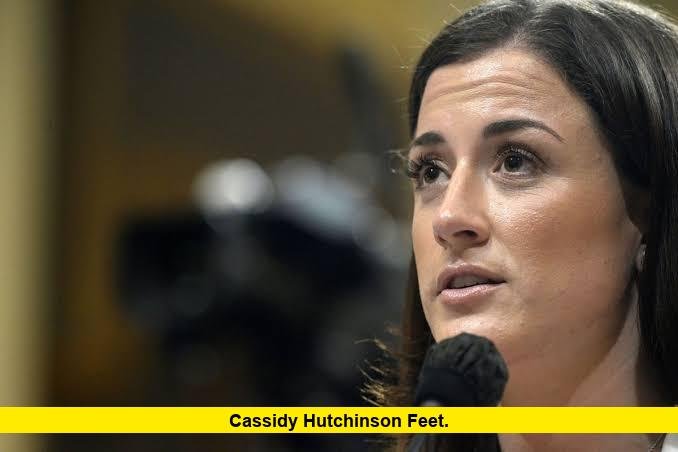

Cassidy Hutchinson feet has become an unusual search phrase associated with the former White House aide, whose latest legal developments have attracted national attention. The most significant verified update involves a federal grand jury’s decision to reject a Justice Department attempt to indict Hutchinson over her testimony about the January 6, 2021, Capitol attack. The decision came on October 27, 2026, and has renewed public interest in her background, appearances, and personal life.
While the search phrase suggests curiosity about Hutchinson’s physical appearance, there is no verified public information establishing a specific story about her feet. Her recent headlines instead concern the federal investigation into statements she made while testifying before Congress.
The distinction matters because online searches can combine unrelated personal-interest questions with major political developments. Understanding what has actually happened helps separate documented events from unsupported claims.
Why Are People Searching for Cassidy Hutchinson Feet?
Cassidy Hutchinson became a nationally recognized figure after her televised testimony before the House committee investigating the January 6 Capitol attack.
Her appearance at the congressional hearing introduced her to millions of Americans. Photographs, television clips, interviews, and discussions about her testimony subsequently circulated across digital platforms.
Searches involving public figures sometimes focus on clothing, footwear, hairstyles, or other aspects of their appearance. Such interest does not necessarily reflect a significant news event.
For people specifically searching for photographs of Hutchinson’s feet or footwear, publicly available coverage primarily documents her professional appearances and congressional testimony.
There is no verified announcement, medical disclosure, or public controversy specifically involving her feet.
The latest substantial development involving Hutchinson concerns the Justice Department’s unsuccessful attempt to secure criminal charges.
DOJ Grand Jury Cassidy Hutchinson Decision: Latest Verified Update
A federal grand jury in Washington, D.C., declined to indict Cassidy Hutchinson on October 27, 2026.
Federal prosecutors had sought criminal charges connected to statements Hutchinson made before the congressional committee investigating the Capitol attack.
The investigation focused on allegations that she had provided false testimony about President Donald Trump’s conduct surrounding January 6, 2021.
However, the grand jury did not approve the proposed indictment.
During a brief federal court appearance, Justice Department attorney Neville S. Hedley informed U.S. Magistrate Judge Zia M. Faruqui that the grand jury had not concurred with the prosecution’s request.
The development marked a significant setback for the federal effort to bring criminal charges against Hutchinson.
Importantly, the decision does not represent a criminal conviction, an acquittal after trial, or a judicial determination that every statement Hutchinson made was accurate.
It means prosecutors failed to obtain the indictment they requested.
As of the latest verified update, that attempt had not resulted in criminal charges against her.
What Does the Grand Jury’s Decision Mean?
A federal grand jury evaluates evidence presented by prosecutors to determine whether sufficient grounds exist to issue an indictment.
An indictment formally accuses someone of a crime. It does not establish guilt.
In Hutchinson’s case, prosecutors sought an indictment related to her congressional testimony.
The grand jury rejected that request.
The outcome carries several important implications:
- Hutchinson did not face an indictment from the October 27 grand jury presentation.
- The decision prevented the proposed criminal case from advancing through that indictment.
- The rejection did not resolve every disagreement surrounding her testimony.
- Federal prosecutors are not automatically prohibited from pursuing another indictment in the future.
Grand jury proceedings generally operate under secrecy rules. As a result, the complete evidence presented to jurors has not become publicly available.
The precise reasoning behind the panel’s rejection also remains undisclosed.
These limitations make it important to distinguish the confirmed outcome from interpretations of why jurors reached their decision.
Who Is Cassidy Hutchinson?
Cassidy Hutchinson is a former White House aide who served during Donald Trump’s first presidential administration.
She worked closely with Mark Meadows, Trump’s final White House chief of staff during his first term.
Her position placed her near senior administration officials during the period surrounding the 2020 presidential election and its aftermath.
Hutchinson became widely known on June 28, 2022, when she testified publicly before the House Select Committee investigating the January 6 attack.
Her testimony addressed conversations, warnings, and events involving senior White House personnel.
Because she worked near the center of the administration, lawmakers considered her account relevant to understanding what officials knew before and during the Capitol attack.
Her statements attracted intense attention from supporters and critics of Trump.
That visibility transformed Hutchinson from a relatively little-known government employee into a recognizable figure in American political coverage.
Why Cassidy Hutchinson’s 2022 Testimony Became Important
Hutchinson’s congressional testimony addressed several major events surrounding January 6.
She described warnings about potential violence and conversations involving senior White House officials.
One important part of her testimony concerned reports that some people attending Trump’s rally possessed weapons.
Hutchinson testified about Trump’s awareness of security concerns before supporters moved toward the Capitol.
She also described the president’s desire to travel to the Capitol after speaking at the Ellipse.
These statements became central to public discussions about the administration’s response to the unfolding crisis.
However, not every detail in Hutchinson’s testimony came from her direct personal observations.
Some information involved conversations she said other officials had relayed to her.
That distinction became particularly important when investigators and lawmakers examined the accuracy of individual statements.
Her testimony included firsthand observations as well as accounts of what others told her.
Those different forms of evidence require separate consideration when evaluating disputed events.
The Disputed Presidential Vehicle Account
One of the most widely discussed portions of Hutchinson’s testimony involved an alleged confrontation inside a presidential vehicle.
Hutchinson recounted information she said another White House official had shared with her.
The account concerned Trump’s reaction after security personnel prevented him from traveling to the Capitol.
She described an allegation that Trump reached toward the steering wheel and lunged toward a Secret Service agent.
Trump denied the account.
The vehicle’s driver subsequently disputed the description of the alleged physical confrontation.
The driver nevertheless confirmed that Trump wanted to travel to the Capitol.
This disagreement became a major point of contention surrounding Hutchinson’s credibility.
It is important to recognize that Hutchinson presented the vehicle incident as information relayed to her rather than an event she personally witnessed.
The distinction between firsthand testimony and secondhand information remains central to understanding the controversy.
The October 2026 grand jury decision did not publicly establish a definitive factual finding about that disputed incident.
How the Justice Department Investigation Developed
The federal investigation followed years of political disagreement over Hutchinson’s congressional testimony.
Republican lawmakers questioned the accuracy of portions of her statements.
Representatives Jim Jordan and Barry Loudermilk were involved in congressional referrals raising concerns about her testimony.
The Justice Department subsequently examined whether the circumstances justified criminal charges.
By October 8, 2026, federal prosecutors had presented evidence to a grand jury in Washington.
The proceedings concerned potential false statements connected to Hutchinson’s testimony before Congress.
The investigation later reached a decisive stage when prosecutors attempted to obtain an indictment.
On October 27, the grand jury rejected the proposed charges.
The sequence shows how a controversy that began with televised congressional testimony eventually developed into a federal criminal investigation.
Despite that investigation, the latest confirmed grand jury proceeding ended without an indictment.
Timeline of Major Cassidy Hutchinson Developments
| Date | Confirmed development |
|---|---|
| January 6, 2021 | Supporters of Donald Trump attacked the U.S. Capitol while Congress met to certify the presidential election results. |
| June 28, 2022 | Hutchinson testified publicly before the House January 6 committee. |
| Following the testimony | Her statements faced scrutiny, including disputes over the presidential vehicle account. |
| October 8, 2026 | Public reporting confirmed that federal prosecutors had presented evidence to a grand jury examining her testimony. |
| October 27, 2026 | A Washington federal grand jury declined to indict Hutchinson. |
| October 28, 2026 | The latest verified status remained that the attempted indictment had failed. |
This timeline highlights the distinction between the original congressional investigation and the later Justice Department proceedings.
Cassidy Hutchinson Feet: What Is Actually Verified?
The specific phrase Cassidy Hutchinson feet does not correspond to a confirmed legal development or documented public statement about her physical condition.
Hutchinson’s public record centers on her government service, congressional testimony, and the subsequent controversy over that testimony.
Photographs from her congressional appearances show her participating in formal government proceedings.
However, there is no verified basis for claiming that she has a particular foot condition, underwent foot-related medical treatment, or became involved in a footwear controversy.
Likewise, the recent federal grand jury decision has no established connection to her feet or physical appearance.
Search results that combine these subjects should not be treated as evidence that they are related.
Readers seeking reliable information should distinguish ordinary photographs and public appearances from claims that require independent verification.
The documented story remains her role as a former White House aide and the legal scrutiny surrounding her congressional statements.
Has Cassidy Hutchinson Been Charged With a Crime?
The October 27, 2026, grand jury decision did not produce an indictment against Hutchinson.
That is the central confirmed legal outcome.
Prosecutors had sought to advance a case involving alleged false statements to Congress.
The grand jury declined to authorize the proposed charges.
This result should not be confused with a trial verdict.
Hutchinson did not receive an acquittal from a trial jury in that proceeding because the case did not advance to that stage.
Similarly, the rejection does not automatically prevent prosecutors from seeking charges through another legally permissible proceeding.
As of the latest verified reporting, no successful indictment had emerged from the October 27 presentation.
Hutchinson has maintained that her congressional testimony was truthful.
The controversy surrounding her statements remains separate from the legal question of whether prosecutors obtained sufficient support for criminal charges.
Why the Grand Jury Rejection Matters
Federal grand juries commonly approve indictments requested by prosecutors.
A rejection therefore represents a notable development, particularly in a politically sensitive investigation.
The Hutchinson case attracted attention because of her earlier testimony about Trump’s actions during the Capitol attack.
The investigation also involved the Justice Department’s Civil Rights Division, an unusual setting for a case focused on alleged false congressional statements.
The division operates under the leadership of Harmeet Dhillon, a Trump administration appointee.
The unsuccessful indictment added to broader scrutiny of federal investigations involving people whom Trump has publicly criticized.
Supporters of prosecuting allegedly false congressional testimony emphasize the importance of accountability under oath.
Critics of politically sensitive prosecutions emphasize the need for independent decision-making and evidence-based charging decisions.
The grand jury’s rejection establishes one specific result: prosecutors did not obtain the indictment they sought.
It does not, by itself, establish the motivations of prosecutors or jurors.
Frequently Asked Questions
Why is Cassidy Hutchinson receiving renewed attention?
Hutchinson returned to national headlines after a federal grand jury rejected a Justice Department attempt to indict her over testimony connected to the January 6 Capitol attack.
Is there verified news about Cassidy Hutchinson’s feet?
No specific, credible public news development concerning her feet was established in the reviewed reporting. The major verified update concerns the federal grand jury decision.
What happened in the DOJ grand jury investigation?
Federal prosecutors sought criminal charges connected to Hutchinson’s congressional testimony. On October 27, 2026, a Washington grand jury declined to issue the proposed indictment.
Did the grand jury declare Hutchinson innocent?
No. The grand jury rejected the proposed indictment. It did not conduct a criminal trial or issue a verdict on every factual dispute surrounding her testimony.
What did Cassidy Hutchinson say about Donald Trump?
Her 2022 testimony described Trump’s actions, knowledge of security concerns, and desire to travel to the Capitol on January 6. Some details, particularly a secondhand vehicle incident, became disputed.
What is Cassidy Hutchinson’s latest legal status?
The latest verified development is that the October 27 grand jury proceeding ended without an indictment. No subsequent successful indictment was established in the reviewed updates.
Final Thoughts
Cassidy Hutchinson remains a prominent figure in discussions about the January 6 Capitol attack and the federal government’s handling of testimony connected to that event.
Although some internet searches focus on her appearance, the most consequential confirmed development involves the Justice Department’s unsuccessful attempt to secure an indictment.
The October 27 decision marks an important point in the legal controversy surrounding her congressional testimony.
It also reinforces the importance of separating verified developments from speculation, particularly when public attention turns toward a politically recognizable individual.
For readers following Hutchinson’s story, the central facts remain clear: she testified before Congress in 2022, federal prosecutors later investigated allegations concerning that testimony, and a Washington grand jury rejected the proposed indictment in October 2026.
What do you think about the grand jury’s decision? Share your thoughts in the comments and stay updated as new verified developments emerge.