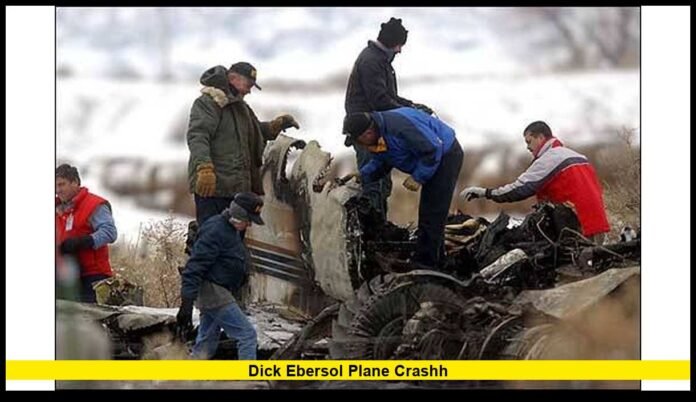

The Dick Ebersol plane crash on November 28, 2004, became a heartbreaking moment in American aviation history when a private jet carrying the prominent NBC sports executive and his family crashed during takeoff in Colorado. The accident killed three people, including Ebersol’s 14-year-old son, Edward “Teddy” Ebersol, while Dick Ebersol and his older son, Charles, survived. Investigators later determined that ice and snow contamination on the aircraft’s wings played a central role in the disaster. More than two decades later, the crash remains a significant case in discussions about winter aviation safety, preflight preparation, and the personal consequences of a sudden family tragedy.
What Happened in the 2004 Colorado Plane Crash?
The accident took place at Montrose Regional Airport in southwestern Colorado. The aircraft, a Canadair Challenger business jet, was preparing to depart for South Bend, Indiana, after a Thanksgiving holiday trip.
Conditions at the airport were wintry, with snow falling around the time of departure. The aircraft began its takeoff run but failed to climb safely. It went beyond the runway area, struck the ground, and caught fire.
Six people were aboard the jet. They included the two pilots, a flight attendant, Dick Ebersol, and his sons Charles and Teddy.
The crash claimed three lives. Teddy, the aircraft’s captain, and the flight attendant died. Dick Ebersol, Charles, and the first officer survived.
The destruction of the aircraft and the loss of life prompted an extensive investigation. Authorities examined the wreckage, the weather, the aircraft’s operating conditions, and the decisions made before takeoff.
The accident quickly drew national attention because Ebersol was a prominent figure in American television. However, beyond his public reputation, the incident was a family tragedy involving the death of a teenage boy.
Who Was Dick Ebersol at the Time of the Accident?
Dick Ebersol was one of the most influential executives in American television sports. His career included major responsibilities at NBC, where he helped develop and oversee sports programming and coverage of significant athletic events.
His professional work connected him with Olympic broadcasts, the NFL, and other major sports properties. He was widely recognized for helping establish sports programming as a central part of network television.
By 2004, Ebersol had spent decades working in the entertainment and broadcasting industries. His professional life involved high-profile events, demanding schedules, and relationships with leading figures in sports and television.
The Colorado accident abruptly shifted attention from his career to his family. Rather than a routine holiday trip, the journey became the setting for an event that permanently changed the lives of those involved.
Ebersol survived, but his youngest son did not. That loss became the most painful and enduring personal consequence of the crash.
Who Was Traveling on the Aircraft?
The jet carried six people when it attempted to take off from Montrose Regional Airport.
The passengers and crew included:
- Dick Ebersol: The NBC sports executive survived the accident.
- Charles Ebersol: His older son survived alongside his father.
- Edward “Teddy” Ebersol: The 14-year-old died in the crash.
- The captain: The pilot died in the accident.
- The first officer: The second pilot survived.
- The flight attendant: The crew member died in the crash.
The three survivors faced the immediate physical consequences of the accident, while the deaths created lasting grief for their families and loved ones.
The loss of Teddy was especially devastating because he was only 14. His death transformed the incident from a serious aviation accident into a widely reported family tragedy.
The identities of those aboard are central to understanding the human impact of the crash. The accident did not simply destroy an aircraft; it ended three lives and left survivors to cope with a traumatic experience.
How Dick and Charles Ebersol Escaped
Dick Ebersol and Charles Ebersol survived the impact and subsequent destruction of the jet. Contemporary accounts described Charles helping his father escape from the wreckage.
The aircraft suffered catastrophic damage, and a fire complicated rescue efforts. Emergency personnel faced a difficult scene as they worked to assist survivors and determine the fate of everyone aboard.
Dick and Charles received medical attention following the accident. Their survival was remarkable given the severity of the destruction, but the physical and emotional consequences were substantial.
The loss of Teddy compounded the ordeal. Surviving a crash involving a close family member can bring complicated emotions, particularly when other people aboard have died.
For the Ebersol family, the days following the accident involved more than recovery from physical injuries. They also had to confront the sudden death of a child and the trauma of the circumstances surrounding it.
The event became a defining moment in their private lives, even as the public continued to follow developments surrounding the investigation.
What Caused the Dick Ebersol Plane Crash?
The National Transportation Safety Board investigated the accident and adopted its final findings on May 2, 2006.
Investigators determined that the aircraft attempted to take off with ice or snow contamination on its wings. That contamination interfered with the wings’ aerodynamic performance and reduced their ability to generate sufficient lift.
The aircraft failed to climb successfully, stalled, and struck the ground.
The NTSB identified the flight crew’s failure to ensure that the wings were free of contamination as the probable cause. The pilots’ limited experience operating in winter weather conditions also contributed to the accident.
These findings established a clear explanation for the disaster. The crash was not left as an unexplained event, and the official investigation did not identify wing contamination as a minor or incidental issue.
Even a thin layer of ice can significantly change how air flows across an aircraft’s wings. During takeoff, the aircraft needs sufficient lift to become airborne and maintain a safe climb.
Contamination can increase drag, reduce lift, and change the speed at which a wing stalls. When those effects occur during a critical phase of flight, the consequences can be catastrophic.
The investigation therefore focused on the condition of the aircraft before departure and the decisions that allowed the takeoff attempt to proceed.
Why Snow and Ice Create Serious Aviation Risks
Winter weather introduces several hazards for pilots, ground crews, and aircraft operators. Snow, freezing precipitation, and low temperatures can allow contamination to accumulate on critical aircraft surfaces.
Wings require particular attention because their shape and surface condition directly affect aerodynamic performance. A wing designed to produce lift under clean conditions may behave very differently when ice or snow disrupts airflow.
Deicing procedures remove existing contamination. Anti-icing procedures help prevent further accumulation for a limited period, depending on the conditions and products used.
These procedures require careful coordination. Crews must account for weather conditions, inspection requirements, and the time that passes between treatment and takeoff.
A plane can appear generally clean while still carrying contamination that affects its performance. Visual impressions alone may not provide sufficient assurance that the aircraft is ready for departure.
The Montrose accident reinforced the importance of following established procedures rather than assuming that an aircraft can safely take off despite winter conditions.
It also demonstrated why pilots must understand how contamination affects performance. When safety requirements cannot be met, delaying or abandoning a departure is essential.
The Role of the NTSB Investigation
The NTSB examines aviation accidents to identify probable causes and contributing factors. Its work typically involves evidence from the wreckage, aircraft records, weather information, crew actions, and relevant operating procedures.
In the Montrose case, investigators evaluated the aircraft’s takeoff attempt and the environmental conditions present at the airport.
The final findings identified contaminated wings as the central safety failure. The investigation also highlighted the flight crew’s limited experience with winter weather operations.
This distinction matters because an accident can involve several connected factors. Weather may create a hazardous environment, but decisions about aircraft preparation and departure determine how that hazard is managed.
The findings did not merely describe what happened during the final moments of the flight. They identified the failures that allowed the aircraft to attempt takeoff under unsafe conditions.
The investigation was completed in 2006, establishing the official explanation for the 2004 accident. No verified later finding has overturned that conclusion.
How the Accident Affected the Ebersol Family
For Dick Ebersol and his wife, actress Susan Saint James, the death of Teddy was an immeasurable personal loss. The tragedy occurred during a family holiday trip, making the circumstances especially painful.
The family had to cope with grief while survivors recovered from the accident. Public interest in Ebersol’s career meant that the tragedy received extensive attention, but media attention could not lessen the private consequences.
The crash also affected Charles, who survived alongside his father. Losing a younger sibling under such circumstances can create a lasting emotional burden, particularly when the surviving family members were directly involved in the same traumatic event.
Ebersol’s professional career continued to be associated with major sports broadcasting work in the years that followed. Nevertheless, his career achievements represent a separate part of his life from the personal loss he experienced.
The tragedy illustrates how a single event can change a family’s future in an instant. It also explains why the accident remains significant in accounts of Ebersol’s life, despite the many professional milestones associated with his name.
Where Did the Crash Happen?
Montrose Regional Airport is located in southwestern Colorado. The surrounding region includes mountainous terrain and destinations that attract visitors throughout the year.
Winter conditions can make aviation operations more demanding, especially when snow and freezing temperatures affect visibility and aircraft surfaces.
The jet involved in the accident was preparing to travel to South Bend, Indiana. Its departure never progressed into a safe flight.
The crash occurred during takeoff, a phase in which the aircraft must accelerate and generate enough lift to climb. Because wing contamination directly affects lift and drag, the weather and aircraft condition became important elements of the investigation.
The location explains the winter environment surrounding the accident, but the official cause rests on the specific findings about aircraft contamination and flight crew decisions.
What Is the Latest Confirmed Status of the Case?
As of October 27, 2026, the established facts remain unchanged. The crash occurred on November 28, 2004, and the NTSB completed its investigation with final findings adopted on May 2, 2006.
There is no verified indication of a new investigation that has replaced the original conclusions or established a different cause.
Readers may encounter anniversary coverage, retrospective reporting, or renewed discussion of the accident. Such coverage can revisit the tragedy without representing a new development in the official case.
The distinction is important when searching for updates. A newly published account of an older accident does not necessarily mean investigators have uncovered new evidence.
The confirmed record continues to show that the aircraft crashed during takeoff in winter weather, killing three people and leaving three survivors. The NTSB attributed the accident primarily to the flight crew’s failure to ensure the wings were free of ice or snow contamination.
For readers seeking factual information, these established findings provide the clearest account of the event.
The Lasting Aviation Safety Lessons
The Montrose crash remains a significant example of the risks associated with aircraft icing. Its lessons apply to the wider aviation industry, particularly during winter operations.
First, aircraft preparation must account for the actual condition of critical surfaces, not simply the appearance of the plane. Ice and snow can compromise performance even when the contamination seems limited.
Second, established deicing and inspection procedures must be followed carefully. Weather conditions can change quickly, and crews must make decisions based on safety requirements.
Third, flight crews need appropriate training and experience to recognize and manage winter hazards. Good judgment includes knowing when conditions do not support a safe departure.
Finally, the investigation demonstrates the value of identifying the specific causes of accidents. A completed investigation can help clarify what went wrong and reinforce procedures intended to prevent similar events.
The deaths in Colorado cannot be undone, but the safety lessons remain relevant to pilots, aircraft operators, and aviation professionals.
Conclusion
The 2004 Colorado accident remains one of the most tragic events associated with Dick Ebersol’s personal life. Three people died, including his teenage son Teddy, while Ebersol, Charles, and the first officer survived. The NTSB identified ice and snow contamination on the aircraft’s wings as the primary cause, with limited winter-weather experience contributing to the disaster. The completed investigation continues to provide the authoritative account of what happened and why aircraft preparation matters so profoundly.
What stands out most to you about this tragedy and its aviation safety lessons? Share your thoughts in the comments and follow verified developments for accurate updates.