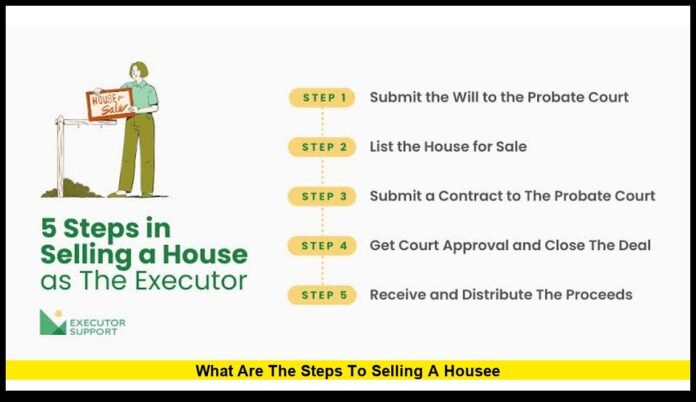

Selling a property can be a complicated process, especially for homeowners who have never navigated the real estate market before. Understanding what are the steps to selling a house can help you prepare your property, determine a competitive asking price, attract serious buyers, negotiate favorable terms, and complete the transaction with fewer surprises. From evaluating your home’s market value to reviewing closing documents, every stage requires careful planning and informed decisions.
The U.S. housing market varies by location, property type, buyer demand, and mortgage rates. Some homes attract multiple offers shortly after listing, while others require price adjustments, additional marketing, or repairs before finding the right buyer. Regardless of market conditions, sellers benefit from understanding their financial position, preparing the property, complying with disclosure requirements, and evaluating offers beyond the proposed purchase price.
A successful sale involves more than finding someone willing to buy your home. It requires coordinating inspections, financing, title searches, paperwork, and the transfer of ownership. The following guide explains the process in practical detail so homeowners can approach each stage with greater confidence.
1. Establish Your Selling Goals and Timeline
Before advertising your property, identify your reasons for selling and determine when you would ideally like to complete the transaction. Your circumstances will influence your pricing strategy, preparation budget, and willingness to negotiate with potential buyers.
Some homeowners sell because they are relocating for employment, purchasing another property, downsizing after retirement, or moving closer to family. Others may need to sell an inherited home or dispose of an investment property.
Consider whether you need the sale proceeds to purchase your next home. If you are buying and selling simultaneously, coordinating both transactions can be challenging. A delayed closing on your current property could affect your ability to complete the purchase of another home.
Create a preliminary schedule that accounts for cleaning, repairs, photography, listing preparation, showings, negotiations, and closing. Allow additional time for unexpected issues, including inspection findings, financing delays, or title complications.
You should also determine whether you can continue paying the mortgage, property taxes, insurance, utilities, and maintenance costs while the house is on the market.
2. Research Your Property’s Market Value
Establishing the right asking price is one of the most important decisions a homeowner makes when preparing to sell.
Start by examining recently sold properties in your neighborhood that resemble your home in size, age, condition, layout, and location. These comparable sales can help you understand what buyers have actually paid rather than what other homeowners hope to receive.
Current listings provide additional information about competing properties, but asking prices do not necessarily reflect final sale prices.
Consider a Comparative Market Analysis
A real estate agent can prepare a comparative market analysis, commonly known as a CMA. This evaluation considers comparable sales, current listings, property characteristics, and local market conditions to help establish a reasonable asking-price range.
A professional appraisal offers another way to estimate value, particularly when a property has unusual features or few comparable sales.
Online valuation tools can provide a preliminary estimate, but their calculations may not account for recent renovations, structural concerns, unique features, or neighborhood-level differences.
Your pricing decision should reflect the property’s actual condition and the level of competition in your local market. An excessively high price may discourage buyers, while an unnecessarily low price could reduce your potential proceeds.
3. Calculate Your Home Equity and Expected Net Proceeds
Knowing your home’s estimated value is only part of the financial planning process. You must also determine how much money you are likely to receive after paying outstanding obligations and selling expenses.
Home equity represents the difference between the property’s value and the debts secured against it. However, your equity does not automatically equal your final proceeds.
For example, imagine that your property sells for $425,000 and your outstanding mortgage balance is $250,000. The difference is $175,000 before accounting for transaction expenses, other liens, and applicable adjustments.
Your actual proceeds will depend on the final sale price, mortgage payoff, brokerage compensation, closing fees, taxes, and any credits or concessions you agree to provide.
Request a mortgage payoff statement from your lender before listing the property. If you have a second mortgage, home equity line of credit, or another recorded lien, include those obligations in your calculations.
A seller net sheet can help estimate how much money you might receive under different sale-price scenarios. This estimate is particularly important if you intend to use the proceeds as a down payment on another home.
4. Choose Your Selling Method
Homeowners typically sell through a real estate agent or manage the transaction themselves.
Work With a Real Estate Agent
A listing agent can assist with pricing, property preparation, marketing, showings, offer negotiations, and transaction coordination.
An experienced professional may also identify potential issues before they become significant problems. Before hiring an agent, ask about their experience with comparable properties, marketing approach, communication practices, and proposed compensation.
Brokerage compensation is negotiable. Review the listing agreement carefully to understand the services provided, payment arrangements, and any cancellation provisions.
Sell the Property Yourself
A for-sale-by-owner transaction allows you to market the property without hiring a listing agent. This approach may reduce certain brokerage expenses, but it also requires you to manage pricing, advertising, buyer communications, negotiations, disclosures, and contractual deadlines.
You may still benefit from professional assistance with contracts, title work, and closing arrangements. State laws and local practices determine which services are appropriate for your transaction.
Compare the potential savings with the time, expertise, and responsibilities involved before deciding which approach best suits your circumstances.
5. Prepare the House for Prospective Buyers
A well-maintained property can make a stronger impression and help buyers understand its value. Preparation does not necessarily require a complete renovation or expensive upgrades.
Begin with a thorough walkthrough to identify maintenance problems, visible damage, and areas that need attention.
Common improvements include repairing leaking faucets, replacing broken hardware, touching up damaged paint, fixing loose fixtures, and addressing obvious safety concerns. Significant roof, foundation, plumbing, or electrical problems may require professional evaluation.
Decluttering is equally important. Remove unnecessary belongings from countertops, hallways, closets, and living spaces. A clean, organized home allows buyers to evaluate room dimensions, storage capacity, and potential furniture arrangements.
Deep-clean kitchens, bathrooms, windows, floors, and other frequently used areas. If necessary, hire professional cleaners before photography and showings.
Exterior presentation also matters. Trim overgrown landscaping, clear walkways, clean the entrance, and maintain the lawn where applicable.
Home staging can help make rooms appear inviting and functional. Depending on your budget, you may rearrange existing furniture, rent selected pieces, or hire a staging professional.
Before spending heavily on improvements, consider whether the expected benefit justifies the cost.
6. Gather Documents and Complete Required Disclosures
Organizing paperwork before listing can reduce delays later in the transaction.
Collect available ownership records, mortgage information, property tax records, renovation receipts, warranties, permits, and documentation relating to major repairs. If the property belongs to a homeowners association, obtain relevant association documents and information about applicable fees or assessments.
You should also understand your legal disclosure responsibilities.
Depending on state law, sellers may need to disclose known material defects involving structural components, water intrusion, roofing, electrical systems, plumbing, pest damage, or other specified conditions.
Federal law requires particular lead-based paint disclosures for most residential properties built before 1978, subject to applicable exemptions.
Selling a property as is does not automatically eliminate disclosure obligations. Sellers should complete required forms accurately and seek qualified legal advice when uncertain about a property’s condition or reporting requirements.
7. List and Market the Property
Once the home is ready, prepare a listing that accurately describes the property and highlights its most appealing features.
High-quality photographs help prospective buyers evaluate a home before arranging a visit. Depending on the property, floor plans, video tours, and virtual walkthroughs may provide additional value.
The listing should include accurate information about the property’s size, bedrooms, bathrooms, location, condition, and notable features. Avoid unsupported claims or misleading descriptions that could create disputes.
A real estate agent may market the home through a multiple listing service, commonly called an MLS, and participating property websites. Homeowners selling independently can explore permitted advertising platforms and other appropriate marketing methods.
Plan showings around your schedule while remaining reasonably flexible. Before visitors arrive, secure valuables, remove sensitive documents, organize rooms, and make sure pets are safely accommodated.
Protecting personal information is particularly important when multiple people may enter the property.
8. Evaluate Offers and Negotiate Contract Terms
When offers arrive, evaluate the complete proposal rather than concentrating exclusively on the purchase price.
A strong offer should be assessed alongside the buyer’s financing, deposit, contingencies, requested concessions, and proposed closing date.
For example, one buyer might offer more money but request substantial seller credits and retain several contractual termination options. Another might propose a slightly lower price with a practical timeline and fewer contingencies. The better choice depends on your priorities and the terms involved.
Review the following details carefully:
- Purchase price: The amount the buyer agrees to pay.
- Financing arrangements: Whether the buyer intends to pay cash or obtain a mortgage.
- Earnest money: The deposit and the contractual conditions governing its return or release.
- Inspection contingency: The buyer’s rights following an inspection.
- Appraisal contingency: The options available if the valuation is below the contract price.
- Seller concessions: Any agreed contribution toward eligible buyer expenses.
- Closing date: Whether the proposed schedule fits your plans.
- Included property: Appliances, fixtures, and other items included in the agreement.
You may accept an offer, reject it, or negotiate a counteroffer. Once an agreement becomes binding, the parties must follow its terms unless they mutually amend it or another contractual or legal provision applies.
9. Complete Inspections and Negotiate Repairs
After the purchase agreement is signed, the buyer may arrange a home inspection under the terms of the contract.
An inspector may evaluate the roof, foundation, plumbing, electrical systems, heating and cooling equipment, and other accessible components. Additional specialists may be needed if the inspection identifies potential structural, environmental, or safety concerns.
The buyer may request repairs, a price reduction, a credit, or another negotiated arrangement.
Sellers should review these requests against their contractual obligations and the property’s condition. Obtaining estimates from qualified contractors can help establish the likely cost of proposed work.
If you agree to make repairs, document the arrangement, meet the deadlines, and retain receipts or other relevant records. Some transactions allow the parties to negotiate a credit instead, subject to contract terms and lender requirements.
Clear communication at this stage can prevent misunderstandings and keep the transaction moving forward.
10. Complete the Appraisal and Financing Process
When a buyer uses a mortgage, the lender may require an appraisal to evaluate the property’s value for lending purposes.
An appraisal differs from a home inspection. An inspection primarily examines the property’s physical condition, while an appraisal estimates its market value.
If the appraised value is below the agreed purchase price, the buyer and seller may need to negotiate. Depending on the contract, possible outcomes include a price adjustment, an additional buyer contribution, or termination under an applicable contingency.
The lender must also complete its underwriting requirements. This may involve reviewing the buyer’s income, credit, assets, debts, and other financial information.
Sellers should respond promptly to reasonable document requests and remain aware of the transaction’s deadlines. Until financing and other necessary conditions are satisfied, an accepted offer should not be treated as a guaranteed completed sale.
11. Resolve Title Issues and Prepare for Closing
The title company, escrow company, or closing attorney typically coordinates the documentation and procedures required to transfer ownership.
A title search examines ownership records and may identify mortgages, liens, easements, or other matters affecting the property.
Outstanding mortgages and eligible liens generally need to be addressed as part of the closing process. Ownership discrepancies or other title problems may require additional documentation before the transaction can proceed.
Review your estimated settlement statement carefully. It should identify the sale price, mortgage payoff, applicable transaction charges, negotiated credits, taxes, and other adjustments.
Ask questions about unfamiliar expenses and confirm the expected closing arrangements. Depending on your location, the parties may sign documents in person, through an approved remote process, or using another permitted arrangement.
12. Sign the Closing Documents and Transfer Ownership
Closing is the final stage of the transaction.
The seller signs the documents required to transfer ownership, while the closing professional coordinates the receipt and distribution of funds. The seller’s mortgage and other applicable obligations are paid according to the settlement arrangements, and the remaining proceeds are distributed as directed.
The required paperwork may include the deed, tax forms, affidavits, settlement statements, and state-specific documents.
Check important details before signing, including the property description, names, financial figures, credits, and mortgage payoff information.
Once the transaction is completed under the applicable contract and legal requirements, the deed is submitted for recording where required. The seller transfers keys, access devices, and possession according to the agreement.
Retain copies of the final settlement statement and other important transaction records for your financial and tax files.
13. Understand Potential Tax Consequences
Selling a house can have federal and state tax implications.
For federal tax purposes, the taxable gain is generally determined by comparing the amount realized from the sale with the property’s adjusted tax basis, subject to applicable rules. The total cash received is not automatically the taxable profit.
Eligible homeowners may qualify for the primary residence capital gains exclusion. Generally, qualifying taxpayers may exclude up to $250,000 of gain when filing as single or up to $500,000 for many married couples filing jointly.
Eligibility typically depends on meeting applicable ownership and use tests, which generally require owning and using the home as a principal residence for at least two years during the five-year period ending on the sale date. Additional restrictions and exceptions may apply.
Rental use, business use, previous exclusions, and other circumstances can affect the tax treatment. State tax requirements may also differ from federal rules.
Keep records of the original purchase, qualifying improvements, and eligible selling expenses. A qualified tax professional can help determine your adjusted basis, potential exclusion, and reporting responsibilities.
14. Review Your Final Proceeds and Complete Post-Sale Tasks
After closing, verify the final accounting and confirm that the proceeds were distributed according to the settlement statement.
Notify relevant service providers of the ownership change and arrange the appropriate transfer or termination of utilities, insurance, and other property-related services. Follow the closing agreement regarding the final utility readings, property condition, and possession date.
Update your mailing address with financial institutions, government agencies, and other organizations as necessary. Store your sale documents securely and retain tax records for the appropriate period.
If you are purchasing another home, coordinate the use of your proceeds with your next transaction and keep sufficient funds available for moving costs and other expenses.
These final administrative tasks help ensure that the sale is properly concluded.
Frequently Asked Questions
How long does it take to sell a house?
The timeline depends on local demand, pricing, property condition, and buyer financing. Preparation and marketing may take several weeks or longer, while the period between an accepted offer and closing often involves additional inspections, underwriting, and title work.
Can I sell a house without making repairs?
Yes, depending on the property’s condition and applicable law. However, buyers may negotiate repairs or credits after an inspection, and sellers must comply with relevant disclosure requirements.
Do I need to hire a real estate agent?
No. You can sell independently, but you will be responsible for marketing, negotiations, disclosures, and transaction coordination unless you hire professionals for selected services.
When will I receive my money?
The net proceeds are generally distributed through the closing process after the necessary funds and documentation requirements have been satisfied. The exact timing depends on the transaction and local procedures.
What if my mortgage balance is higher than the sale price?
You may need additional funds to complete the sale or negotiate an arrangement with your lender. Discuss your financial position with the mortgage servicer before committing to a transaction that may not cover the outstanding balance.
Conclusion
Selling a property successfully requires preparation, realistic pricing, careful negotiations, accurate disclosures, and close attention to the final paperwork. Homeowners who understand the financial and administrative responsibilities involved can make better decisions and reduce the likelihood of avoidable delays.
Whether you are selling a starter home, a longtime family residence, or an investment property, approach each stage with a clear plan. Compare offers carefully, maintain organized records, and seek qualified professional advice whenever legal, financial, or tax questions arise.
Are you planning to sell your home or have recently completed a sale? Share your experience in the comments and stay tuned for more practical real estate insights.