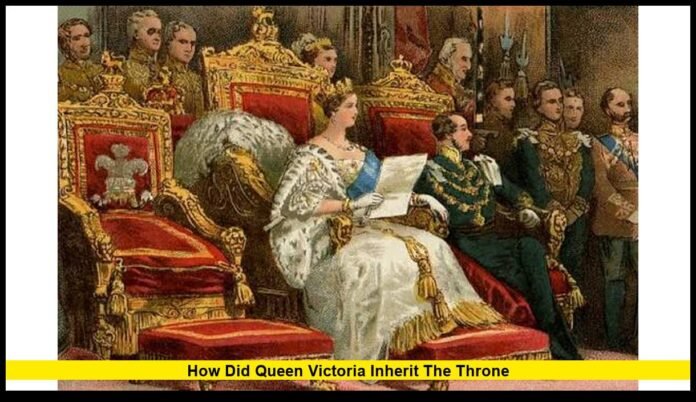

How did Queen Victoria inherit the throne? She became queen on June 20, 1837, after her uncle, King William IV, died without a surviving legitimate child. At just 18 years old, Victoria inherited the British crown through her position in the royal succession. Her rise resulted from a series of deaths among senior royal relatives, the absence of eligible heirs in several branches of the family, and the hereditary rules that governed the monarchy.
Victoria’s accession was a turning point in British royal history. She had been born fifth in line to the throne, but the circumstances surrounding her family gradually brought her closer to the crown. Her father, Prince Edward, Duke of Kent and Strathearn, never became king. Nevertheless, his daughter eventually succeeded where he had not.
The story behind Victoria’s accession reveals how inheritance worked within the British monarchy during the early 19th century. It also explains why a young princess, rather than one of the king’s sons, ultimately became sovereign. Her reign began a new chapter for Britain and lasted more than 63 years, ending with her death in 1901.
How Did Queen Victoria Become the British Monarch?
Queen Victoria became monarch because she was the next eligible heir when William IV died. She belonged to the House of Hanover and was the granddaughter of King George III. Her father was George III’s fourth son, Prince Edward.
When Victoria was born on May 24, 1819, she was not the immediate successor to the crown. Several male relatives stood ahead of her, including her uncles George IV, Frederick, Duke of York, and William, Duke of Clarence, who later became William IV.
However, these royal relatives had no surviving legitimate children who could continue their respective lines ahead of Victoria. Frederick, Duke of York, died in 1827 without legitimate children. George IV died in 1830 without a surviving legitimate child, and William IV followed him to the throne.
William also had no surviving legitimate children when he died in 1837. As a result, Victoria became the next monarch under the established succession rules.
Her accession did not require an election or a parliamentary appointment. The crown passed to her automatically upon William’s death, while official announcements and the Accession Council formally recognized the new sovereign.
Who Was Queen Victoria Before She Became Queen?
Victoria was born at Kensington Palace in London on May 24, 1819. Her full name at birth was Alexandrina Victoria. Her parents chose Alexandrina in honor of Tsar Alexander I of Russia, one of her godparents, while Victoria honored her mother.
Her father, Prince Edward, Duke of Kent and Strathearn, was a younger son of George III. Her mother, Princess Victoria of Saxe-Coburg-Saalfeld, came from a German princely family.
Victoria was her parents’ only child together. Her father died on January 23, 1820, when she was less than a year old. Her grandfather, George III, died six days later.
These deaths changed the royal family’s leadership but did not immediately place Victoria on the throne. Her eldest surviving uncle, George IV, became king. Victoria remained a princess and continued to live at Kensington Palace with her mother.
Her childhood became closely connected to her future royal responsibilities. As she grew older, the possibility of becoming queen became increasingly real because her uncles had no surviving legitimate children.
Victoria received private education and studied subjects considered appropriate for a future monarch. Her lessons included history, languages, geography, and other areas intended to prepare her for public duties.
Her upbringing also involved a strict household system influenced by her mother and Sir John Conroy. As Victoria approached adulthood, she increasingly sought independence and a clearer role in managing her own life.
Why Did Princess Charlotte’s Death Matter?
Princess Charlotte of Wales played a major role in the events that eventually led to Victoria’s accession. Charlotte was the only legitimate child of George, Prince of Wales, who later became George IV.
As the expected successor to her father, Charlotte represented the next generation of the royal family. Her position made the future of the monarchy appear relatively secure.
That changed dramatically on November 6, 1817, when Charlotte died following childbirth. Her son was stillborn, leaving no surviving child in her branch of the royal family.
Charlotte’s death created a succession problem because George III’s sons had not established a secure line of legitimate descendants. Several of the king’s sons subsequently married in an effort to produce heirs.
Prince Edward married Princess Victoria in 1818. Their daughter, Alexandrina Victoria, was born the following year and entered the succession behind the senior royal relatives who remained alive.
This sequence was central to Victoria’s eventual accession. Her birth followed a royal family crisis, but she still needed several other relatives to die without leaving eligible successors before she could inherit the crown.
Charlotte’s death did not directly make Victoria queen. Instead, it changed the circumstances of the succession and helped establish the family line from which the future monarch emerged.
What Role Did Victoria’s Father Play in the Succession?
Prince Edward, Duke of Kent and Strathearn, provided Victoria with her hereditary claim to the throne. As a son of George III, Edward belonged to the royal line from which the next monarch could emerge.
However, Edward never ruled Britain. He died in January 1820, before George III’s death had fully reshaped the succession.
Edward’s position as the fourth son meant that he originally stood behind his older brothers. Victoria therefore did not inherit the throne directly from her father. Instead, her claim descended through him and became effective after the deaths of senior relatives.
The distinction is important because hereditary succession does not require a person’s parent to have been king or queen. A legitimate descendant can inherit the crown if the people ahead of them in the succession die or otherwise cease to qualify.
Victoria’s father died when she was an infant, so he never witnessed her accession. Nevertheless, his place in the royal family gave her the status that eventually allowed her to become sovereign.
Why Did King George IV Not Have an Heir?
George IV became king after George III died in January 1820. Before becoming king, he had married Caroline of Brunswick, and their only legitimate child was Princess Charlotte.
Charlotte’s death in 1817 left George IV without a surviving legitimate child. He therefore had no direct legitimate descendant to succeed him when he died on June 26, 1830.
His younger brother William IV inherited the crown. William’s accession moved Victoria closer to the throne, although she was not yet the reigning monarch.
The deaths of Charlotte and George IV demonstrate how succession depended on the survival of eligible descendants. The crown did not pass to a distant relative simply because that person had a royal title. It passed according to the established order of inheritance.
George IV’s lack of a surviving legitimate child was one of the major developments that placed Victoria on the path to the throne.
Why Did William IV Leave the Throne to Victoria?
William IV ruled Britain from 1830 until his death in 1837. He was George III’s third son and Victoria’s uncle.
William had fathered several children with the actress Dorothea Jordan before his marriage to Princess Adelaide of Saxe-Meiningen. Those children were not legitimate heirs to the crown.
William and Adelaide had two daughters who survived birth, but both died in early childhood. They had no surviving legitimate child when William died.
Because Victoria stood next in the line of succession, the crown passed to her. No surviving legitimate child of William could take precedence over her.
William’s death was therefore the immediate event that made Victoria queen. The earlier deaths in the royal family had prepared the way, but her accession occurred only when the reigning monarch died.
William died at Windsor Castle on June 20, 1837. Victoria was 18 years old and had celebrated her birthday less than a month earlier.
What Happened on June 20, 1837?
The morning of June 20 marked the moment Victoria’s life changed from that of a princess to that of a queen.
Victoria was staying at Kensington Palace when she learned that William IV had died. She was awakened early and told that senior officials, including the Archbishop of Canterbury and Lord Conyngham, the Lord Chamberlain, had come to see her.
Lord Conyngham informed her that her uncle had died and that she was now queen. Victoria later recorded the event in her journal, preserving a personal account of the beginning of her reign.
Her response reflected the seriousness of the responsibility she had inherited. She understood that the crown carried public duties, not simply royal privileges.
The Accession Council met at Kensington Palace on the same day. Government figures and senior officials recognized her accession, and the formal proclamation announced her position as queen.
Parliament also responded to William’s death. Members of the House of Lords met and swore allegiance to Victoria, reflecting the constitutional process that accompanied the transition.
These formal steps confirmed the change of sovereign, but they did not create her right to the crown. That right had already passed to her through hereditary succession at the moment William died.
Why Was Victoria Allowed to Rule Without a Regent?
Victoria became queen at 18, which meant she could assume the monarch’s role without a regent. She had turned 18 on May 24, 1837, only 27 days before William IV died.
A regent would have been necessary if the crown had passed to her while she was still below the legally established age. Such an arrangement would have allowed another person to exercise royal authority on behalf of an underage sovereign.
The timing of William’s death avoided that situation. Victoria could begin her reign directly, although she still needed advice and support from experienced ministers.
Lord Melbourne, who served as prime minister during the early years of her reign, became an important adviser. He helped the young queen understand the workings of government and the relationship between the Crown and Parliament.
Victoria’s age made her accession particularly notable. She had inherited one of the most important hereditary positions in Europe while still a teenager, yet she now had to learn how to manage the responsibilities of monarchy.
When Was Queen Victoria Crowned?
Victoria became queen on June 20, 1837, but her coronation did not take place until June 28, 1838. The ceremony occurred at Westminster Abbey in London.
Accession and coronation are separate events. Accession marks the legal transfer of the crown to the next sovereign, while coronation is a ceremonial and religious event that publicly celebrates the monarch’s position.
Victoria’s coronation involved royal regalia, anointing, formal recognition, and the placing of the crown on her head. The ceremony also connected the monarch with Britain’s long-standing traditions of kingship and constitutional government.
Large crowds gathered in London to witness the procession. The ceremony gave the public an opportunity to see their young queen in her new role.
The coronation did not make Victoria queen for the first time. She had already ruled for more than a year. Instead, it provided a major public celebration of a reign that had begun with William IV’s death.
How Did Victoria’s Accession Affect the British Monarchy?
Victoria’s accession began a reign that lasted until January 22, 1901. The period became known as the Victorian era, a name associated with major changes in British society.
During her reign, Britain experienced industrial development, railway expansion, urban growth, scientific advances, and significant political and social reforms. The British Empire also grew during much of this period, with consequences that continue to shape historical discussions today.
The monarchy operated within a constitutional system in which Parliament and ministers held central roles in government. The sovereign remained an important national figure, participating in official duties, diplomacy, and public ceremonies.
Victoria’s personal influence developed throughout her reign. Her marriage to Prince Albert in 1840 and their nine children became important parts of the royal family’s public identity.
Albert died in 1861, and Victoria spent years in mourning. She later returned to a more visible public role, and her long reign became closely associated with the monarchy’s place in national life.
Victoria’s accession did not itself cause Britain’s industrial or political transformation. However, her reign coincided with a period of extraordinary change, and her name became inseparable from that era.
Queen Victoria’s Accession: A Timeline of Key Events
The following dates explain how Victoria moved from a royal child to the British sovereign.
| Date | Event |
|---|---|
| November 6, 1817 | Princess Charlotte dies after childbirth, leaving no surviving child. |
| May 1818 | Prince Edward marries Princess Victoria of Saxe-Coburg-Saalfeld. |
| May 24, 1819 | Alexandrina Victoria is born at Kensington Palace. |
| January 23, 1820 | Victoria’s father, Prince Edward, dies. |
| January 29, 1820 | George III dies, and George IV becomes king. |
| 1827 | Frederick, Duke of York, dies without legitimate children. |
| June 26, 1830 | George IV dies, and William IV succeeds him. |
| May 24, 1837 | Victoria turns 18. |
| June 20, 1837 | William IV dies, and Victoria becomes queen. |
| June 28, 1838 | Victoria’s coronation takes place at Westminster Abbey. |
| January 22, 1901 | Victoria dies, and Edward VII succeeds her. |
Frequently Asked Questions About Queen Victoria’s Accession
How did Queen Victoria inherit the throne?
Victoria inherited the British throne because she was the next eligible heir when William IV died on June 20, 1837. The king had no surviving legitimate children, and Victoria stood next in the succession.
Was Queen Victoria born to a king?
No. Her father, Prince Edward, Duke of Kent and Strathearn, was a son of George III but never became king. Victoria inherited the crown through her family’s position in the royal succession.
How old was Queen Victoria when she became queen?
She was 18 years old. Victoria had turned 18 on May 24, 1837, less than a month before William IV died.
Who ruled Britain before Queen Victoria?
William IV ruled immediately before Victoria. He became king in 1830 after the death of his older brother, George IV.
Did Queen Victoria inherit the throne from her father?
Not directly. Her father died in 1820 without becoming king. Victoria inherited the crown after her uncles George IV and William IV had ruled and died without surviving legitimate children.
Why did Princess Charlotte’s death matter?
Charlotte was George IV’s only legitimate child. Her death in 1817 left no surviving child in her line and prompted other sons of George III to establish legitimate families.
Was Queen Victoria crowned on the day she became queen?
No. Victoria became queen on June 20, 1837, and was crowned on June 28, 1838. Her accession and coronation were separate events.
What royal dynasty did Victoria belong to?
She belonged to the House of Hanover, which had ruled Britain since George I became king in 1714.
How long did Queen Victoria reign?
Victoria ruled for more than 63 years, from June 20, 1837, until January 22, 1901. Her reign became known as the Victorian era.
Who succeeded Queen Victoria?
Her eldest son, Edward VII, succeeded her after her death in January 1901.
Queen Victoria’s accession demonstrates how royal inheritance can be shaped by family relationships, succession law, and unexpected deaths. She did not become queen because her father had ruled or because she was selected by the government. She inherited the crown because she stood next in the legally recognized line of succession when William IV died.
Her rise from a young princess at Kensington Palace to one of Britain’s most recognized monarchs remains a significant chapter in royal history.
What part of Queen Victoria’s journey to the throne interests you most? Share your thoughts in the comments and keep following our coverage of British royal history.