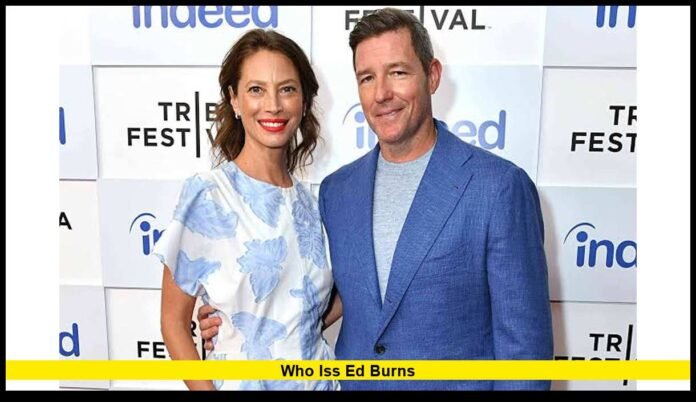

Who is Ed Burns? Ed Burns is an American actor, writer, director and producer who built a distinctive career by moving between independent cinema, major Hollywood productions and television. Born in Queens, New York, Burns became widely known after making The Brothers McMullen, a low-budget family drama that won the Dramatic Grand Jury Prize at the 1995 Sundance Film Festival. He later reached a much broader audience as Private First Class Richard Reiben in Steven Spielberg’s Saving Private Ryan.
Burns has continued working across multiple sides of the entertainment industry. Rather than limiting himself to acting, he has frequently written, directed and produced his own projects. His filmmaking has often centered on family relationships, romantic decisions, friendship, New York life and Irish-American experiences.
In recent years, Burns has returned to the characters that helped launch his career while also creating new stories. His recent work includes The Family McMullen and Finnegan’s Foursome, demonstrating that independent filmmaking remains an important part of his professional identity.
Ed Burns’ Early Life and New York Roots
Edward Fitzgerald Burns was born on January 29, 1968, in Woodside, Queens, New York. He grew up in New York and Long Island, environments that would later influence both his storytelling and the settings of many of his projects.
Burns developed an interest in the entertainment business before becoming a recognized filmmaker. Instead of immediately entering the industry as a major actor or director, he worked behind the scenes and gained experience in television production.
One of his early jobs was as a production assistant for Entertainment Tonight. The position gave him an opportunity to observe the television industry while developing his own creative ambitions.
During this period, Burns began working on the screenplay that would become The Brothers McMullen. The project was far removed from the large-budget productions that later became part of his career.
His early approach was personal and practical. He worked with limited resources and used locations and people available to him. That experience became a key part of the filmmaking philosophy that would define much of his later work.
The Breakthrough of The Brothers McMullen
Burns’ career changed dramatically with The Brothers McMullen, which he wrote, directed and starred in.
The 1995 film follows three Irish-American brothers dealing with love, family expectations, religion and personal choices after the death of their father. Burns played Barry McMullen, one of the brothers at the center of the story.
The film was made for a very small budget and reflected the kind of intimate storytelling that would become closely associated with Burns.
Its success at Sundance immediately changed the film’s prospects. Winning the Dramatic Grand Jury Prize gave Burns national attention and helped establish him as a promising new filmmaker.
The movie also became an example of how a personal independent production could gain significant recognition without the resources normally associated with Hollywood filmmaking.
For Burns, the success created opportunities to work on larger productions while continuing to make personal movies.
Moving Into Hollywood
Following the success of The Brothers McMullen, Burns directed and starred in She’s the One, released in 1996.
The romantic comedy featured Burns alongside Jennifer Aniston, Cameron Diaz and other established performers. It continued many of the themes that had appeared in his first film, including relationships between family members and the complications of romantic life.
Burns was no longer simply an emerging independent filmmaker. His Sundance success had given him access to larger casts and wider theatrical distribution.
However, he did not abandon the personal style that had defined his debut. His subsequent directing projects continued to focus on character-driven stories rather than large-scale spectacle.
The Saving Private Ryan Role
One of the biggest acting opportunities of Burns’ career arrived when he joined the cast of Saving Private Ryan.
Directed by Steven Spielberg and released in 1998, the World War II drama starred Tom Hanks as Captain John Miller and Matt Damon as Private James Francis Ryan.
Burns portrayed Private First Class Richard Reiben, a member of Miller’s unit. Reiben is outspoken, skeptical and often frustrated by the mission facing the soldiers.
The film became a major critical and commercial success and won multiple Academy Awards, including Best Director for Spielberg.
For Burns, the movie provided an opportunity to work on one of the most significant war films of its generation. It also introduced him to audiences who may not have discovered his earlier independent work.
His role demonstrated that Burns could move comfortably between intimate independent productions and large-scale studio filmmaking.
A Career Built Around Multiple Roles
One of the defining characteristics of Burns’ career is his willingness to take on several responsibilities on a single project.
He has frequently worked as a writer, director, producer and performer. That combination has allowed him to maintain considerable creative involvement from the development stage through production.
His directing credits include films such as No Looking Back, Sidewalks of New York, Ash Wednesday, Looking for Kitty, The Groomsmen, Purple Violets, Nice Guy Johnny, Newlyweds, The Fitzgerald Family Christmas, Summer Days, Summer Nights and Beneath the Blue Suburban Skies.
The subjects vary from film to film, but relationships remain a recurring element.
Burns often examines what happens when characters reach important points in their lives. His stories may involve marriage, parenthood, friendship, family disagreements or the pressure to make major personal decisions.
Ed Burns and Independent Filmmaking
Independent filmmaking has remained central to Burns’ identity.
Unlike filmmakers who move from independent movies into studio productions and rarely return, Burns has continued to make smaller films throughout his career.
He has also embraced changes in film distribution. His movie Purple Violets was notable for becoming available exclusively through iTunes when it was released in 2007.
Later projects also demonstrated his willingness to work outside traditional theatrical distribution models.
This flexibility has been particularly important for a filmmaker whose projects tend to emphasize characters and dialogue rather than expensive visual effects.
Burns has repeatedly shown that a film can be built around a focused story, a manageable cast and familiar locations.
His Television Work
Burns has also established himself as a television creator.
In 2015, he created Public Morals, a crime drama set in 1960s New York. Burns wrote, directed, produced and starred in the series, playing police officer Terry Muldoon.
The show explored the city’s Public Morals Division and the relationship between police officers, organized crime and personal loyalties.
Although Public Morals lasted only one season, it reflected Burns’ continuing interest in New York stories and morally complicated characters.
He later created Bridge and Tunnel, a comedy-drama set in the early 1980s.
The series follows young Long Islanders who travel into Manhattan while attempting to build careers and navigate relationships. Burns again took on multiple creative responsibilities and appeared as Artie Farrell.
Bridge and Tunnel premiered in 2021 and ran for two seasons.
Returning to The Brothers McMullen
Decades after his breakthrough, Burns revisited the McMullen family with The Family McMullen.
The film brought back the world of his original movie while introducing the characters to a new stage of their lives. Burns again played Barry McMullen and served as writer and director.
The project represented more than a simple return to an earlier film. It allowed Burns to examine how relationships and family responsibilities can change as characters grow older.
The sequel also demonstrated the lasting importance of The Brothers McMullen in Burns’ career.
The original film helped establish him as a filmmaker in the 1990s. Returning to those characters more than 30 years later created a direct connection between his earliest major success and his more recent work.
His Latest Film Work
Burns has remained active in filmmaking, with Finnegan’s Foursome becoming one of his most recent projects.
The 2026 film is a comedy centered on family and an Irish setting. Burns directed and wrote the movie and also appears in the cast.
The story follows two Irish-American brothers and their children as they travel to Ireland. Golf becomes part of the setting for a broader story involving family relationships and memories of their late father.
The project contains several themes that have appeared throughout Burns’ career.
Family remains at the center of the story. So does Irish-American identity, a subject that has appeared repeatedly in his work since The Brothers McMullen.
His involvement in multiple areas of production also follows the working method he established early in his career.
Who Is Ed Burns Today?
For anyone asking who is Ed Burns today, the simplest answer is that he remains a multi-hyphenate filmmaker whose career has never been limited to one role.
He is recognized as an actor because of films such as Saving Private Ryan. He is also an established director and screenwriter because of the independent movies he has created over several decades.
His career has moved through several stages.
- He began with behind-the-scenes television work.
- He became a filmmaker through The Brothers McMullen.
- Sundance recognition brought him wider attention.
- Hollywood opportunities followed, including Saving Private Ryan.
- He continued making independent films while taking acting roles.
- He expanded into television with projects such as Public Morals and Bridge and Tunnel.
- He returned to the McMullen family with The Family McMullen.
- He continued directing and acting with Finnegan’s Foursome in 2026.
That progression explains why Burns remains an interesting figure in American independent cinema.
Ed Burns and His Personal Life
Burns has been married to model and activist Christy Turlington since 2003. The couple have two children.
Turlington has maintained her own prominent career in modeling and charitable work, while Burns has remained focused largely on film and television.
Despite their public careers, the couple has generally kept much of their family life private.
Their long marriage has occasionally been marked publicly through anniversary celebrations and appearances at important events.
Why Ed Burns Still Matters in American Cinema
Burns’ career is notable because it connects several different eras of American filmmaking.
He emerged during the 1990s independent film movement, when filmmakers could attract major attention with personal stories made on modest budgets.
He then worked alongside some of Hollywood’s most prominent actors and directors.
Yet Burns never completely shifted away from independent production.
His work also reflects a particular kind of storytelling. Instead of relying primarily on action or spectacle, many of his films explore conversations, personal conflicts and decisions that affect families and relationships.
New York has remained another important influence.
Queens, Long Island and Manhattan have appeared repeatedly in his stories, giving his work a strong geographic identity. Irish-American culture is also a recurring influence, particularly in projects connected to family and heritage.
Burns’ ability to combine these elements has helped create a recognizable filmmaking style.
Ed Burns’ Lasting Career Legacy
Burns entered the film world through a project that was personal, inexpensive and creatively independent. The success of The Brothers McMullen could have become the peak of a short-lived career, but he continued working for more than three decades.
His filmography includes independent dramas, romantic comedies, crime stories, television series and major Hollywood productions.
His acting work has put him in front of large audiences, while his directing and writing have allowed him to develop stories according to his own interests.
The return of the McMullen family and the release of Finnegan’s Foursome show that Burns remains connected to the themes that have shaped his career from the beginning.
Family, relationships, identity and the experience of growing older continue to appear in his work.
That consistency is one of the strongest reasons his name remains relevant to audiences interested in American independent film.
Final Thoughts
Ed Burns has built a rare career by refusing to remain in just one corner of the entertainment business. From a low-budget Sundance winner to a major World War II film, from television dramas to recent independent features, he has continued to work as both a performer and a filmmaker.
His journey illustrates how a personal creative voice can survive changes in Hollywood, distribution and audience habits. More than 30 years after his breakthrough, Burns continues to bring character-driven stories to the screen while maintaining the New York and Irish-American influences that have long shaped his work.
What is your favorite Ed Burns movie or performance? Share your thoughts and keep watching for the next chapter of his filmmaking career.