
Mackenzie Scott new novel reviews are gaining attention as readers examine Last Days in Two Nations (A History in Eighteen Minds), the author’s first novel in more than a decade. Scott released the book through Substack in August 2026, using a serialized format rather than the traditional publishing route associated with her earlier fiction. The completed novel has now generated a divided critical response, particularly around its structure, political themes, editing, and ending.
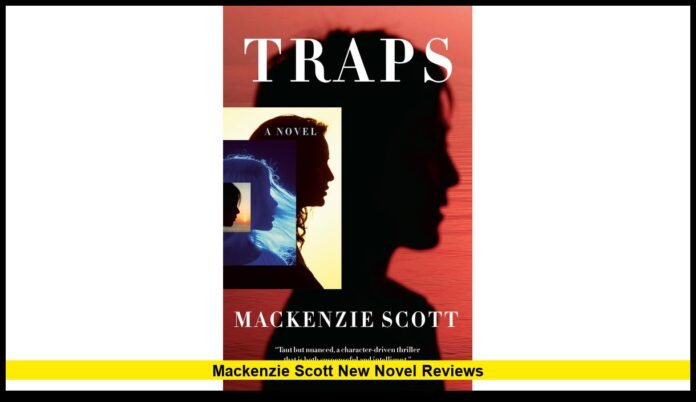
Scott’s return to fiction represents an important moment in her literary career. Before Last Days in Two Nations, she published The Testing of Luther Albright in 2005 and Traps in 2013. Her latest work takes a very different approach from those earlier novels.
The new book presents a fictional America divided between two political systems. Its story unfolds through 18 perspectives, allowing readers to see the fictional conflict through different characters and experiences.
That structure has become one of the most discussed aspects of the book. Some readers may find the multiple viewpoints ambitious and thought-provoking. Others have found the large cast and shifting perspectives difficult to follow.
The response also centers on the book’s ending. Critics have disagreed about whether its uncertainty adds literary depth or leaves too many important questions unresolved.
What Is MacKenzie Scott’s New Novel About?
Last Days in Two Nations (A History in Eighteen Minds) is a dystopian novel set in an imagined version of the United States.
The story describes a country divided into two distinct political entities. One side is known as the Still United states, while the other is the Dakota Membership.
The Dakota Membership operates under the leadership of President Damian Paxton. The government uses authoritarian policies and extensive social control to shape the lives of people living under its rule.
Scott tells the story through 18 different minds. Each perspective provides another piece of the larger political and personal situation.
Rather than following only one central protagonist, the novel moves between characters. Their experiences reveal different reactions to government authority, family relationships, political pressure, and personal survival.
The book also examines extreme government policies involving social engineering, genetic intervention, and eugenic thinking. Those elements form a major part of the dystopian environment.
The result is a politically charged story that focuses on how ordinary people respond when institutions begin controlling increasingly personal areas of life.
Why the Novel Is Receiving Attention
Scott’s return to fiction is itself significant.
Her previous novel, Traps, came out in 2013. Her new book therefore arrives after a long period away from novel writing.
The publication method has also attracted attention.
Instead of working through a conventional major publishing release, Scott published the novel through Substack. She released the work in installments throughout August 2026.
The first installment appeared on August 8. The final installment and epilogue arrived on August 31.
Readers could follow the story as individual installments appeared. The completed project also became available through Scott’s Substack publication in downloadable formats.
That approach gave the author a direct relationship with readers. It also made the release noticeably different from the traditional book-launch model used for many major novels.
The unusual publication strategy has become part of the discussion surrounding the book, although most reviews remain focused on the writing itself.
What Are the Current Mackenzie Scott New Novel Reviews Saying?
The critical response is mixed.
Reviewers have recognized the scale of Scott’s ambition while raising questions about execution. The biggest disagreements involve the novel’s structure, clarity, editing, and conclusion.
One recurring criticism concerns the number of perspectives.
Eighteen viewpoints allow Scott to present a wide range of experiences. However, the approach also requires readers to repeatedly adjust to new characters and circumstances.
Some reviewers believe that this structure strengthens the book because the fictional political crisis does not belong to one person. Instead, it affects an entire society.
Other critics have found the shifts distracting.
The disagreement illustrates why the current reception cannot be reduced to a simple positive or negative verdict. The novel attempts to handle a large political and social story through many individual viewpoints.
That creates both opportunities and challenges for readers.
The 18-Perspective Structure
The subtitle, A History in Eighteen Minds, directly points toward the novel’s central storytelling technique.
Each perspective gives readers another view of the fictional world.
The approach can show how the same political system affects different people. A government decision may appear one way to an official, another way to a parent, and differently again to someone living under direct pressure.
Scott uses those contrasting experiences to build a larger picture.
At the same time, readers must keep track of numerous characters, relationships, and developments.
That demand has become a significant part of the critical discussion.
The structure also affects the pace. Instead of following one continuous character journey, the novel repeatedly moves between individual experiences.
Readers who enjoy large ensemble stories may appreciate that design. Those who prefer a single central narrative may find it harder to maintain a clear connection with the story.
Why the Ending Is Dividing Readers
The conclusion has emerged as one of the most debated parts of the book.
Scott does not resolve every question in a straightforward manner. The ending moves into broader ideas involving memory, history, interpretation, and the way people understand major events.
That decision has divided reviewers.
Some see the uncertainty as an intentional literary choice. From that perspective, the lack of a simple resolution fits a story concerned with competing versions of history and political reality.
Other reviewers believe the ending leaves too many elements unresolved.
The disagreement is important because it reflects two different expectations for the novel.
Readers looking for a clear conclusion may come away frustrated. Readers comfortable with ambiguity may view the ending differently.
The current critical response therefore does not establish one universally accepted interpretation.
Political Themes in the Novel
Politics sits at the center of Last Days in Two Nations.
The Dakota Membership provides the novel’s authoritarian setting. President Damian Paxton leads a government that exercises extensive influence over the population.
Scott uses that fictional system to explore questions about power and control.
The story also examines what happens when political authority moves beyond traditional government functions and begins influencing personal decisions.
Family relationships become especially important.
Parents and children live within a system that can shape their choices. Characters must consider whether cooperation, resistance, or compromise offers the best path forward.
Those decisions create much of the novel’s personal tension.
The book does not rely entirely on large political events. It also examines how political systems affect everyday life.
Family Relationships and Personal Choices
Although the novel has a large political setting, personal relationships remain important.
Characters face difficult decisions involving family, loyalty, safety, and responsibility.
The government structure creates pressure, but individual choices drive much of the story.
Some characters cooperate with the system. Others question it. Some attempt to resist while dealing with the consequences of their decisions.
This creates moral uncertainty throughout the novel.
Scott does not present every character as completely heroic or completely villainous. Instead, many people occupy complicated positions within the fictional society.
That approach adds another layer to the 18-perspective structure.
Each character can have different motivations, fears, and priorities. The larger political conflict therefore becomes a collection of personal stories rather than a single political argument.
Questions About Editing and Presentation
The novel’s presentation has also become part of the review discussion.
Readers received manuscript-style versions of the work through Scott’s Substack publication. The formatting differs from what many readers expect from a traditionally published hardcover or paperback.
Critics have also noted editing concerns, including reported typographical issues.
Those observations have influenced some assessments of the book’s overall polish.
A traditional publishing process usually involves multiple stages of editorial review, copy editing, proofreading, design, and production. Scott’s direct publication route created a different reading experience.
That difference does not change the story itself, but it affects how some reviewers have evaluated the finished work.
The manuscript-like presentation can make the book feel less conventionally produced than a major bookstore release.
For readers, that distinction may influence their overall impression of the novel.
How the New Book Compares With Scott’s Earlier Novels
Scott’s first two novels established a different literary profile.
The Testing of Luther Albright, published in 2005, centered on an engineer whose carefully organized life begins to unravel as his family and surroundings become increasingly unstable.
The book focused heavily on personal relationships and the pressures affecting one family.
Scott’s second novel, Traps, appeared in 2013. It followed four women whose lives became connected through a series of events involving family, travel, danger, and personal transformation.
Last Days in Two Nations takes a much broader approach.
The new novel moves from intimate family-centered storytelling toward a large-scale political dystopia.
Its 18 viewpoints also create a much wider narrative field.
The difference shows that Scott has not simply returned to the same type of fiction she wrote earlier in her career.
Instead, the new novel explores a substantially different setting and storytelling structure.
How the Substack Release Changed the Reading Experience
The publication method is unusual for a major literary release.
Scott serialized the novel on Substack instead of relying on a traditional bookstore launch.
Readers could follow the installments as they appeared throughout August.
That meant the book initially reached its audience in stages rather than as a single conventional publication.
Once the serialization concluded, readers could access the complete work.
The approach also gave Scott greater control over the timing and presentation of the novel.
For readers, however, it created an experience that differed from buying a finished hardcover or paperback from a bookstore.
The release model attracted attention because of Scott’s established literary history and public profile.
It also raised questions about how direct-to-reader publishing may affect the editing and presentation of a major work of fiction.
Is the Story Based on Real People?
The novel has prompted readers to look for connections between its fictional political world and real-world events.
However, those interpretations should remain separate from confirmed information about the book.
The story is fiction. Its characters and political institutions belong to the world Scott created for the novel.
Reviewers may identify parallels with contemporary American politics, but those interpretations do not establish that individual characters represent specific real people.
The same applies to attempts to connect fictional events with current political developments.
Without a confirmed statement from Scott establishing a specific real-world counterpart, such interpretations remain matters of literary analysis rather than established facts.
For readers interested in the book itself, the characters can be considered within the fictional setting Scott created.
How Long Is the Novel?
The book runs at approximately 80,000 words.
Its manuscript-style presentation amounts to roughly 317 pages.
That makes it a substantial novel rather than a short work.
The length also helps explain the scope of the story.
With 18 perspectives and a fictional political system divided between competing territories, Scott has considerable space to explore different characters and events.
The large cast requires readers to invest attention in multiple storylines.
For some, that scale may be one of the book’s strongest qualities. For others, it may contribute to the sense that the narrative sometimes becomes difficult to organize.
What Readers Should Know About the Current Reception
Anyone searching for Mackenzie Scott new novel reviews should expect a divided critical landscape rather than universal agreement.
The book has attracted serious attention because it marks Scott’s return to fiction after 13 years.
Its unusual release method has also made the novel stand out.
But the central issue remains the writing.
Reviewers have recognized its ambition while questioning whether the large structure always produces a clear or satisfying reading experience.
The ending has generated especially strong disagreement.
Some readers may see its ambiguity as part of the novel’s purpose. Others may prefer greater resolution.
The editing and manuscript-style presentation have also influenced some reviews.
Taken together, these factors have created a book that invites discussion even among readers who reach very different conclusions about its success.
Key Facts About Last Days in Two Nations
- Author: MacKenzie Scott
- Title: Last Days in Two Nations (A History in Eighteen Minds)
- Genre: Dystopian fiction
- Release platform: Substack
- Serialization: August 2026
- First installment: August 8, 2026
- Final installment: August 31, 2026
- Length: Approximately 80,000 words
- Manuscript length: Approximately 317 pages
- Number of perspectives: 18
- Previous novel: Traps, published in 2013
- Previous novel before that: The Testing of Luther Albright, published in 2005
Frequently Asked Questions
What is MacKenzie Scott’s latest novel?
MacKenzie Scott’s latest novel is Last Days in Two Nations (A History in Eighteen Minds).
When did MacKenzie Scott release the novel?
Scott began releasing the novel on Substack on August 8, 2026. The final installment and epilogue appeared on August 31, 2026.
What is Last Days in Two Nations about?
The novel depicts a fictional America divided into two political entities. It examines authoritarian government, personal freedom, family relationships, political control, and individual choices.
How many characters tell the story?
The novel uses 18 perspectives, which is reflected in its subtitle, A History in Eighteen Minds.
Why are reviews of the novel mixed?
Reviews have differed over the book’s structure, editing, political themes, presentation, and ending. Some critics recognize its ambition, while others question its clarity and execution.
Why is the ending controversial?
The conclusion leaves some questions open and emphasizes ideas involving history, memory, and interpretation. Critics disagree about whether that ambiguity works effectively.
Is this MacKenzie Scott’s first novel?
No. Scott previously published The Testing of Luther Albright in 2005 and Traps in 2013.
How was the novel published?
Scott released the book directly through Substack in serialized installments rather than following the conventional publishing route used for many major novels.
Is the novel available as a complete work?
Yes. The serialized publication concluded on August 31, 2026, and the completed work is available through Scott’s Substack publication.
What makes the book different from Scott’s earlier fiction?
The new novel has a much larger political and social scope. It also uses 18 perspectives and a dystopian setting, making it substantially different from the more focused narratives of her earlier novels.
Final Takeaway
MacKenzie Scott’s return to fiction has created a literary release that stands apart from her previous novels. Last Days in Two Nations combines dystopian politics, family conflict, authoritarian power, and an 18-perspective narrative while using an unconventional direct-to-reader publishing model.
The critical response remains divided. Reviewers have acknowledged the scale of Scott’s project while debating its structure, editing, presentation, and ambiguous conclusion. Readers now have access to the complete novel and can form their own assessment of the story and its themes.
Have you read Last Days in Two Nations? Share your thoughts on Scott’s latest novel and its reception, and stay connected for the latest updates.