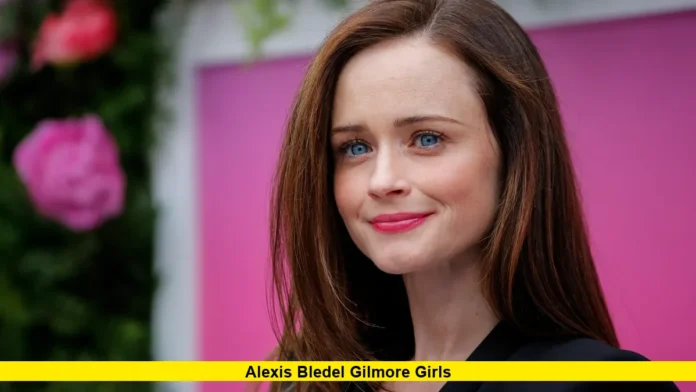

Alexis Bledel Gilmore Girls fans have a fresh reason to revisit Stars Hollow after Bledel recently explained why the beloved series continues to connect with viewers nearly two decades after its original run ended.
Bledel, who played Rory Gilmore throughout the show’s seven-season run, reflected on the enduring appeal of Gilmore Girls in a recent interview with The New York Times. Her comments arrived as the publication included the series in its new list of the 100 best television shows of the 21st century.
The recognition has renewed attention on a series that first premiered in 2000 and concluded its original broadcast run in 2007. Bledel’s explanation focused on several qualities that helped the show remain recognizable and relatable across different generations.
Among them are the show’s rapid-fire conversations, stories about growing up, family relationships, romance and the challenges faced by a single mother.
Alexis Bledel Explains Why Gilmore Girls Still Works
For Bledel, the lasting appeal of Gilmore Girls comes from the combination of familiar life experiences and a distinctive storytelling style.
She pointed to the show’s unusually fast dialogue as one reason viewers continue returning to it. The conversations often move quickly, with characters trading references, jokes and emotional observations in rapid succession.
Bledel also highlighted themes that do not depend on a particular era. Rory’s experiences with adolescence, education, relationships and adulthood give viewers different points of connection depending on where they are in life.
Lorelai Gilmore’s story adds another layer. As Rory’s mother, she faces the responsibilities of raising a daughter while building a career and managing complicated relationships with family members.
Bledel described the show’s combination of teen experiences, single-mother life, romance and multigenerational family drama as part of what keeps audiences coming back.
That explanation helps put the show’s continued popularity into perspective. While some elements of early-2000s television can feel dated, the central relationships in Gilmore Girls remain easy for viewers to recognize.
Gilmore Girls Earns New Recognition in 2026
The timing of Bledel’s comments is significant because Gilmore Girls has just received recognition from The New York Times.
The newspaper’s 2026 project, The 100 Best TV Shows of the 21st Century, surveyed more than 500 actors, showrunners, craftspeople, executives and other television professionals. The eligible shows had to premiere on or after January 1, 2000.
Gilmore Girls appeared at No. 99 on the list.
The placement itself is only one part of the significance. The project gives the series another major piece of recognition more than 25 years after its premiere.
The New York Times described the show as a series built around low-stakes drama, quick dialogue and a cozy atmosphere. It also noted the show’s continued association with autumn nostalgia and the interest it has generated in Washington, Connecticut, which served as inspiration for Stars Hollow.
Bledel was among the television professionals who participated in the broader voting process. Her inclusion adds another personal connection to the list because she experienced the series both as its star and as a viewer of the television landscape that followed it.
Rory Gilmore Remains at the Center of the Conversation
Bledel’s connection to Gilmore Girls is inseparable from Rory.
When the series began, Rory was a teenager navigating school, friendships, romance and her ambitions for the future. Her relationship with Lorelai provided the emotional foundation for much of the series.
Over seven seasons, viewers watched Rory move from high school to Yale and begin establishing herself as a young adult. Her ambitions and setbacks became central parts of the story.
That progression also allowed different audiences to connect with the character at different stages.
Younger viewers could recognize Rory’s uncertainty about school, friendships and relationships. Older viewers could see themselves in Lorelai’s concerns as a parent or in the challenges surrounding family expectations.
The show did not require every viewer to have the same experience. Instead, it presented several generations of characters dealing with overlapping but different stages of life.
That structure is one reason the series can continue to attract viewers who were not alive when it premiered.
The Fast Dialogue Became a Signature
Few elements define Gilmore Girls more clearly than its dialogue.
Characters routinely speak at a pace that is faster than conventional television conversation. References to books, movies, music, television and popular culture are woven into everyday exchanges.
The style was closely associated with creator Amy Sherman-Palladino’s approach to the series.
The dialogue gave Stars Hollow a particular rhythm. Even ordinary conversations could become memorable because characters rarely communicated in straightforward, predictable ways.
Bledel’s comments point to an important distinction: the show’s dialogue feels stylized, but the emotions underneath it remain familiar.
A conversation between Rory and Lorelai can move from humor to disagreement within moments. Their arguments often involve ordinary family concerns rather than enormous dramatic twists.
That balance gives the series a sense of intimacy.
The Mother-Daughter Relationship Remains the Emotional Core
At the heart of Gilmore Girls is the relationship between Rory and Lorelai.
Their bond is affectionate, complicated and occasionally difficult. The two characters are exceptionally close, but the series never presents their relationship as perfect.
Lorelai wants Rory to have opportunities that she did not have. Rory, meanwhile, wants to make her own decisions while still maintaining her connection to her mother.
Their different perspectives create many of the show’s most important conflicts.
The relationship also changes as Rory grows older. The early seasons emphasize Lorelai’s role as a protective mother and Rory’s role as her teenage daughter. Later episodes explore what happens when Rory begins making independent choices.
That evolution gives the series a built-in way to address adulthood without abandoning its original emotional foundation.
Multigenerational Family Drama Adds Another Layer
The show also benefits from the relationship between Rory, Lorelai and Emily Gilmore.
Emily represents a very different generation and worldview. Her relationship with Lorelai is shaped by years of disagreements, expectations and unresolved family history.
Rory often becomes the point of connection between them.
This three-generation structure allows the series to explore questions about parenting, independence, tradition and personal identity.
It also prevents the story from becoming solely about Rory’s teenage experiences.
As Rory grows older, the audience can see how family expectations influence her decisions. At the same time, Lorelai’s relationship with Emily continues to evolve.
Those themes remain recognizable because family disagreements rarely disappear simply because people get older.
Romance Is Part of the Formula, But Not the Whole Story
Romance has always been an important part of Gilmore Girls, particularly through Rory’s relationships and Lorelai’s long-running romantic storyline.
However, the series consistently gives romance room alongside friendships, education, work and family.
Rory’s relationships with Dean Forester, Jess Mariano and Logan Huntzberger became major parts of the show’s fandom. Each relationship reflected a different period of Rory’s development.
Lorelai’s relationships also played a major role, especially her long-running connection with Luke Danes.
The romantic stories created plenty of debate among viewers, but the broader structure of the series kept returning to relationships of many kinds.
That variety is important to its longevity.
Viewers can watch for the romance, the family drama, the humor, the friendships or the atmosphere without relying on a single storyline to carry the entire series.
The Series Found a New Generation Through Streaming
The original Gilmore Girls finale aired in 2007, but the series did not disappear.
Streaming introduced the show to viewers who had never watched it during its original broadcast. That helped transform the series from a television favorite of the early 2000s into a recurring comfort watch for new audiences.
Its seasonal atmosphere has also become closely associated with fall viewing.
Stars Hollow’s fictional small-town setting, coffee-shop conversations, colorful residents and changing seasons provide a visual identity that works particularly well for repeat viewing.
The show’s relatively self-contained stories also make it easy for audiences to return to familiar episodes.
Alexis Bledel Returned as Rory for Netflix
Bledel’s most significant return to the character came with Gilmore Girls: A Year in the Life in 2016.
The four-part Netflix revival reunited Bledel with Lauren Graham, Kelly Bishop and much of the original cast. The story jumped forward almost a decade and followed Rory and Lorelai as their lives entered new stages.
The revival allowed viewers to see Rory as an adult rather than as the teenager they remembered from the original series.
Its ending generated substantial discussion because Rory revealed that she was pregnant in the final moments.
Bledel later acknowledged that the ending surprised her. She had hoped Rory would finish her story in a more settled place, but she ultimately trusted Sherman-Palladino’s creative decision.
The revival remains the most recent completed continuation of Rory’s story on screen.
What Alexis Bledel’s Comments Say About the Show Today
Bledel’s latest comments are notable because they do not reduce the show’s appeal to nostalgia alone.
Nostalgia certainly plays a role in the continuing popularity of Gilmore Girls. The series has a recognizable setting, memorable characters and a distinct early-2000s identity.
But Bledel’s explanation points toward something broader.
The show combines an old-fashioned conversational style with experiences that remain familiar. Teenagers still face pressure about school and relationships. Parents still worry about their children’s futures. Families still struggle with expectations across generations.
Those subjects do not become irrelevant simply because the technology, fashion or cultural references surrounding them change.
That helps explain why the series can feel both firmly connected to its original era and surprisingly contemporary.
Why Gilmore Girls Continues to Matter to Fans
The renewed attention surrounding the series in 2026 demonstrates that its cultural presence has not faded.
The New York Times recognition places the series within a larger conversation about influential television from the 21st century. Bledel’s participation makes that recognition particularly meaningful because she helped create one of the show’s defining performances.
Her Rory Gilmore remains strongly associated with books, ambition, complicated relationships and the transition from adolescence to adulthood.
At the same time, Rory was never presented as perfect. Her mistakes became part of the character’s development, which allowed viewers to follow her through both successes and disappointments.
That imperfection is another reason the character remains recognizable.
A Show That Grew With Its Audience
Perhaps the clearest explanation for the show’s staying power is that Gilmore Girls gives viewers something different at different ages.
A teenager might focus on Rory’s school life and relationships. A college student might identify with her changing ambitions. A parent might connect more strongly with Lorelai. Another viewer might recognize aspects of Emily’s perspective.
The same episode can therefore produce a different reaction years later.
Bledel’s own experience mirrors that passage of time. She began playing Rory at 18 and later returned to the character as an adult.
Her recent reflection on the show’s longevity recognizes the unusual relationship between the performers, the characters and the audience.
Alexis Bledel and the Enduring Legacy of Rory Gilmore
More than 25 years after Gilmore Girls premiered, Rory Gilmore remains one of Bledel’s defining roles.
The show’s inclusion in The New York Times 2026 television project has brought renewed attention to the series and to the qualities Bledel believes have kept it relevant.
Her explanation is rooted in the show’s combination of quick dialogue, family relationships, romance and recognizable life experiences.
Those ingredients helped Gilmore Girls establish its identity in the early 2000s. Streaming later introduced the series to a wider audience, while the 2016 revival gave longtime viewers another chapter.
Today, the series continues to invite new viewers into Stars Hollow while giving longtime fans another reason to revisit Rory, Lorelai and the people around them.
As Alexis Bledel’s latest comments remind fans, the magic of Gilmore Girls comes from stories that can change meaning as viewers grow older—so share your favorite Rory moment and keep following the latest updates from Stars Hollow.