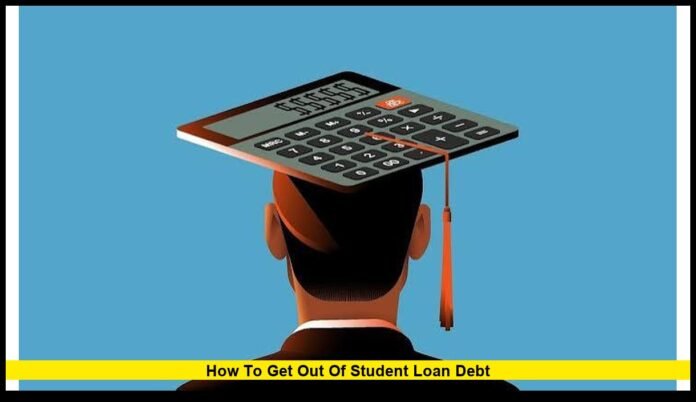

How to get out of student loan debt has become a pressing question for millions of Americans as federal repayment rules undergo major changes in 2026. Borrowers are now dealing with new repayment options, the end of the SAVE Plan, changing forgiveness rules, and important deadlines that could affect monthly payments.
The federal student loan system changed substantially on July 1, 2026. Two new repayment options became available: the Repayment Assistance Plan and the Tiered Standard Plan. At the same time, borrowers enrolled in SAVE are being required to move to another repayment option.
For borrowers trying to reduce their balances, the biggest mistake is assuming that an older repayment strategy still applies. Loan type, disbursement date, income, family size, employment and repayment history can all affect available choices.
The current environment also makes it important to check official loan information instead of relying on old repayment estimates or information posted before the 2026 changes.
Why Student Loan Repayment Looks Different in 2026
Federal student loan repayment is no longer built around the same group of plans that borrowers became familiar with during previous years.
The new system includes RAP and the Tiered Standard Plan. Existing borrowers may still qualify for certain other plans depending on when their loans were disbursed and what type of loans they have.
The changes are particularly important for borrowers who were enrolled in SAVE. That plan is no longer available following a federal court order, and affected borrowers must select another eligible repayment plan.
Loan servicers began sending notices to borrowers affected by the transition. The notice provides a specific period for choosing another plan.
Borrowers who do not take action can eventually be moved into a different repayment arrangement. That could produce a monthly payment that is substantially different from what they previously expected.
The First Step Is Knowing Exactly What You Owe
Before changing a repayment plan, borrowers should establish a clear picture of their current loans.
The StudentAid.gov dashboard can show important information about federal loans, including balances, loan types and current repayment plans.
A borrower should review:
- Total federal student loan balance
- Individual loan balances
- Interest rates
- Current repayment plan
- Monthly payment
- Loan disbursement dates
- Whether loans are current or in default
- Previous qualifying payments
- Potential forgiveness eligibility
This information matters because two borrowers with the same balance can have very different repayment options.
For example, a borrower with newer Direct Loans may face different plan availability than someone with older federal loans. Parent PLUS borrowers also have separate restrictions.
Getting the loan information correct is therefore the foundation for making any repayment decision.
What the New Repayment Assistance Plan Means
The Repayment Assistance Plan, commonly called RAP, is one of the most significant changes introduced in 2026.
RAP bases monthly payments on income and family circumstances. Depending on income, the required payment can range from 1% to 10% of the borrower’s income. The plan also provides a $50 monthly reduction for each dependent under its rules.
Payments can be as low as $10.
One of the most important features involves unpaid interest. Eligible borrowers who make their required payments can receive an interest benefit designed to prevent unpaid monthly interest from continuing to increase the balance.
RAP also contains a principal matching feature. When an eligible borrower’s payment reduces principal by less than $50, the government can contribute up to $50 toward principal each month under the applicable rules.
That structure is important for borrowers whose income makes it difficult to make large monthly payments.
However, a lower payment does not automatically mean the borrower will repay the debt faster. Borrowers should compare the monthly amount, repayment period and potential remaining balance before selecting a plan.
The Tiered Standard Plan Offers Fixed Payments
Not every borrower wants an income-based repayment arrangement.
The Tiered Standard Plan provides another option for eligible borrowers. Instead of adjusting payments directly according to income, the plan uses fixed repayment periods based on the amount borrowed.
Depending on the applicable balance level, repayment can extend for 10, 15, 20 or 25 years.
A longer repayment period can reduce the required monthly payment compared with a shorter term. However, extending the repayment period can also mean making payments for a longer period.
Borrowers should therefore compare the total projected cost instead of looking only at the monthly bill.
The choice between an income-based plan and a fixed-payment plan depends on the borrower’s circumstances. Income stability, loan balance and long-term repayment goals all matter.
What Happens to Borrowers Leaving SAVE
The end of SAVE is one of the biggest issues facing federal student loan borrowers right now.
Borrowers enrolled in SAVE are being notified that they need to choose another repayment plan. The transition is happening in batches, so not every borrower receives the same deadline at the same time.
The first group of borrowers has deadlines approaching in late September.
Reports in September indicate that millions of borrowers remain in the transition process, while some borrowers have already selected new repayment plans. Some borrowers have also reported account and billing issues during the transition.
That makes it especially important to keep copies of notices and check the account after submitting a new repayment application.
Borrowers should not assume that a pending application automatically means their account has been successfully moved to the new plan.
How Income Can Affect Monthly Payments
Income remains central to many federal repayment options.
For borrowers using RAP, income determines the basic payment calculation. Family size also matters because qualifying dependents can reduce the required payment.
A borrower whose income has fallen may also have options to recalculate an income-driven payment rather than waiting for the next annual certification date.
This can be particularly important for people whose financial circumstances have changed since their previous income information was used.
Borrowers should keep income documentation available. Tax information, income records and family-size information can become important during the application and annual renewal process.
Missing an annual renewal can also create problems. A payment can increase if the borrower fails to recertify on time.
Public Service Loan Forgiveness Can Be a Separate Path
Public Service Loan Forgiveness remains an important consideration for borrowers employed by qualifying government and nonprofit organizations.
The program generally requires 120 qualifying monthly payments while meeting the applicable employment and loan requirements.
The payments do not have to be consecutive. However, borrowers must continue meeting the program requirements when seeking forgiveness.
PSLF is particularly relevant when deciding whether to make aggressive extra payments.
A borrower who expects to receive forgiveness may approach repayment differently from someone who plans to pay the entire balance personally.
Borrowers should track qualifying employment and payment records carefully. Current administrative delays have also made it important for borrowers to keep their own documentation rather than relying solely on an online payment counter.
Borrowers in Default Have Different Priorities
Default can significantly restrict repayment choices.
Defaulted federal loans are not generally eligible for income-driven repayment until the borrower resolves the default.
One possible route is loan rehabilitation. Another may be consolidation, depending on the borrower’s loans and circumstances.
Rehabilitation can allow an eligible borrower to restore the loan to good standing after completing the required payments under a rehabilitation agreement.
Once the default is resolved, the borrower may regain access to repayment options that were previously unavailable.
Ignoring a default is unlikely to solve the underlying debt problem. Collection activity, credit consequences and other financial complications can follow.
Borrowers who are already in default should focus first on understanding the available path back into the federal repayment system.
Can Paying Extra Reduce Student Loan Debt Faster?
Borrowers who have enough income to pay more than the required amount may consider additional payments.
Extra payments can reduce principal faster. A lower principal balance can mean less interest accumulates over time.
But extra payments are not automatically the right move for every borrower.
Someone pursuing PSLF or another forgiveness program may need to consider whether aggressively reducing the balance changes the potential benefit of eventual forgiveness.
The same issue can arise for borrowers who qualify for an income-driven plan with a future discharge.
Before sending additional money, borrowers should understand how their repayment plan works and whether forgiveness is part of their long-term strategy.
The 1% Auto Pay Interest Reduction Is Important
Another 2026 change could help eligible borrowers reduce interest costs.
Federal student loan borrowers enrolled in auto pay can receive a temporary 1 percentage-point interest-rate reduction under the current program.
Borrowers already enrolled can qualify, while others must enroll by September 30, 2026, to receive the temporary benefit under the announced rules.
The reduction is scheduled to continue through June 30, 2028, for eligible borrowers.
This does not eliminate student loan debt. However, reducing the interest rate can allow more of a payment to go toward the underlying balance.
Borrowers should check with their loan servicer to confirm eligibility and make sure the bank account connected to auto pay is accurate.
Consolidation May Help, but It Requires Care
Federal consolidation combines eligible federal loans into one Direct Consolidation Loan.
The result can simplify repayment by replacing multiple loan payments with one payment.
Consolidation can also affect eligibility for certain repayment plans. However, borrowers should not consolidate simply because they want a single bill.
The terms of the new loan, interest calculation and treatment of previous qualifying payments can matter.
Parent PLUS borrowers need particular caution because special rules apply to these loans.
Anyone considering consolidation should review the current federal rules and compare the consequences before submitting an application.
A Simple Checklist for Borrowers
Borrowers who want to make progress should start with the basics.
1. Check your StudentAid.gov account.
Confirm balances, loan types and repayment status.
2. Identify your current repayment plan.
Determine whether your loans are affected by the end of SAVE or another plan change.
3. Review your available plans.
Use the federal repayment calculator to see which options apply to your loans.
4. Compare monthly payments.
Look beyond the first payment and examine how the amount could change over time.
5. Check forgiveness eligibility.
Review PSLF and other applicable federal discharge programs.
6. Resolve default if necessary.
Defaulted borrowers should examine rehabilitation or consolidation options.
7. Consider auto pay.
Eligible borrowers may qualify for the temporary 1% interest-rate reduction.
8. Save your records.
Keep copies of applications, payment confirmations, employment certifications and servicer communications.
Why Borrowers Should Act Before a Deadline Arrives
Student loan deadlines can create problems when borrowers wait until the final days.
A repayment application may require processing time. Account information may also take time to update.
Borrowers affected by the SAVE transition should pay close attention to the deadline included in their servicer notice.
The September 30 deadline for the 1% auto-pay interest reduction is also approaching. Borrowers who qualify should review the program before the deadline rather than assuming the reduction will happen automatically.
Checking an account early also gives borrowers more time to challenge an incorrect balance or payment amount.
The Biggest Mistake Is Ignoring the Loan Account
Student loan balances can change because of interest, payments, capitalization and repayment-plan changes.
A borrower who does not regularly check the account can miss an important notice.
This is especially relevant in 2026 because the federal repayment system is undergoing a major transition.
Borrowers should watch for messages from their servicer, review their StudentAid.gov information and keep documentation of major account changes.
If a payment amount looks wrong, borrowers should contact the servicer promptly and retain records of the conversation.
What Borrowers Should Watch Next
The student loan system is continuing to change.
The transition away from SAVE remains one of the most important developments for borrowers. New repayment plans are also changing how future borrowers and existing borrowers approach monthly payments.
PSLF processing is another area borrowers are watching closely, particularly those who have reached or are approaching 120 qualifying payments.
At the same time, the temporary auto-pay interest reduction provides a specific opportunity for eligible borrowers through the September 30 enrollment deadline.
For anyone carrying federal student loans, the best approach is to focus on the information that applies directly to their own account.
Loan type, balance, income and repayment history can make a major difference. A strategy that works for one borrower may not work for another.
The goal is not simply to reduce the next monthly bill. It is to understand the repayment path, avoid unnecessary interest, preserve eligible forgiveness opportunities and keep the account in good standing.
As federal rules continue to evolve, borrowers who regularly review their repayment status will be better positioned to respond when another change takes effect.
FAQ
1. What should I do first to reduce my student loan debt?
Start by checking your federal loan balance, loan type, repayment plan and current payment. Then compare the plans available for your specific loans.
2. What happened to the SAVE Plan?
SAVE is no longer available. Borrowers affected by the change must select another eligible federal repayment plan after receiving instructions from their loan servicer.
3. Can RAP help reduce student loan payments?
RAP bases payments on income and family circumstances. Eligible borrowers may also receive interest and principal benefits under the plan’s rules.
Disclaimer: This article is provided for general informational and educational purposes only and should not be considered financial, legal, tax, or student loan advice. Federal student loan programs, repayment plans, eligibility requirements, interest rates, deadlines, and forgiveness rules may change. Individual circumstances vary based on loan type, balance, income, employment, repayment history, and other factors. Readers should verify current information through official federal sources and their loan servicer before making decisions about repayment, consolidation, rehabilitation, or forgiveness.
Are you dealing with a changing student loan payment or a new repayment plan in 2026? Share your experience in the comments and stay informed about the latest developments that could affect your student debt.