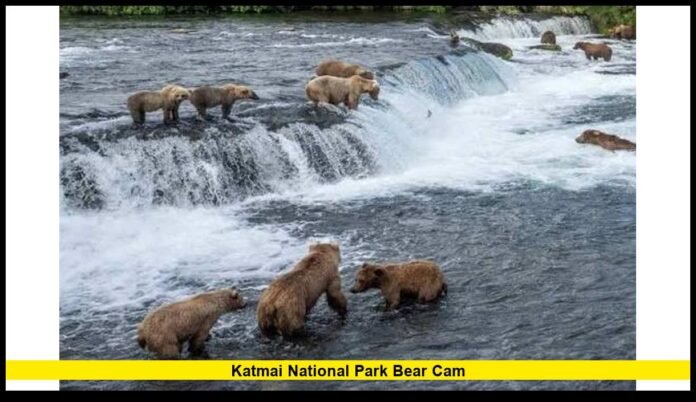

Katmai National Park Bear Cam viewers are getting another close look at Alaska’s brown bears as the 2026 viewing season reaches an important point. The live cameras at Brooks River are showing bears fishing, resting, interacting with one another and building the body reserves they need before winter.
The 2026 camera season began June 23 and has continued through the summer and early fall. Viewers can watch several locations around Brooks River, including Brooks Falls, the lower river, the Riffles and other viewpoints.
September is particularly significant because the bears are approaching the end of their most intensive feeding period. It is also the month when Fat Bear Week brings renewed attention to individual bears and their physical condition.
The 2026 Fat Bear Week competition is scheduled to begin September 22 and conclude September 29. The official contestant bracket is scheduled for release September 18.
What the 2026 Katmai Bear Cam Season Is Showing
The cameras provide a continuous look at wild brown bears in one of Alaska’s most productive salmon habitats.
Unlike a traditional wildlife program, the livestream does not follow a predetermined script. Bears decide where they go, how long they remain in one location and how they respond to other animals.
That can make every viewing session different.
A bear may spend several minutes standing in the river waiting for a salmon. Another may move through the same area before disappearing into the surrounding vegetation.
At Brooks Falls, viewers can see bears using different fishing techniques. Some position themselves directly in the rushing water, while others wait in areas where salmon are easier to catch.
The behavior also changes as the season progresses.
During the height of the salmon run, fishing can become extremely competitive. Bears may defend productive locations or move to other sections of the river when preferred spots become crowded.
Brooks Falls Remains the Center of the Live Bear Action
Brooks Falls is the location most closely associated with Katmai’s livestreams.
The waterfall creates a natural obstacle for salmon traveling upstream. Bears use this location to intercept fish as they attempt to move through the falls.
During peak periods, numerous bears can gather around the waterfall.
Large adult bears often occupy valuable fishing positions, while younger or smaller animals may search for opportunities elsewhere.
The result is a constantly changing scene.
One of the most interesting aspects of the livestream is that viewers can watch bears develop individual fishing habits. Some animals wait patiently in one position, while others move around in search of a better opportunity.
The falls also provide a dramatic setting for watching bears prepare for winter.
A successful fishing season allows the animals to accumulate substantial fat reserves. Those reserves become particularly important after the bears leave the river and enter their winter dens.
Different Cameras Offer Different Views
The Katmai camera network includes several viewpoints, allowing viewers to see more than the famous waterfall.
The Brooks Falls camera focuses on the main fishing area. It is often the first destination for people who want to watch bears catching salmon.
The Brooks Falls Low Camera provides a lower perspective of the waterfall. This view can bring the bears closer to the center of the action when they occupy the fishing area.
The River Watch Cam looks across the lower portion of Brooks River. This area is especially useful for observing mothers and cubs.
The Riffles camera covers another section of the river. Bears that are not using the waterfall can sometimes be observed feeding or traveling through this area.
Dumpling Mountain offers a broader landscape view. Instead of focusing exclusively on individual bears, this camera can show the surrounding Katmai landscape and nearby features.
Together, the cameras create a more complete picture of bear activity across Brooks River.
September Brings a Major Change in Bear Behavior
September marks a transition in the annual bear cycle.
After spending much of the summer feeding heavily, bears are approaching the period when they will leave their feeding areas and eventually settle into winter dens.
The animals need substantial energy reserves to survive the months ahead.
That is why body size becomes so noticeable during the later part of the season.
A bear that looked considerably leaner in early summer can appear dramatically heavier by September.
The change is not simply cosmetic. Fat reserves help bears survive winter when regular feeding stops.
This biological process is the reason Fat Bear Week focuses on body condition rather than conventional wildlife characteristics.
The competition celebrates bears that have successfully accumulated the reserves necessary for the winter period.
Fat Bear Week 2026 Is Approaching
The next major event on the calendar is Fat Bear Week 2026.
The competition is scheduled to run from September 22 through September 29.
The official tournament bracket is scheduled to be revealed September 18. That announcement identifies the bears selected for the competition and establishes the matchups for the opening round.
Voting begins September 22.
The tournament uses a bracket format. Bears compete head-to-head, with public voting determining which animal advances through each round.
The competition eventually reaches the championship matchup on September 29.
There is no voting during the September 26-27 weekend. Voting resumes for the later stages of the tournament before the final result is announced.
For people who have been following the live cameras throughout the summer, the tournament provides a different way to engage with the individual bears they have watched.
Chunk Remains One of the Most Recognizable Bears
Bear 32, known as Chunk, remains one of the best-known individuals associated with recent Fat Bear Week competitions.
Chunk won the 2025 competition after receiving 96,350 votes.
His victory followed a season in which viewers watched him overcome an apparent jaw injury while continuing to feed and gain weight.
His story became one of the memorable parts of the 2025 competition because his condition did not prevent him from successfully navigating the feeding season.
Chunk has also been seen during the 2026 season.
His appearance has generated renewed interest among people who remember his previous Fat Bear Week run.
However, a bear’s popularity or previous championship does not automatically place it in the new tournament. The official 2026 bracket determines which animals will compete.
That makes the September 18 bracket announcement an important moment for viewers following the competition.
Cubs Add Another Dimension to the 2026 Season
Young bears are also attracting attention around Brooks River this year.
Katmai National Park officials have reported seeing more cubs at Brooks Camp than they have seen in a long time.
Cubs experience the river environment differently from adult bears.
They must learn how to move through difficult terrain, locate food and respond to the presence of larger animals.
Mothers remain responsible for protecting and guiding them.
The lower portion of Brooks River can provide opportunities to observe these family groups through the live camera system.
Watching cubs alongside their mothers also highlights the different stages of a bear’s development.
A young bear may have very different feeding opportunities from a large adult male. Family groups must often balance access to food with safety.
The Salmon Run Drives the Action
Salmon are at the center of the seasonal activity captured by the cameras.
Their movement through Brooks River creates feeding opportunities for the bears.
The timing and availability of salmon influence where bears spend their time.
When fishing is productive, bears can remain near the river for long periods. As conditions change, they may move between different areas.
Later in the season, bears can also feed on salmon that have died after completing much of their migration.
This creates a different type of feeding opportunity from the fast-moving fish available earlier in the season.
The cameras allow viewers to observe these changes without needing to visit Alaska.
Millions of People Are Watching
The online audience for the Brooks Falls livestream has grown substantially.
During a period from June 22 through August 4, 2026, the Brooks Falls bearcam recorded about 7.3 million views.
That represented a significant increase compared with the same period in previous years.
The numbers demonstrate the enormous audience that has developed around the Katmai cameras.
A remote river in Alaska can now be watched by people across the United States and around the world.
For many viewers, the livestream has become a seasonal tradition.
People may check the cameras during a lunch break, watch the falls in the evening or return repeatedly throughout the summer to follow familiar bears.
Why the Live Feed Is Different From Fat Bear Week
The livestream and Fat Bear Week are connected, but they offer different experiences.
The cameras provide ongoing observations of bears.
Fat Bear Week creates a short competition centered on selected individuals.
A viewer watching the livestream may see dozens of bears over the course of the season. Only a smaller group enters the annual competition.
That distinction is important when discussing individual bears.
Seeing a bear regularly on camera does not necessarily mean that animal will appear in the tournament.
The official selection determines the competition field.
The live cameras remain valuable even outside the voting period because they show behavior that cannot be captured through a single photograph.
How U.S. Viewers Can Follow the Cameras
The livestreams can be watched online through the Katmai webcam network and Explore.org.
The National Park Service generally operates the camera season from late June into early October.
Availability can vary by camera and operating conditions.
Viewers interested in fishing activity will generally want to check the Brooks Falls feeds.
Those interested in families and cubs can look toward the River Watch view.
The Riffles provides another opportunity to see bears away from the main waterfall, while Dumpling Mountain provides a wider landscape perspective.
Because these are live wildlife cameras, there can be periods when no bear appears.
That is normal.
The animals move freely through the habitat, and their locations change throughout the day.
The 2026 Season Is Entering Its Final Stage
The arrival of Fat Bear Week signals that the summer viewing season is moving toward its final stage.
The bears have spent months taking advantage of the salmon run.
Their bodies now reflect the food they have consumed.
As autumn advances, the animals will increasingly prepare for the winter period.
For viewers, that creates a limited opportunity to observe the final portion of the annual feeding season.
The cameras also provide a record of how dramatically the bears can change during a single summer.
Early-season footage and September footage can look remarkably different.
That transformation is one of the central reasons people return to the cameras year after year.
What to Watch as Fat Bear Week Gets Closer
The next major date is September 18, when the 2026 Fat Bear Week bracket is scheduled to be revealed.
After that, attention will shift toward the opening voting rounds beginning September 22.
Viewers who have followed the Katmai cameras throughout the season may already recognize some of the bears selected for the competition.
The tournament will then narrow the field until the championship on September 29.
Meanwhile, the live cameras will continue showing daily activity around Brooks River.
That means viewers can follow both sides of the story: the public competition and the natural behavior taking place away from the voting process.
The bears themselves remain focused on the same priority they have had throughout the season — feeding and building enough reserves for winter.
Where Is Katmai National Park Located?
Katmai National Park is one of Alaska’s most remote and remarkable destinations, and its location helps explain why the park’s brown bears have become such a major attraction for wildlife viewers. The park sits in southwestern Alaska on the Alaska Peninsula, across Shelikof Strait from Kodiak Island. Its remote setting includes vast wilderness, rivers, lakes, mountains and coastal areas, with Brooks River among the best-known locations for observing brown bears. Because Katmai is not connected to Alaska’s road system, most visitors reach the park by air or water, making it very different from national parks that can be reached by highway. Brooks Camp serves as the main visitor area for people traveling to see the bears around Brooks River and Brooks Falls. The same remote landscape is also home to the popular live bear cameras, which allow viewers to watch wild brown bears fishing for salmon without traveling to Alaska. Understanding where Katmai National Park is located provides useful context for anyone interested in the park’s famous bear population, its livestreams and the seasonal activity around Brooks River. For more information about the park’s geography, access, nearby communities and what makes its location unique, read our complete guide to where Katmai National Park is located.
Katmai’s Bear Cameras Continue to Bring Alaska to Viewers
The 2026 Katmai camera season has given viewers another opportunity to watch brown bears in their natural environment.
From the fishing platforms at Brooks Falls to the family groups along the lower river, each camera provides a different look at the animals and their seasonal routine.
September now brings the added excitement of Fat Bear Week.
With the 2026 bracket scheduled for release on September 18 and public voting beginning September 22, the coming days will bring increased attention to the bears that have spent the summer feeding along Brooks River.
For viewers in the United States, the cameras offer an unusually direct way to follow that seasonal transformation from home.
Which Katmai bear are you watching this season? Share your favorite bear-cam moments in the comments and stay tuned as the 2026 season reaches its biggest days.