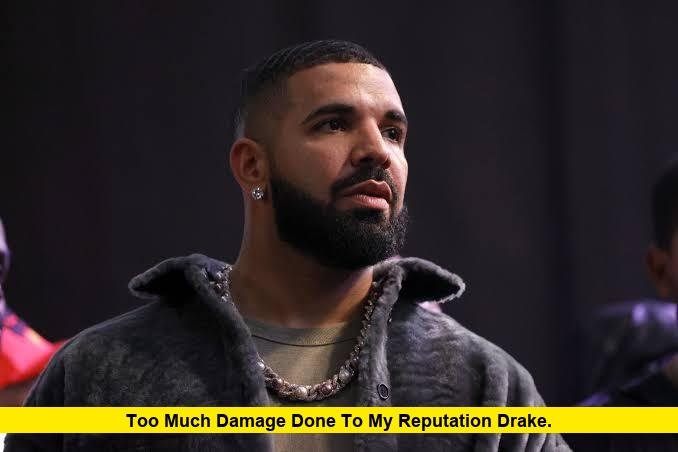

The search for too much damage done to my reputation drake is closely connected to the fallout from Drake’s highly publicized 2024 feud with Kendrick Lamar, particularly the impact of Lamar’s “Not Like Us” and the legal battle that followed. Drake has disputed the allegations made in the song, while a federal judge later dismissed his defamation lawsuit against Universal Music Group. As of the latest update, Drake is appealing that decision.
The controversy has continued to shape conversations about Drake’s public image, even as he has remained commercially active. In 2026, he released his solo album ICEMAN and continued building new creative projects.
Why Drake’s Reputation Became a Major Topic
Drake’s reputation became a central issue during his 2024 rap battle with Kendrick Lamar. What began as a competitive exchange between two of hip-hop’s biggest names quickly escalated into a series of highly personal diss tracks.
Over a period of roughly 16 days, the two artists exchanged multiple songs. The lyrics moved beyond competition over musical status and included serious personal accusations.
Lamar’s “Not Like Us” became the most commercially successful and culturally visible part of the dispute. The song included allegations about Drake that he has denied.
The record also became a major mainstream event. It won five Grammy Awards in 2025 and was performed by Lamar during the Super Bowl LIX halftime show.
That exposure meant the controversy reached audiences well beyond hip-hop. For many listeners who had not followed the earlier stages of the feud, “Not Like Us” became their primary introduction to the dispute.
What Drake Actually Claimed About the Damage
The phrase too much damage done to my reputation drake should not be treated as a confirmed quotation from Drake.
The verified connection comes from Drake’s legal case against Universal Music Group. His lawsuit argued that the company’s distribution and promotion of “Not Like Us” contributed to reputational and financial harm.
Drake’s legal team argued that the song communicated allegations about him as though they were factual. They also argued that UMG knowingly promoted material they considered defamatory.
The case therefore turned a highly publicized rap feud into a legal dispute over reputation, free expression and the meaning of lyrics in a diss track.
Drake did not sue Kendrick Lamar in that federal case. Instead, he sued UMG, the major record company involved with both artists.
What Happened With Drake’s UMG Lawsuit
Drake filed his federal lawsuit against UMG in January 2025. The case centered on “Not Like Us” and allegations that UMG had promoted the song despite the reputational harm Drake said it caused.
UMG disputed Drake’s position and argued that the song existed within the established context of a rap battle. The company maintained that the lyrics should not be treated as conventional factual statements.
In October 2025, U.S. District Judge Jeannette Vargas dismissed Drake’s lawsuit.
The judge concluded that the disputed lyrics represented nonactionable opinion rather than verifiable factual assertions. The decision emphasized the broader context of an intense rap battle, where exaggerated and inflammatory language is expected.
That ruling did not establish that the accusations made about Drake were true. Instead, it addressed whether the disputed lyrics could legally support Drake’s defamation claims against UMG.
This distinction is important when discussing Drake’s reputation. A court dismissing a defamation case does not mean the allegations in a song were proven true. It means the legal requirements for the particular claim were not satisfied.
Drake Appealed the Decision
The legal dispute did not end with the October 2025 dismissal.
Drake appealed to the U.S. Court of Appeals for the Second Circuit. His lawyers argued that the lower court had applied the law incorrectly and that the lyrics should not automatically receive protection simply because they appeared in a rap battle.
The appeal continued through 2026.
Written arguments were filed by both sides, with Drake submitting his reply brief in April 2026. The appeal remained pending in the latest available court-docket information.
That means there has not yet been a final appellate resolution establishing whether Drake’s case should return to the lower court.
For readers searching for the latest Drake reputation controversy, the appeal is one of the most important developments because it keeps the legal dispute active even after the original case was dismissed.
How “Not Like Us” Affected the Public Conversation
The reputational controversy cannot be separated from the enormous cultural success of “Not Like Us.”
The song became one of the defining records of the 2024 rap battle. Its popularity pushed the dispute into sports broadcasts, television coverage, social media discussions and mainstream entertainment.
Lamar also performed the song at the 2025 Super Bowl halftime show, exposing the record to a massive U.S. television audience.
The Grammy Awards added another major moment. “Not Like Us” won five awards, including Record of the Year and Song of the Year.
Those achievements gave the song a life beyond the original rap battle.
For Drake, that presented a difficult public-relations problem. The allegations contained in the song continued circulating long after the original exchange ended.
At the same time, Drake continued to reject the allegations and pursued his legal challenge against UMG.
Did the Controversy End Drake’s Career?
The available evidence does not support describing Drake’s career as finished.
His public image has undoubtedly been debated more intensely since the Kendrick Lamar feud, but Drake has continued releasing music and maintaining a large audience.
His 2025 collaboration with PartyNextDoor, $ome $exy $ongs 4 U, kept him active following the feud.
Then came ICEMAN, Drake’s ninth studio album, which was released on May 15, 2026. The 18-track album marked his first full-length solo release following the controversy surrounding the Kendrick Lamar battle.
The album’s rollout itself attracted considerable attention.
Drake promoted ICEMAN with an elaborate ice installation in Toronto. Fans and online creators closely followed the stunt before the release date was revealed.
The album also demonstrated that Drake remained capable of generating significant commercial attention despite the controversy.
What Happened With Drake’s Reputation in 2026?
The answer is more complicated than simply saying Drake’s reputation was destroyed.
There are several different parts of Drake’s public reputation.
His standing as a commercially successful recording artist remains substantial. His music continues to reach large audiences, and ICEMAN generated significant chart activity.
His reputation within hip-hop culture is more contested. The Kendrick Lamar feud continues to influence how some listeners discuss Drake’s legacy.
Critics and fans disagree sharply about what the battle means for his career. Some view it as a major setback, while others point to his continued popularity and commercial performance.
The legal case has added another layer.
Although Drake did not win his initial defamation lawsuit, the dismissal was based on the legal treatment of the lyrics as protected opinion in the context of the rap battle. His appeal means the dispute remains unresolved at the appellate level.
Why the Wording “Too Much Damage” Can Be Misleading
Searches involving phrases such as too much damage done to my reputation drake can easily blur together several different stories.
There is the musical feud.
There are the allegations contained in Kendrick Lamar’s lyrics.
There are Drake’s responses to those allegations.
There is the controversy surrounding the public reception of the battle.
And there is the separate legal question involving UMG.
These issues should not be treated as one confirmed statement from Drake.
Most importantly, there is no reliable evidence establishing that Drake publicly used the exact phrase “too much damage done to my reputation” as a direct quote describing his situation.
That makes it safer to understand the keyword as a search phrase about the perceived damage to Drake’s reputation rather than a verified quotation.
Drake’s Response Through Music
One of Drake’s most visible responses has been to continue releasing music.
His 2026 solo album ICEMAN arrived after a lengthy promotional campaign. The project gave Drake an opportunity to address his position through his own music rather than relying solely on interviews or legal filings.
The album also arrived at a time when discussion about his career remained tied to the Kendrick Lamar feud.
That timing made ICEMAN significant beyond its music.
It became part of the larger question of how Drake would move forward after one of the most public rap battles of his career.
His continued output also shows why claims that his career simply ended after “Not Like Us” are too broad.
Where the Drake Reputation Story Stands Now
The latest verified picture is more nuanced than many social-media posts suggest.
Drake has faced substantial criticism and continued public discussion following his feud with Kendrick Lamar. The allegations in “Not Like Us” became a major part of that discussion, but Drake has denied them.
His federal defamation case against UMG was dismissed in October 2025 because the court found that the disputed lyrics were nonactionable opinion in the context of a heated rap battle.
Drake subsequently appealed.
As of the latest available update, the appeal remains pending, meaning there has been no final appellate ruling overturning the dismissal.
Meanwhile, Drake has continued working as a recording artist. ICEMAN was released in May 2026, providing a clear example of his continued activity after the controversy.
The evidence therefore supports a more careful conclusion: Drake’s public reputation has been heavily debated and challenged since the Kendrick Lamar feud, but the claim that his reputation was completely destroyed is not an established fact.
Final Thoughts
The phrase too much damage done to my reputation drake reflects a broader public conversation about how the Kendrick Lamar feud affected Drake’s image. The controversy became much larger than a traditional rap battle after “Not Like Us” reached mainstream audiences, won major awards and appeared at the Super Bowl.
Drake challenged the reputational consequences through a lawsuit against UMG, but a federal judge dismissed that case after determining that the disputed lyrics were protected opinion within the context of a rap battle. His appeal remains an important part of the story.
At the same time, Drake has continued releasing music and building his career. His 2026 album ICEMAN shows that the controversy has not stopped his creative output or removed him from the center of popular music.
Ultimately, Drake’s reputation remains a subject of debate rather than a settled question. His career, legal dispute and continuing music releases provide different pieces of a story that is still developing.
What do you think about the continuing debate surrounding Drake’s reputation? Share your thoughts in the comments and stay updated as the story develops.