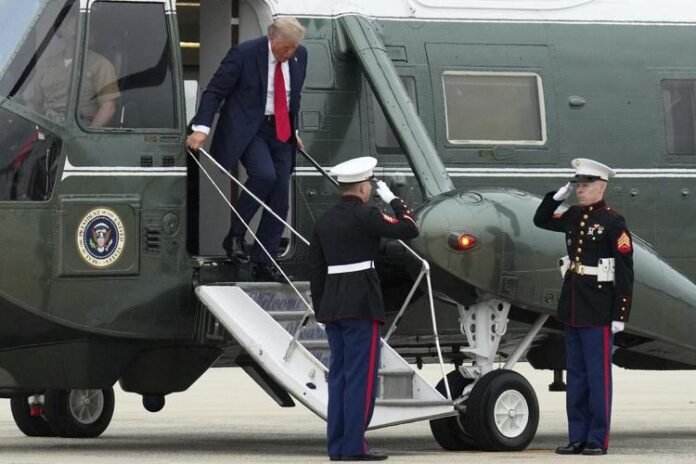

A Stunning Exit Amid Rising Tensions
In a move sending shockwaves through global diplomacy, President Donald Trump abruptly departed the G7 summit in Quebec, Canada on June 16, 2025, amid a worsening conflict between Israel and Iran. While initial reports cited “scheduling conflicts,” Trump later admitted on Truth Social that the decision was tied directly to escalating military tensions in the Middle East, urging Tehran residents to evacuate immediately. The Trump G7 Middle East headline quickly became the dominant narrative across U.S. and international news outlets (via Fox News, June 16, 2025).
Why Trump Walked Out of the G7 Summit Early
Several key developments triggered Trump’s sudden return to Washington:
- Military escalation: As reported by CNN (June 16, 2025), Israeli jets targeted suspected Iranian nuclear sites near Natanz, while Iran launched missiles at Israeli military bases in retaliation.
- Evacuation alert: On his official Truth Social account, Trump wrote: “Everyone should immediately evacuate Tehran. Iran cannot have a nuclear weapon.”
- Rejection of cease-fire talks: While French President Emmanuel Macron proposed a diplomatic cease-fire framework, Trump distanced himself from the plan, stating his mission was “bigger than summits.” (Reuters, June 16, 2025)
Trump G7 Middle East Strategy: Redefining U.S. Priorities
The Trump G7 Middle East episode reflects a recalibration of U.S. foreign policy in real time.
- U.S. military repositioning: According to The Guardian (June 16, 2025), two aircraft carrier strike groups—USS Abraham Lincoln and USS Eisenhower—were rerouted to the Gulf, signaling a show of force.
- Economic sanctions: Trump ordered a fresh round of economic sanctions on Iran’s oil and energy sector, reviving his administration’s “maximum pressure” policy (CNBC, June 16, 2025).
- Diplomatic ultimatum: During a brief presser upon arrival in D.C., Trump warned, “Make a deal or face more brutal military action.”
Impact on G7 Solidarity and Global Alliances
Trump’s early exit fractured the summit’s agenda and sparked division among allies.
| Country | Position on Iran Conflict |
|---|---|
| United States | Supports Israel, no cease-fire yet |
| France | Urging diplomacy and cease-fire |
| Germany | Neutral stance, wary of escalation |
| Canada | Focused on regional de-escalation |
| U.K. | Urging restraint, backs Israel’s right to defense |
As noted by Politico (June 16, 2025), Trump refused to sign the joint G7 declaration condemning Iranian aggression, citing vague “sovereignty concerns.” Behind closed doors, he reportedly clashed with German Chancellor Annalena Baerbock over Europe’s call for “proportionality” in Israeli military actions (The New York Times, June 17, 2025).
Israel-Iran War: Escalating Toll and Regional Ramifications
This isn’t just about geopolitics—it’s a real and rising human crisis.
- Casualties rise: Reports by Al Jazeera (June 16, 2025) confirm over 224 Iranian and 24 Israeli deaths so far.
- Targeted assassinations: Israel reportedly eliminated Ali Shamkhani, Iran’s former security chief, in a targeted airstrike (BBC, June 16, 2025).
- Iranian retaliation: Iran responded with drone swarms aimed at Tel Aviv, some of which were intercepted by Israel’s Iron Dome system.
This back-and-forth has brought Lebanon, Syria, and even Iraq into elevated alert, as border clashes and regional tensions rise.
Trump G7 Middle East Policy Path Forward
Trump’s foreign policy following the summit is taking three distinct directions:
1. Pressure Without Cease-Fire
Trump maintains he won’t entertain any pause in Israeli military activity until Iran halts all nuclear enrichment. He has called Iran’s leaders “suicidal and reckless,” according to Fox News (June 16, 2025).
2. Military Leverage for Diplomacy
By deploying stealth bombers and tankers to Qatar and UAE, Trump is signaling a willingness to strike if Iran refuses to negotiate, per Defense News (June 17, 2025).
3. Controlled Negotiations
Sources in The Wall Street Journal (June 17, 2025) claim Trump has authorized Steve Witkoff, a former White House envoy, to open informal backchannels with Iranian diplomat Abbas Araghchi—but only if Iran “shows serious intent.”
Domestic Fallout and 2025 Election Implications
Back home, Trump’s G7 departure has stirred debate:
- Bipartisan pushback: Democrats and even some Republicans are demanding Congressional review of war powers.
- Public opinion split: A YouGov flash poll (June 17, 2025) shows 47% of Americans support Trump’s stance, while 41% believe he’s escalating tensions unnecessarily.
- Campaign messaging: Trump has already folded the “G7 walkout” into his 2025 campaign messaging, declaring, “I left because summits don’t stop missiles.”
Conclusion: Trump G7 Middle East Headlines Signal a New Global Era
The Trump G7 Middle East moment isn’t just another news cycle—it’s a transformation of U.S. global posture. By leaving the summit early, doubling down on Israeli support, and rejecting multilateral diplomacy, Trump is betting that decisive action wins more than compromise. Whether this gambit pays off remains to be seen, but one thing is certain: the stakes are higher than ever.
Stay ahead of the global shift. Follow real-time updates on the Trump G7 Middle East crisis and how it’s redefining international leadership, diplomacy, and the future of U.S. foreign strategy.
Disclaimer:
This article is based on news available as of June 17, 2025. All information reflects public reports and does not constitute official or legal advice.