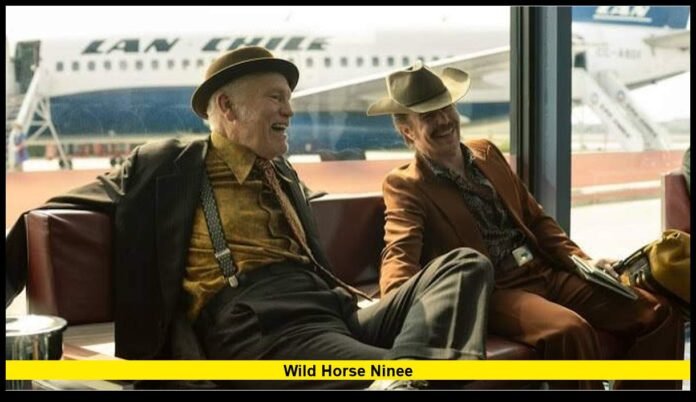

Wild Horse Nine has quickly become one of the most closely watched films of the 2026 fall movie season following its world premiere at the Venice Film Festival. Directed by Martin McDonagh and led by John Malkovich and Sam Rockwell, the darkly comic political drama follows two aging CIA operatives whose assignment around the time of the 1973 Chilean coup takes them to Easter Island. The movie has already generated major awards-season discussion, particularly around Malkovich’s performance.
Why the Movie Is Suddenly a Major Talking Point
The film entered the Venice Film Festival with considerable anticipation because of its creative team. McDonagh has built a reputation for combining bleak subject matter with sharply written comedy, while Malkovich and Rockwell are two performers particularly suited to complicated, eccentric characters.
That anticipation intensified after the movie’s premiere.
The Venice audience responded with an extended standing ovation, with reports putting the reception at roughly 13 to 14 minutes. Malkovich became visibly emotional during the applause, creating one of the festival’s early memorable moments and immediately strengthening the movie’s awards-season profile.
The reaction does not guarantee future Oscar nominations, but it has placed the movie firmly on the radar of critics, industry observers and awards analysts.
What Is the Movie About?
The story is set shortly before the 1973 military coup in Chile.
Malkovich plays Chris, an experienced CIA operative, while Rockwell portrays Lee, his longtime colleague and partner. Their superior, MJ, played by Steve Buscemi, sends them from Santiago to Easter Island for an assignment.
The seemingly remote mission becomes much more complicated as the two men confront unresolved aspects of their professional and personal past.
The island’s famous statues provide the backdrop for a story involving espionage, political intervention, friendship, violence, guilt and regret. Chris also forms a connection with two rebellious young women, played by Mariana di Girolamo and Ailín Salas, adding another layer of tension to an already unstable situation.
Rather than functioning solely as a conventional spy thriller, the movie uses the espionage setting to examine the people behind covert operations and the emotional consequences of the decisions they have made.
The 1973 Chilean Coup Is Central to the Film’s Context
The historical setting gives the story much of its weight.
The 1973 Chilean coup resulted in the overthrow of President Salvador Allende and brought Augusto Pinochet to power. The United States’ role in Chile during that period has remained a subject of extensive historical and political debate.
McDonagh uses that turbulent period as the foundation for a fictional story about CIA operatives.
The filmmaker has explained that he has long been interested in America’s covert involvement in other countries. He has also noted that the film’s themes now feel particularly relevant because of contemporary international politics.
That combination of historical material and current relevance gives the movie a different dimension from a traditional period comedy.
It is not simply recreating a historical event. Instead, the story uses the period to explore questions about responsibility, loyalty and the psychological cost of participating in political operations whose consequences can extend far beyond the people carrying them out.
John Malkovich Is at the Center of the Awards Conversation
The strongest early awards narrative surrounding the movie involves John Malkovich.
The veteran actor has received widespread attention for his portrayal of Chris, with critics highlighting the performance’s mixture of humor, vulnerability and emotional complexity.
Malkovich has previously earned two Academy Award nominations, but he has never won an Oscar. That history has made the possibility of a major awards run particularly intriguing.
Early awards coverage has already placed him prominently in the Best Actor conversation.
His performance is important to the film because Chris is not presented simply as a stereotypical secret agent. The character is older, reflective and increasingly aware of the consequences of his professional life.
That creates opportunities for Malkovich to move between McDonagh’s trademark dark comedy and more serious emotional territory.
The Venice response suggests that the performance may become one of the defining elements of the movie’s awards campaign.
Sam Rockwell Provides the Other Half of the Central Partnership
Sam Rockwell plays Lee, Chris’s longtime partner.
The relationship between the two characters is one of the movie’s primary engines. Their friendship is complicated by their shared history, differing perspectives and the secrets surrounding their work.
Rockwell’s energetic screen presence provides a contrast to Malkovich’s more controlled performance.
Their pairing also reflects one of McDonagh’s recurring interests: complicated relationships between men who may struggle to express affection, regret or vulnerability directly.
The result is a movie that can shift from jokes to violence to unexpectedly emotional exchanges without abandoning its central relationship.
The Supporting Cast Adds More Star Power
The movie features a particularly strong supporting ensemble.
The cast includes:
- John Malkovich
- Sam Rockwell
- Steve Buscemi
- Mariana di Girolamo
- Ailín Salas
- Tom Waits
- Parker Posey
Steve Buscemi plays MJ, the bureau chief responsible for sending Chris and Lee to Easter Island.
Mariana di Girolamo and Ailín Salas play the rebellious students whose relationship with Chris becomes increasingly important to the story.
Tom Waits and Parker Posey also appear in the ensemble, adding further recognizable talent to a production already built around several distinctive performers.
Martin McDonagh Returns to Dark Comedy
The director’s name is one of the biggest reasons audiences are paying attention.
Martin McDonagh previously directed films including In Bruges, Seven Psychopaths, Three Billboards Outside Ebbing, Missouri and The Banshees of Inisherin.
His movies frequently combine humor with violence, grief, guilt and difficult moral choices.
That style is again evident here.
The premise may sound like a conventional espionage story, but McDonagh approaches it through character relationships and darkly comic situations rather than relying solely on action or political exposition.
His dialogue-driven style is also a major component of the movie. The characters frequently reveal themselves through arguments, jokes, insults and personal observations.
This gives the film a tone that is recognizably McDonagh’s while still allowing it to function as a historical political drama.
Why Easter Island Was Chosen as the Setting
Easter Island is one of the film’s most distinctive elements.
The remote location provides an unusual contrast to the political crisis occurring on mainland Chile.
The island’s monumental moai statues also give the movie a visually striking backdrop. Instead of following the conventional imagery associated with Cold War espionage, the story places its characters in an isolated environment surrounded by one of the world’s most recognizable archaeological landscapes.
The location also reinforces the movie’s themes of isolation.
Chris and Lee are physically separated from the center of the political crisis, yet their professional responsibilities continue to follow them.
That tension between a seemingly peaceful paradise and the darker world from which the characters have come is central to the film’s atmosphere.
The Movie Was Actually Filmed on Easter Island
The production’s connection to Easter Island extends beyond the story itself.
The filmmakers made the unusual decision to shoot there, making the location an important part of the production.
Filming on such a remote island presented obvious logistical challenges, but it also allowed the movie to capture an authenticity that would have been difficult to reproduce on a conventional set.
The landscape therefore functions as more than scenery.
It becomes part of the movie’s identity, helping distinguish the film from other political dramas set during the 1970s.
Early Reviews Are Largely Positive
The critical response following the Venice premiere has been encouraging.
Several reviews have praised the central performances, particularly Malkovich and Rockwell, while recognizing McDonagh’s ability to mix comedy and serious political themes.
Some critics have described the movie as emotionally engaging and sharply written, while others have been more cautious about how effectively its different elements fit together.
That distinction is important.
The film is attempting several things at once: it is a buddy movie, a dark comedy, a political drama, a historical story and an examination of aging and regret.
Not every critic has found the combination equally successful.
Nevertheless, the overall response has been strong enough to establish the movie as an important title heading into the fall release calendar.
The Venice Standing Ovation Changed the Conversation
Before its premiere, the movie was already expected to attract attention because of McDonagh and its cast.
After the premiere, the conversation became much bigger.
The lengthy Venice standing ovation was particularly significant because film festivals often serve as the first major testing ground for movies expected to compete during awards season.
Malkovich’s emotional reaction during the applause also became a widely discussed moment.
The reception does not determine how audiences will respond after the movie reaches theaters, but it provides valuable early momentum.
For Searchlight Pictures, the response creates an opportunity to position the movie as one of the studio’s major prestige releases of the year.
Could John Malkovich Win an Oscar?
It is still too early to predict the final Academy Awards lineup, but Malkovich has clearly entered the conversation.
Several factors work in his favor.
First, he is playing the central character in a highly anticipated film from an established filmmaker.
Second, the role gives him considerable dramatic and comedic range.
Third, the Venice reception has provided an early burst of momentum.
Finally, Malkovich’s long career and previous Oscar nominations make a potential awards campaign easy for voters and audiences to understand.
Whether that momentum lasts will depend on the movie’s theatrical performance, its reception at subsequent festivals and the strength of competing performances later in the year.
Toronto Will Be Another Important Stop
After Venice, the movie is scheduled to continue its festival journey, including a stop at the Toronto International Film Festival.
That matters because Toronto provides another opportunity for the film to reach critics and audiences outside Venice.
A strong response there could reinforce the idea that the movie has broad appeal beyond the festival circuit.
The coming weeks should therefore provide a clearer picture of whether its early awards momentum is temporary or capable of lasting throughout the 2026-27 season.
Wild Horse Nine Release Date
The movie is scheduled to arrive in U.S. theaters on November 6, 2026.
That places its theatrical release firmly in the fall awards window.
The timing is potentially advantageous because movies released during this period often have several weeks to build critical and audience momentum before major awards voting intensifies.
The November release also gives audiences who missed the festival premieres an opportunity to see the film for themselves.
What Makes the Movie Different From a Typical Spy Film?
The biggest distinction is that the movie appears to be less interested in conventional espionage mechanics than in the people involved.
Chris and Lee are not young action heroes racing against time to prevent an international disaster.
They are aging operatives carrying years of professional history with them.
Their past decisions matter.
Their friendship matters.
Their regrets matter.
And their position inside a larger political system matters.
That approach gives the movie a more reflective quality than a traditional CIA thriller.
The humor also changes the tone. Rather than presenting espionage entirely through suspense, McDonagh uses uncomfortable jokes and absurd situations to examine the contradictions of people who have spent their lives working in morally complicated environments.
The Political Themes Could Become a Major Discussion Point
The historical material is likely to generate considerable conversation when the movie reaches a wider audience.
The story deals with American intervention abroad and the consequences of covert political activity.
Because the film is arriving during a period of heightened global political tension, McDonagh’s decision to revisit these subjects may feel particularly contemporary.
That relevance could help the movie stand out.
It could also generate debate.
Some viewers may approach it primarily as a dark comedy about two aging friends, while others may focus more heavily on its political implications.
That tension is likely to become part of the movie’s broader cultural conversation.
What to Expect From the Movie
Audiences should expect a film that blends several genres rather than following a straightforward spy-thriller formula.
The movie offers:
- A period setting
- Political themes
- Dark comedy
- Character-driven drama
- A complicated friendship
- Historical context
- Strong ensemble performances
- A remote and visually distinctive location
The relationship between Malkovich and Rockwell is expected to remain at the heart of the experience.
Their characters’ shared history allows the movie to move naturally between comedy and darker emotional territory.
Latest Outlook for the Film
As the Venice Film Festival continues, the movie has moved from being an anticipated festival title to one of the year’s most discussed awards prospects.
Its strong premiere reaction has particularly strengthened Malkovich’s position in the Best Actor conversation.
The film still has a long road ahead.
Audience reactions outside Venice, additional festival screenings, its theatrical performance and the evolving awards competition will all determine how significant its early momentum becomes.
For now, however, the combination of McDonagh’s direction, an acclaimed cast, a politically charged historical setting and a major festival reception makes Wild Horse Nine one of the most intriguing movies heading into the final months of 2026.
Final Takeaway
The movie’s appeal extends beyond its star power. It brings together a celebrated filmmaker, two accomplished leading actors and a story that connects personal guilt with one of the most controversial periods in modern Chilean history.
The result is a film that can operate simultaneously as a dark comedy, a friendship story and a political examination of the consequences of covert power.
With its November theatrical release approaching and awards speculation already building, the coming weeks will be crucial. If the positive response continues through Toronto and the wider fall film circuit, the movie could remain a significant contender well into awards season.
Are you excited to see the movie in theaters? Share your expectations in the comments and stay tuned for more 2026 movie and awards-season updates.