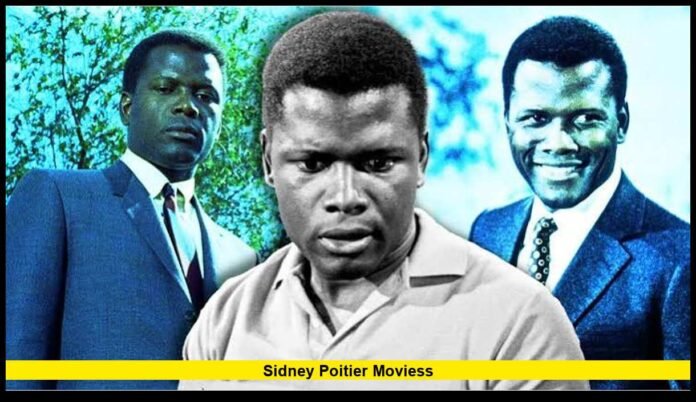

Sidney Poitier movies remain some of the most important works in American cinema, particularly for audiences interested in classic Hollywood, groundbreaking performances and the evolution of Black representation on screen. Across a career that stretched from the early 1950s into the late 1990s, Poitier became a pioneering leading man whose performances helped challenge racial stereotypes while establishing him as one of the most respected actors of his generation.
Born in Miami in 1927 and raised partly in the Bahamas, Poitier built his reputation at a time when opportunities for Black performers in major Hollywood productions were severely limited. Rather than accepting stereotypical roles, he pursued characters with intelligence, independence, dignity and moral complexity. That approach made him an influential figure far beyond the box office.
Poitier died on January 6, 2022, at age 94, meaning his acting filmography is complete. There are no new acting projects expected from him, but his movies continue to attract audiences and remain central to discussions about Hollywood history.
Why Sidney Poitier’s Film Career Was So Important
Poitier’s significance cannot be measured simply by the number of movies he made. His importance came from the kinds of characters he played and the period in which he became a major star.
During the 1950s and 1960s, Hollywood was undergoing major social and cultural changes. The civil rights movement was reshaping American society, while filmmakers were increasingly willing to confront subjects that had previously been avoided.
Poitier became one of the actors most closely associated with that transformation.
He regularly portrayed professionals, teachers, doctors, detectives and other authoritative figures. These characters were not presented as comic stereotypes or background figures. They were central to their stories and frequently forced other characters to confront their own prejudices.
His career also demonstrated that Black performers could successfully headline major commercial productions.
The Early Films That Put Poitier on the Hollywood Map
Poitier’s feature-film career began with No Way Out in 1950. He played Dr. Luther Brooks, a Black physician treating wounded criminals while facing racial hostility.
The role immediately established a pattern that would become familiar throughout his career: Poitier’s character was highly capable, while the surrounding society struggled to accept him.
He followed that performance with movies including Cry, the Beloved Country, Blackboard Jungle and Edge of the City.
Blackboard Jungle
Released in 1955, Blackboard Jungle placed Poitier in a school drama involving troubled teenagers and social tensions.
His performance helped increase his visibility among mainstream movie audiences. It also showed his ability to portray younger Black characters who were not defined solely by racial conflict.
Edge of the City
In Edge of the City, Poitier played Tommy Tyler, a respected worker who forms a friendship with a newcomer played by John Cassavetes.
The film explored friendship, prejudice and workplace tensions, giving Poitier another substantial dramatic role during the early stage of his career.
The Defiant Ones Became a Major Breakthrough
One of the defining early films in Poitier’s career was The Defiant Ones, released in 1958.
Directed by Stanley Kramer, the movie paired Poitier with Tony Curtis. They played escaped prisoners who are physically chained together despite their racial differences and personal distrust.
The unusual setup allowed the film to examine prejudice and cooperation through a survival story.
Poitier’s performance earned him his first Academy Award nomination for Best Actor. It was an important milestone because it demonstrated that he could compete at the highest level of Hollywood acting while carrying a major dramatic role.
A Raisin in the Sun Showed His Dramatic Range
In 1961, Poitier starred in A Raisin in the Sun, the film adaptation of Lorraine Hansberry’s acclaimed stage play.
He portrayed Walter Lee Younger, a working-class Chicago man who dreams of improving his family’s financial situation. Walter is ambitious but frustrated, and his decisions create tension within his family.
The performance allowed Poitier to play a character with significant personal flaws and emotional contradictions.
That distinction was important. Poitier was often associated with exceptionally dignified characters, but Walter Lee was far more complicated. He was ambitious, insecure, frustrated and vulnerable.
The film remains an important part of his legacy and an essential viewing choice for anyone studying his work.
Lilies of the Field Changed Oscar History
Among Poitier’s entire body of work, Lilies of the Field occupies a special place.
Released in 1963, the movie featured Poitier as Homer Smith, an itinerant handyman who encounters a group of nuns in the Arizona desert. The seemingly simple story develops around the nuns’ desire to build a chapel and Smith’s unexpected involvement in their plans.
Poitier’s understated performance earned him the Academy Award for Best Actor at the 1964 ceremony.
That victory made him the first Black actor to win the competitive Academy Award for Best Actor.
The significance of that achievement extended well beyond the ceremony. Poitier’s Oscar demonstrated that a Black performer could win Hollywood’s most prestigious acting prize for a leading dramatic performance.
It became one of the defining milestones of his career and of American film history.
The Three Films That Made 1967 Historic
For many movie fans, 1967 represents the peak of Poitier’s cultural influence.
Three major films starring him were released that year:
- To Sir, with Love
- In the Heat of the Night
- Guess Who’s Coming to Dinner
Each movie placed Poitier in a completely different situation, but all three became important parts of his public image.
To Sir, with Love
In To Sir, with Love, Poitier played Mark Thackeray, an engineer who becomes a teacher at a challenging school in London’s East End.
The character initially struggles to gain the respect of his students. Instead of responding with hostility, Thackeray gradually changes his approach and encourages his pupils to think about adulthood, responsibility and respect.
The movie became one of Poitier’s most recognizable films and helped establish his appeal to a broad international audience.
In the Heat of the Night
In the Heat of the Night gave Poitier one of his most iconic roles: Philadelphia police detective Virgil Tibbs.
Tibbs becomes involved in a murder investigation in a Mississippi town where racial prejudice complicates his relationship with local law enforcement.
The film combined crime mystery with an examination of racial tension. Poitier’s performance gave Tibbs a commanding presence and helped make the character one of the most recognizable detectives in classic American cinema.
The role was successful enough to return in two sequels, They Call Me Mister Tibbs! and The Organization.
Guess Who’s Coming to Dinner
Poitier played Dr. John Prentice in Guess Who’s Coming to Dinner, another landmark production from 1967.
The story centers on an interracial couple whose relationship forces the woman’s parents to confront their assumptions about race and marriage.
Katharine Hepburn and Spencer Tracy played her parents, making the movie one of the most prominent Hollywood productions of its period to address interracial marriage.
Poitier’s character was presented as an accomplished doctor, reinforcing the type of dignified and professionally successful leading role that had become closely associated with his career.
Other Important Films From the 1960s
Poitier’s work was not limited to his three major 1967 productions.
He also appeared in Porgy and Bess, Paris Blues and A Patch of Blue.
Porgy and Bess
The 1959 film adaptation of George Gershwin’s opera featured Poitier as Porgy, with Dorothy Dandridge playing Bess.
The production was a major Hollywood musical and gave Poitier the opportunity to work in a very different genre.
Paris Blues
Released in 1961, Paris Blues centered on American jazz musicians living in Paris. Poitier starred alongside Paul Newman and worked with a cast that also included Joanne Woodward.
The film gave him an opportunity to portray a musician and explore themes of love, artistic ambition and racial identity.
A Patch of Blue
In A Patch of Blue, Poitier played Gordon Ralfe, a kind-hearted man who becomes involved in the life of a blind young woman.
The story explored race, class, disability and relationships, adding another socially significant performance to his 1960s filmography.
Poitier Expanded Into Directing
Poitier did not remain exclusively in front of the camera.
Beginning in the 1970s, he became a successful director, demonstrating that his ambitions extended beyond acting.
His directing credits included Buck and the Preacher, A Warm December, Uptown Saturday Night, Let’s Do It Again, A Piece of the Action, Stir Crazy, Fast Forward, Hanky Panky and Ghost Dad.
Buck and the Preacher
Buck and the Preacher was Poitier’s feature-directing debut. He also starred in the Western opposite Harry Belafonte.
The movie allowed Poitier to move into filmmaking from behind the camera while continuing to work as a leading actor.
Uptown Saturday Night
Poitier followed with the comedy Uptown Saturday Night, starring alongside Bill Cosby and Harry Belafonte.
The film was part of a successful period in which Poitier demonstrated that his career did not have to remain centered on serious social dramas.
Stir Crazy
One of his biggest directing successes came with Stir Crazy, the 1980 comedy starring Richard Pryor and Gene Wilder.
The movie became a major commercial success and showed Poitier’s ability to handle large-scale comedy and mainstream entertainment.
Poitier’s Later Acting Career
Although the 1960s produced his most culturally influential films, Poitier continued appearing in movies for decades.
Among his later credits were:
- Shoot to Kill
- Little Nikita
- The Mighty Quinn
- Ghost Dad
- Sneakers
- The Jackal
Shoot to Kill
In Shoot to Kill, Poitier returned to a law-enforcement role, playing FBI agent Warren Stantin.
The 1988 thriller paired him with Tom Berenger and Kirstie Alley and gave audiences a more action-oriented version of the actor.
Sneakers
The 1992 technology thriller Sneakers featured Poitier as part of a prominent ensemble that included Robert Redford, Dan Aykroyd, River Phoenix and Ben Kingsley.
The movie became an important late-career appearance and introduced Poitier’s work to viewers who may not have grown up watching his classic 1960s films.
The Jackal
Poitier’s later film appearances included The Jackal in 1997, where he played FBI official Carter Preston.
It was among his final major theatrical acting roles.
What Makes the Best Poitier Films Stand Out?
The strongest Sidney Poitier movies tend to share several qualities.
First, they feature characters with clearly defined moral or professional identities. Poitier often played people who knew who they were even when the world around them attempted to undermine them.
Second, many of his best films addressed social issues without reducing the characters to political symbols.
Virgil Tibbs in In the Heat of the Night, for example, is first and foremost a detective solving a murder. The racial conflict surrounding him makes his work more difficult, but his professional ability remains central to the story.
Third, Poitier’s performances were often controlled rather than exaggerated. His ability to communicate authority through voice, posture and restraint became one of his trademarks.
Which Movies Should New Viewers Watch First?
Someone discovering Poitier’s work today could begin with a small group of films representing different stages of his career.
For drama: A Raisin in the Sun
For Oscar history: Lilies of the Field
For crime and suspense: In the Heat of the Night
For social drama: Guess Who’s Coming to Dinner
For education and inspiration: To Sir, with Love
For early career significance: The Defiant Ones
For comedy: Stir Crazy
For a later-career thriller: Sneakers
Together, these films provide a useful overview of his acting range and his broader contribution to American cinema.
Sidney Poitier’s Lasting Legacy
Poitier’s career changed Hollywood in ways that went beyond individual awards.
He proved that Black actors could headline serious dramas, romantic stories, crime films, comedies and mainstream commercial productions. He also demonstrated that an actor could use his position in Hollywood to pursue opportunities behind the camera.
His influence can be seen in the careers of performers who followed him, including actors who benefited from the greater range of opportunities that gradually became available to Black performers.
The Academy later honored Poitier with an Honorary Award in 2002, recognizing the overall importance of his contribution to cinema.
His legacy also remains connected to the films themselves. Decades after their original releases, movies such as Lilies of the Field, In the Heat of the Night, Guess Who’s Coming to Dinner, A Raisin in the Sun and To Sir, with Love continue to be discussed, studied and watched.
Sidney Poitier’s Film Legacy Today
As of August 2026, Poitier’s film career remains complete following his death in 2022. There are no new performances to anticipate, but interest in his existing work continues.
The 2022 documentary Sidney provided another opportunity for audiences to examine his personal journey, career and cultural impact. His films also continue to serve as reference points when Hollywood history, civil rights, classic cinema and Black representation are discussed.
Perhaps the most remarkable aspect of Poitier’s career is how many different types of viewers can find an entry point into his work. Some may discover him through a classic drama, others through a crime movie, comedy or one of his directing projects.
That versatility is a major reason his work remains relevant.
Final Takeaway
Sidney Poitier’s career represents one of the most important chapters in the history of American movies. He was a groundbreaking actor, director and cultural figure who helped redefine the possibilities available to Black performers in Hollywood.
From his early breakthrough in No Way Out and The Defiant Ones to his Oscar-winning performance in Lilies of the Field and his extraordinary run of 1967 films, Poitier repeatedly demonstrated that powerful storytelling and compelling characters could reach audiences while challenging long-standing assumptions.
His later work behind the camera added another dimension to his legacy, while films such as Stir Crazy and Sneakers showed that he could remain commercially relevant across different generations.
The most important part of his legacy, however, may be the doors he helped open. His performances gave audiences characters who were intelligent, capable and fully human at a time when Hollywood rarely offered Black actors that level of visibility.
Which Sidney Poitier film deserves the top spot in his legendary career? Share your favorite and keep following for more updates on classic Hollywood and iconic movies.