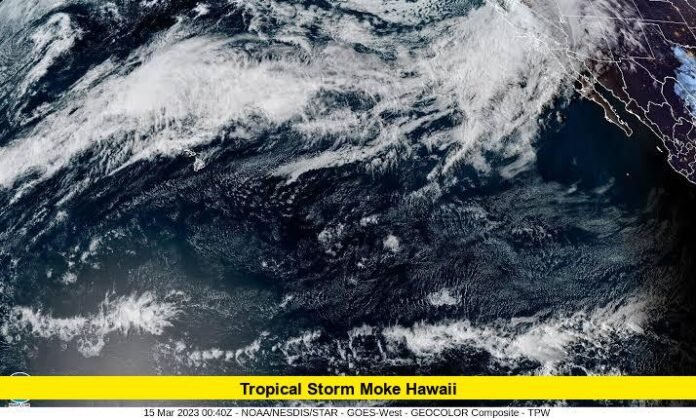

Tropical Storm Moke Hawaii impacts are ramping up this weekend as the storm passes south of the Big Island, bringing heavy rain, gusty winds, and dangerous surf just days after Hurricane Lala battered the islands. Forecasters at the Central Pacific Hurricane Center say Moke strengthened from a tropical depression on Friday, becoming the second tropical system to threaten Hawaii in less than two weeks.
As of Friday evening, Moke carried maximum sustained winds of 45 mph and a minimum central pressure of 1,002 millibars. The storm sat roughly 600 miles southeast of Hilo and was moving west-northwest at about 12 mph. Forecasters expect gradual strengthening, with winds potentially reaching 50 to 60 mph before Moke makes its closest approach to the islands this weekend.
Where Moke Stands Right Now
Moke’s center is tracking farther south than Hurricane Lala did earlier this month. That path keeps the strongest winds away from land, but forecasters caution the storm’s size means Hawaii will still feel its effects. Showers and thunderstorms already extend hundreds of miles from Moke’s low-pressure center.
The National Hurricane Center reports the storm is not forecast to become a hurricane. Instead, Moke should remain a mid- to higher-end tropical storm through its closest pass, then weaken as it moves beyond the island chain early next week.
A tropical storm warning covers offshore waters extending from 40 to 240 nautical miles from the main islands, including a portion of the Papahanaumokuakea Marine National Monument. No tropical storm watches or warnings have been issued for the main Hawaiian Islands themselves, since the compact storm’s core is expected to stay well south of land.
Rain and Flooding Are the Biggest Threat
Wind speeds may be lower than Lala’s, but rainfall remains the primary danger from this storm. The Big Island could see 5 to 10 inches of rain, with isolated totals reaching 15 inches in the highest elevations. Eastern Maui may pick up 1 to 2 inches, with a maximum of 4 inches possible in wetter pockets. The remaining islands should expect lighter totals, generally 1 to 2 inches.
Ground across the southern and windward Big Island is already saturated from Lala’s downpours earlier this month. That saturation raises the risk of flash flooding and mudslides even from moderate rainfall. A flood watch remains in effect for the Big Island as Moke’s outer bands begin moving over the region.
Below is a quick breakdown of expected rainfall by area:
- Big Island (windward and southeast slopes): 5 to 10 inches, isolated totals up to 15 inches
- Eastern Maui: 1 to 2 inches, isolated totals up to 4 inches
- Remaining Hawaiian Islands: 1 to 2 inches generally
Forecasters describe the flooding and mudslide risk as life-threatening in steep terrain, particularly in communities still recovering from Lala’s damage.
Wind and Surf Conditions to Watch
Even though Moke’s core will pass offshore, gusty winds are likely across the Big Island this weekend. Areas near and downslope of higher terrain face the greatest risk of damaging gusts. Meteorologists note these winds could down trees or cause isolated power outages in exposed locations.
Swells generated by Moke will affect the islands through the weekend and into early next week. Those swells are expected to produce dangerous surf and life-threatening rip currents along many south- and east-facing shorelines. Ocean safety officials are urging beachgoers to stay alert to posted advisories and avoid entering rough water.
How Moke Compares to Hurricane Lala
Hawaii rarely faces back-to-back tropical threats, which makes this stretch of weather unusual. Hurricane Lala struck as a Category 1 storm just over a week earlier, damaging or destroying more than 100 homes and cutting off several communities on the Big Island. That storm dumped more than a foot of rain across parts of the state, with the highest elevations recording over 40 inches.
Moke is expected to stay weaker than Lala and pass farther offshore. Even so, forecasters warn residents shouldn’t dismiss the threat simply because Moke isn’t forecast to reach hurricane strength. The storm’s rain bands are wide, and its arrival comes while recovery from Lala is still underway in many neighborhoods.
Timeline for Hawaii Island Impacts
Moke’s heaviest effects are expected to unfold over a multi-day stretch:
- Saturday night: Rain begins spreading onto the Big Island as Moke approaches from the southeast
- Sunday: Moke makes its closest pass south of the Big Island, bringing the heaviest rain and strongest winds
- Sunday night into Monday: Rain continues affecting the Big Island before spreading toward the rest of the state
- Early next week: Moke gradually weakens as it moves west of the islands
Officials continue to update forecast tracks as new data comes in, and residents are advised to monitor official channels for any changes to the storm’s path or intensity.
Why This Season Has Been So Active
Meteorologists point to favorable El Niño conditions as a factor behind this year’s unusually active stretch of tropical systems near Hawaii. Warmer ocean waters and shifting wind patterns have made it easier for storms to organize and track toward the islands, rather than being steered away as they often are in typical years. Moke’s formation so soon after Lala reflects that broader pattern playing out in the Central Pacific this season.
What Residents Should Do Now
Emergency officials are urging Big Island residents, especially those in flood-prone or landslide-prone areas, to prepare before Moke’s rain bands intensify. Recommended steps include:
- Clearing gutters and drainage areas around homes to reduce flood risk
- Avoiding travel through low-lying roads once rain intensifies
- Staying away from streams, gulches, and steep slopes during heavy rainfall
- Monitoring official National Weather Service and county alerts for updates
- Preparing an emergency kit in case of power outages or road closures
County officials have reopened some shelters used during Lala’s response, and residents in vulnerable areas are being encouraged to have a plan in place ahead of the weekend’s heaviest rain.
Looking Ahead
Forecasters expect Moke to weaken steadily once it clears the islands early next week, with drier conditions returning to most of the state by midweek. The Central Pacific Hurricane Center will continue issuing updated advisories as the storm’s track becomes clearer over the coming days.
For now, the Big Island remains the focal point of concern, facing its second round of heavy rain and flood risk in as many weeks. Residents across the island chain are being asked to stay weather-aware as Moke completes its pass south of Hawaii.
Stay tuned for the latest updates on Tropical Storm Moke and share your storm prep tips in the comments below.