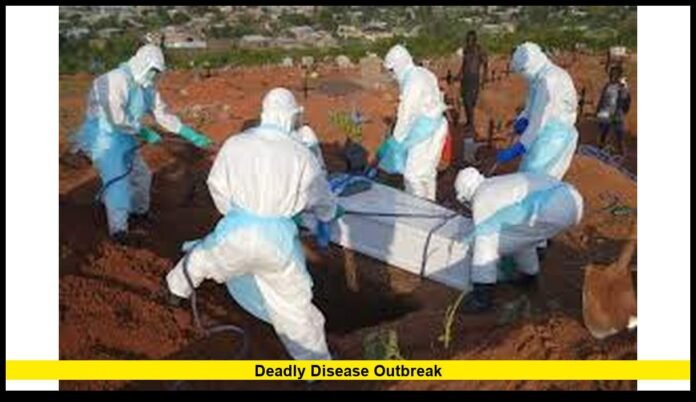

A deadly disease outbreak involving Ebola disease caused by Bundibugyo virus is continuing to intensify in the Democratic Republic of the Congo, with confirmed cases reaching 4,381 and confirmed deaths rising to 2,011 as of August 9, 2026.
The outbreak is centered in northeastern Congo, particularly Ituri Province, and has become the largest known outbreak caused by Bundibugyo virus. Health authorities are facing major challenges as infections continue to spread through communities while insecurity, limited healthcare access and population movement complicate efforts to contain transmission.
The current outbreak began in 2026 and was formally recognized after laboratory testing identified Bundibugyo virus among patients in Ituri. Uganda also reported cases linked to the outbreak earlier in the response.
For Americans, the situation overseas is serious, but U.S. health officials continue to assess the risk to the general American population as low. The current outbreak has not resulted in widespread local transmission in the United States.
Latest Ebola Outbreak Numbers
The latest available figures show the scale of the crisis in Congo.
As of August 9, health authorities had recorded:
- 4,381 confirmed cases
- 2,011 confirmed deaths
- More than 2,000 confirmed survivors
- Ongoing transmission in affected communities
- Continued response operations in northeastern Congo
The numbers have increased sharply since the outbreak was first identified in May.
The rapid rise has made the situation increasingly difficult for response teams. Health workers must identify new patients, trace their contacts, provide medical care and monitor communities for additional infections.
Those tasks become much harder when patients live in remote areas or when insecurity prevents medical teams from reaching communities quickly.
The death toll also highlights the severity of the disease. More than 2,000 confirmed deaths have now been recorded during the outbreak.
Why This Outbreak Is Different
The virus responsible for the current emergency is Bundibugyo virus, a species capable of causing Ebola disease.
This is different from the Zaire Ebola virus that caused the massive West African epidemic from 2014 to 2016.
Bundibugyo virus was first identified during an outbreak in Uganda in 2007. A smaller outbreak also occurred in the Democratic Republic of the Congo in 2012.
Neither earlier event approached the current outbreak’s size.
The current crisis has therefore become an important public health event because it represents an unprecedented level of transmission for this particular Ebola species.
Another major issue involves medical countermeasures. There is currently no vaccine specifically approved for Bundibugyo virus, and no specific treatment has been approved specifically for this virus.
Researchers are working to evaluate vaccine candidates and other potential tools while health workers continue providing supportive medical care.
Where the Outbreak Is Happening
The Democratic Republic of the Congo remains the main center of transmission.
Ituri Province in northeastern Congo has been particularly affected. The region presents difficult conditions for outbreak control because many communities are remote and healthcare infrastructure is limited.
The area also experiences insecurity and significant movement of people.
People cross local and international borders for employment, family reasons, trade and humanitarian activities. Such movement can complicate efforts to identify people who may have been exposed.
Uganda has also been involved in the response because infections crossed the border earlier in the outbreak.
The international response has therefore focused not only on treating patients but also on strengthening surveillance in neighboring areas.
How Ebola Spreads
Ebola does not spread through casual everyday contact in the same way as common respiratory infections.
Transmission primarily occurs when someone comes into direct contact with the blood or other body fluids of an infected person.
Contaminated materials can also spread the virus.
People caring for sick relatives can face significant exposure risks, especially when protective equipment and infection-control practices are unavailable.
Healthcare workers are another high-risk group when protective procedures are inadequate.
Traditional burial practices can also increase transmission because people may come into contact with the body of someone who died from Ebola.
These transmission patterns explain why rapid identification and isolation are central to outbreak control.
Symptoms Can Become Severe
Ebola disease can cause a serious illness that requires immediate medical attention.
Early symptoms can include:
- Fever
- Severe weakness
- Headache
- Muscle pain
- Vomiting
- Diarrhea
- Stomach pain
Some patients can later develop bleeding or other severe complications.
Symptoms can overlap with other infections, which means doctors cannot diagnose Ebola simply by looking at symptoms.
Laboratory testing is needed to confirm infection.
Anyone with a possible exposure history who develops symptoms should immediately tell healthcare professionals about the exposure and recent travel.
Early medical evaluation is especially important because supportive treatment can improve a patient’s chances of survival.
Read More – Deadly Fungus Outbreak: What Americans Should Know About the Spread of Candida auris in 2026
Why the Congo Response Is So Difficult
Containing Ebola requires a coordinated public health system.
Response teams need to locate patients quickly. They must arrange testing and safe isolation. Contact investigators then identify people who may have been exposed.
Every delay can create additional opportunities for transmission.
The current outbreak is taking place in a region where health workers face several obstacles.
Some communities are difficult to reach. Insecurity can restrict travel. Healthcare facilities may lack sufficient staff or supplies. Population movement can also make contact tracing more complicated.
The result is a race between transmission and containment.
If a patient is identified early, health workers have a better opportunity to isolate the person and investigate possible contacts.
If diagnosis comes late, the number of people requiring follow-up can increase substantially.
Community Transmission Remains a Major Concern
Community transmission is one of the most difficult aspects of the current emergency.
Health officials cannot rely solely on hospitals to identify infections. People can become sick at home, seek care from different facilities or remain outside formal healthcare systems.
That creates gaps in surveillance.
Response teams are working to improve community-level detection and communication. Community involvement is especially important because residents often know where people live, who has been sick and which local practices could increase exposure.
Building trust can also make contact tracing more effective.
Residents who understand how Ebola spreads are more likely to recognize potential symptoms, seek care quickly and cooperate with health investigators.
Medical Treatment Remains Critical
There is no specific approved treatment designed for Bundibugyo virus.
Doctors instead provide supportive care based on the patient’s condition.
This can include managing dehydration, monitoring vital functions and treating complications that develop during illness.
Access to care matters greatly.
Patients who reach medical facilities early can receive closer monitoring and supportive treatment before severe complications develop.
At the same time, healthcare facilities must protect staff and other patients from infection.
Strict infection-prevention procedures are essential.
Healthcare workers require appropriate protective equipment, safe procedures for handling patients and effective systems for disposing of contaminated materials.
Vaccine Research Is Underway
The lack of a Bundibugyo-specific vaccine is one of the major challenges facing the response.
Researchers have been evaluating vaccine candidates during the outbreak.
Clinical research is particularly important because a vaccine that proves effective could become an important tool for controlling future outbreaks involving this virus.
Existing Ebola vaccines were developed primarily against other Ebola species.
That distinction matters. Protection against one Ebola species does not automatically mean that the same vaccine provides reliable protection against another.
Scientists therefore need evidence from laboratory research and clinical studies before determining how well a vaccine works against Bundibugyo virus.
What the Outbreak Means for the United States
For people living in the United States, the current situation requires awareness rather than panic.
The outbreak is occurring primarily in Congo, thousands of miles from the United States.
U.S. health authorities have continued monitoring developments and maintaining measures designed to identify possible infections connected with international travel.
The general American population is not experiencing community transmission from this outbreak.
The risk is different for Americans who work in affected regions.
Humanitarian workers, healthcare professionals and others who travel to outbreak areas can have direct exposure to infected people.
That group needs to follow strict infection-prevention recommendations.
Travelers should also monitor official health guidance before visiting affected areas because recommendations can change as an outbreak develops.
CDC Travel Guidance Remains Important
U.S. travelers should pay close attention to current health recommendations for the Democratic Republic of the Congo and Uganda.
CDC guidance includes heightened precautions for travel involving areas affected by the Bundibugyo outbreak.
The strongest warnings apply to specific provinces where transmission or other security concerns create greater risks.
Travelers should check current recommendations before departure rather than relying on old information circulating online.
This is especially important because outbreak conditions can change quickly.
A travel recommendation issued several weeks earlier may no longer reflect the latest situation.
Why the Death Toll Has Risen So Quickly
The number of confirmed deaths has increased rapidly since the outbreak began.
Several factors can influence the number of deaths recorded during an Ebola outbreak.
Delayed diagnosis can prevent patients from receiving supportive care early.
Limited healthcare access can also leave severely ill patients without appropriate treatment.
In addition, community transmission can allow infections to continue before health workers identify a chain of transmission.
The current outbreak combines many of these challenges.
That is why international health agencies are emphasizing rapid detection, treatment, contact tracing and community participation.
The Role of Public Health Surveillance
Surveillance allows health authorities to detect new infections and identify changes in transmission.
During the current outbreak, surveillance teams are working to locate cases and monitor people who may have been exposed.
Laboratory testing provides another essential layer of the response.
Without reliable testing, health officials cannot determine whether suspected patients actually have Ebola or another illness.
Accurate data also helps authorities decide where to send medical teams and supplies.
When surveillance improves, health workers can identify transmission clusters more quickly.
That can make it easier to focus resources on areas where they are most urgently needed.
Why Accurate Information Matters
A serious outbreak can generate fear, particularly when social media reports spread faster than official health updates.
Some online posts may mix confirmed information with rumors or outdated numbers.
That can make it difficult for readers to understand the actual situation.
The latest confirmed figures show that Congo is facing a severe Ebola emergency. They do not show a comparable outbreak occurring in the United States.
For American readers, that distinction is important.
Following current information from federal health authorities is more useful than relying on unverified social-media claims.
People should also avoid sharing unconfirmed reports about individual patients or alleged cases.
What Happens Next
The coming weeks will remain important for the Ebola response in Congo.
Health officials need to reduce the number of new infections while improving the ability to identify cases quickly.
The main indicators will include new confirmed cases, deaths, recoveries, geographic spread and the effectiveness of contact tracing.
The response will also depend on whether health teams can safely reach communities where transmission continues.
Vaccine research could become increasingly important if candidate vaccines demonstrate meaningful protection against Bundibugyo virus.
International assistance will also remain important as Congo manages the demands of a large and complex outbreak.
What Americans Should Remember
The current Ebola crisis is severe, but Americans should understand its geographic and epidemiological context.
More than 4,300 confirmed cases and more than 2,000 confirmed deaths have been reported in Congo as of August 9.
The outbreak is caused by Bundibugyo virus and has become the largest known outbreak involving that Ebola species.
It is concentrated in northeastern Congo, where conflict, difficult terrain, limited healthcare access and population movement have made containment harder.
For people in the United States without relevant travel or exposure, the immediate risk remains low.
People traveling to affected regions should follow current public health and travel recommendations and understand how Ebola transmission occurs.
The response in Congo now depends on finding patients quickly, protecting healthcare workers, tracing contacts and gaining cooperation from affected communities.
Bottom Line
The Ebola emergency in the Democratic Republic of the Congo has reached a critical stage, with confirmed infections and deaths continuing to climb in August 2026. Bundibugyo virus has caused the largest known outbreak of its kind, placing enormous pressure on health workers and local communities.
The latest confirmed figures show 4,381 cases and 2,011 deaths as of August 9. Health authorities continue working to interrupt transmission while researchers evaluate potential vaccines and other medical tools.
For U.S. residents, the outbreak remains primarily an overseas public health emergency, not a widespread domestic crisis. Travelers and people working in affected areas face a different level of risk and should follow current official guidance.
Stay informed with verified updates as health authorities continue working to bring the outbreak under control, and share your thoughts in the comments.