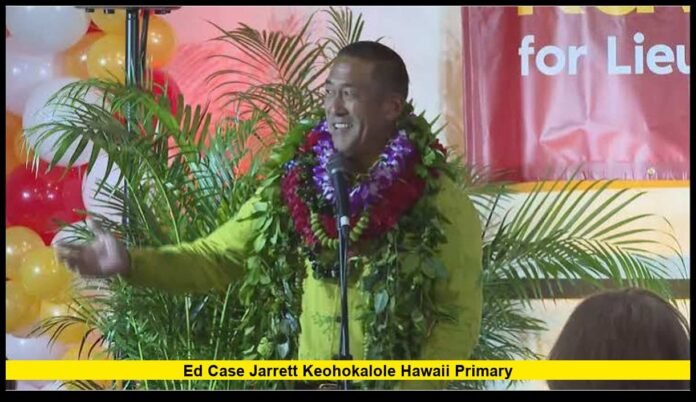

Ed Case Jarrett Keohokalole Hawaii primary results are settled, with incumbent U.S. Rep. Ed Case defeating state Sen. Jarrett Keohokalole in the Democratic primary for Hawaii’s 1st Congressional District. Case received 57.3% of the vote, while Keohokalole finished with 34.2%.
The August 8 primary was one of Hawaii’s most closely watched congressional contests. Keohokalole entered the race as a younger challenger seeking to unseat a longtime Democratic incumbent. Case defended his record and argued that his experience in Congress remained valuable for Hawaii.
The result gives Case the Democratic nomination for the November general election. The primary also closes Keohokalole’s 2026 campaign for the U.S. House.
Ed Case Wins Hawaii’s 1st District Democratic Primary
Case won the Democratic contest with 58,393 votes, or 57.3% of the total.
Keohokalole received 34,878 votes, representing 34.2%.
The remaining Democratic candidates received much smaller shares of the vote. Jennifer Booker finished with 2.1%, while Nicholas Kiswanto and Ben Fatula each received less than 1%.
The final numbers gave Case a clear advantage over his closest challenger.
The outcome was especially significant because Keohokalole had presented a serious challenge to the incumbent. His campaign focused on changing the direction of Democratic representation in Hawaii and bringing younger leadership to Washington.
Case ultimately maintained a strong position among Democratic voters in the district.
The Key Results From the Democratic Primary
The final reported results for the major candidates were:
| Candidate | Votes | Percentage |
|---|---|---|
| Ed Case | 58,393 | 57.3% |
| Jarrett K. Keohokalole | 34,878 | 34.2% |
| Jennifer Booker | 2,123 | 2.1% |
| Nicholas Kiswanto | 846 | 0.8% |
| Ben Fatula | 819 | 0.8% |
Case finished more than 23 percentage points ahead of Keohokalole.
That margin made the outcome decisive and removed the possibility of a close finish between the two leading candidates.
Why the Race Was Closely Watched
The contest brought two different political generations into direct competition.
Case, 73, is a longtime Hawaii politician with extensive experience in Congress. He has represented Hawaii in the House during two periods of his career.
His current service in the House began in 2019.
Keohokalole, 43, is a state senator who sought to move from Hawaii’s state government to the U.S. House.
The age difference became part of the broader discussion surrounding the campaign. Keohokalole argued that Hawaii could benefit from younger leadership and a new approach to national issues.
Case emphasized experience, seniority and his ability to represent Hawaii in Washington.
The voters chose Case.
Case’s Experience Was Central to His Campaign
Case entered the primary with a long political record in Hawaii.
He first won a seat in the U.S. House in 2002. He represented Hawaii until 2007 before returning to Congress in 2019.
His current district is Hawaii’s 1st Congressional District, which includes Honolulu and other communities on Oahu.
During the campaign, Case highlighted his position in Congress and his ability to work on federal spending matters affecting Hawaii.
His argument was straightforward: experience in Washington can help a state secure federal resources and influence important legislation.
That message resonated with enough Democratic voters to produce a comfortable primary victory.
Read More – 2026 House Incumbent Primary Losses Reach Nine as Anti-Incumbent Wave Grows
Keohokalole Sought a Change in Democratic Representation
Keohokalole built his campaign around a different vision.
He sought to present himself as a more progressive alternative to Case.
His campaign focused on issues that included housing affordability, health care, economic security and the cost of living.
Those issues are particularly important in Hawaii, where high housing and living expenses remain major concerns for many residents.
Keohokalole also criticized Case for several votes and positions on national policy.
The challenger argued that Hawaii needed a representative who would take stronger progressive positions in Congress.
His campaign attempted to turn those disagreements into a broader argument about the direction of the Democratic Party.
However, the effort did not produce enough votes to defeat the incumbent.
The SAVE Act Became a Major Campaign Issue
One of the clearest differences between the candidates involved the SAVE Act.
Case faced criticism for supporting the Trump-backed legislation, which sought to establish additional requirements involving proof of citizenship for voting in federal elections.
Keohokalole opposed the measure and used Case’s position as part of his argument that the incumbent was not aligned closely enough with Democratic voters.
The disagreement became an important part of the primary campaign.
For Keohokalole, the issue provided an opportunity to challenge Case from the left.
For Case, the vote was part of a larger record that he defended during the campaign.
The issue helped define one of the major policy differences between the two candidates.
Foreign Policy Also Divided the Candidates
The candidates also differed on U.S. foreign policy, particularly regarding Israel and the war in Gaza.
Case has maintained a stronger relationship with traditional pro-Israel positions within the Democratic Party.
Keohokalole took a more critical approach to U.S. support for Israel and called for changes in American policy.
The disagreement reflected a larger debate within the Democratic Party.
Progressive candidates across the country have increasingly challenged established Democrats over U.S. policy toward Israel.
Keohokalole attempted to make that issue part of his case for new leadership.
It was not enough to overcome Case’s advantage in the primary.
Corporate Donations Were Another Point of Conflict
Keohokalole also criticized Case over corporate campaign contributions.
The challenger argued that accepting money from corporate interests could create distance between a member of Congress and ordinary constituents.
Case defended his broader record and his ability to work effectively in Washington.
The disagreement reflected the different styles of the two campaigns.
Keohokalole emphasized political change and stronger progressive representation.
Case focused more heavily on experience, seniority and his record as a member of Congress.
The primary results show that Case’s approach proved more successful with Democratic voters.
The District Remains a Strong Democratic Seat
Hawaii’s 1st Congressional District is centered on Honolulu and other communities on Oahu.
The district has a strong Democratic voting history.
That makes the Democratic primary particularly important because the party’s nominee enters the general election with a significant political advantage.
Case’s primary victory therefore puts him in a strong position heading into November.
However, the primary itself does not determine the general election winner.
Case must still compete in the November 3 general election.
The result nevertheless gives him the opportunity to continue his campaign with the Democratic nomination secured.
What the Primary Result Means for Case
For Case, the victory provides another clear mandate from Democratic primary voters.
He faced a challenger who attempted to make age, ideology and political direction central issues.
Instead, Case won more than half of the Democratic vote.
His 57.3% share also gave him a substantial lead over Keohokalole.
That result allows Case to move into the next stage of the election without having to defend his nomination.
The campaign will now shift toward the general election.
Case can focus on his congressional record, Hawaii priorities and his plans for another term.
What the Result Means for Keohokalole
Keohokalole’s congressional campaign ends with the primary defeat.
His 34.2% share was enough to demonstrate meaningful support but fell well short of the total needed to win the nomination.
The campaign nevertheless put several issues at the center of the congressional race.
Housing costs, health care, economic pressure and foreign policy all received significant attention.
Keohokalole also gave Democratic voters a clear generational alternative to Case.
The final result shows that the alternative did not attract enough support to remove the incumbent.
A Generational Contest Ends With an Incumbent Victory
The primary was more than a contest between two names on a ballot.
It was also a choice between political experience and generational change.
Case offered decades of experience in Hawaii politics and Washington.
Keohokalole offered a younger profile and a more progressive approach to several major issues.
The result gave Case the advantage.
His victory demonstrates that Democratic primary voters in the district were not ready to replace the longtime incumbent.
It also shows that a strong progressive challenge does not automatically translate into an incumbent defeat.
Case Now Turns Toward November
With the Democratic nomination secured, Case’s next major electoral test will come on November 3.
The general election will determine who represents Hawaii’s 1st Congressional District in the next term.
Case will enter that contest as the Democratic nominee after defeating Keohokalole.
His immediate challenge is no longer a Democratic primary opponent.
Instead, the focus will shift toward the general election and the issues facing voters across the district.
The primary result gives Case a strong starting point.
He has already demonstrated that he can hold his Democratic base despite a serious challenge from his left.
Why the Result Matters Beyond the Two Candidates
The Hawaii primary offered a clear example of the continuing debate inside the Democratic Party.
Some Democratic voters have pushed for younger candidates and more progressive policies.
Other voters continue to value experienced incumbents with established relationships in Washington.
The Case-Keohokalole contest placed those differences directly before Hawaii voters.
Case’s victory shows that the incumbent’s experience remained a powerful advantage.
Keohokalole’s campaign, meanwhile, demonstrated that there was substantial support for a different direction.
The 34.2% result represents a significant portion of the Democratic electorate, even though it was not enough to win.
The 2026 Hawaii Primary Is Now Settled
The Democratic contest for Hawaii’s 1st Congressional District has reached its conclusion.
Ed Case won with 57.3% of the vote, while Jarrett Keohokalole received 34.2%.
Case will now represent the Democratic Party in the November general election.
Keohokalole will not advance to the general election after finishing second in the Democratic primary.
The result provides a clear answer to the central question of the race. Hawaii Democratic voters chose to keep Case as their congressional nominee rather than replacing him with a younger challenger.
The November election will now determine whether Case continues his service in the U.S. House.
For now, the most important result is settled: Case survived a serious Democratic challenge and secured another opportunity to represent Hawaii’s 1st Congressional District.
Ed Case’s primary victory puts the Hawaii 1st District race on a new path toward the November election, and voters will soon have the final say on who represents them in Congress.