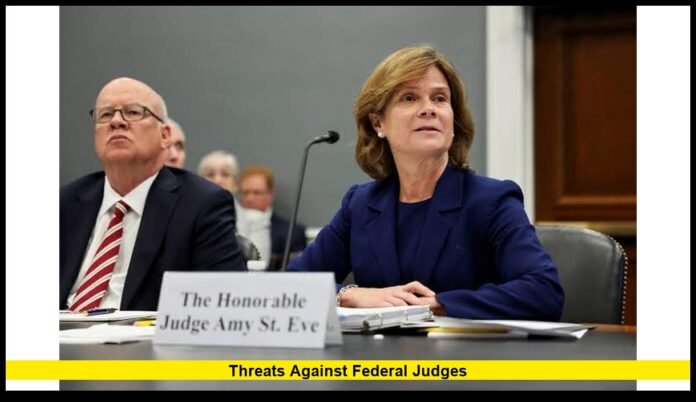

Threats against federal judges continue to draw nationwide attention as federal authorities, court officials, and lawmakers work to address the growing number of intimidation cases targeting members of the U.S. judiciary. As of August 2026, judicial security remains one of the highest priorities within the federal court system. Criminal investigations, security enhancements, and continued discussions in Congress highlight the seriousness of the issue.
Federal judges play a critical role in interpreting the Constitution, resolving legal disputes, and ensuring justice is administered fairly. When judges become targets of threats or harassment because of their decisions, it raises concerns that extend beyond individual courtrooms. Protecting judges is widely viewed as essential to preserving an independent judicial system and maintaining public confidence in the rule of law.
Why Federal Judges Face Security Risks
Federal judges oversee some of the nation’s most significant legal matters. Their responsibilities include cases involving organized crime, terrorism, financial fraud, immigration, constitutional rights, election disputes, public corruption, civil liberties, and major federal criminal prosecutions.
Many of these cases involve individuals or organizations with strong opinions or significant personal interests. Although citizens have the right to disagree with court rulings, threats, intimidation, and violence are criminal acts that interfere with the justice system.
Court officials have repeatedly emphasized that judges must be able to make decisions based on facts and the law without fearing for their own safety or the safety of their families.
Judicial Security Has Become a National Priority
Over the last several years, the federal government has devoted increasing attention to protecting judges. Security concerns now receive regular discussion during budget hearings, congressional oversight meetings, and court administration planning.
The federal judiciary continues requesting additional funding to strengthen security measures across the country. These efforts focus on protecting judges both inside federal courthouses and away from their workplaces.
Security planning now includes:
- Personal protection for judges facing elevated risks
- Improved courthouse security systems
- Enhanced monitoring of online threats
- Faster investigations of threatening communications
- Better coordination between federal and local law enforcement agencies
Officials believe these measures are necessary because the threat environment has changed significantly compared with previous decades.
Threat Investigations Continue Across the Country
Federal law enforcement agencies investigate every reported threat that appears credible. The U.S. Marshals Service serves as the primary agency responsible for protecting the federal judiciary, while the Department of Justice prosecutes individuals accused of making unlawful threats.
Each investigation begins by examining whether a communication represents protected free speech or crosses the legal line into criminal intimidation.
Investigators review several important factors, including:
- The wording of the threat
- Whether the sender identified a specific judge
- Previous criminal behavior
- Access to weapons
- Evidence showing preparation or planning
- Online activity connected to the threat
When authorities determine that a serious threat exists, they may increase security around a judge immediately while criminal investigators continue gathering evidence.
Recent Cases Show Strong Federal Enforcement
Federal prosecutors have continued filing criminal charges in cases involving threats against judges.
One widely reported case involved a suburban Chicago resident accused of sending threatening letters to federal judges serving in different states. Prosecutors alleged the communications violated federal law prohibiting threats against judicial officers.
In another significant case during 2026, a Las Vegas woman received a lengthy federal prison sentence after being convicted of threatening two federal judges and a probation officer. Prosecutors stated that attacks on judges threaten the integrity of the justice system itself and require serious criminal penalties.
These prosecutions demonstrate that authorities continue pursuing cases involving threats regardless of where they originate.
Increasing Numbers Have Raised Concern
Although annual totals vary from year to year, federal officials have consistently reported a much higher number of threats than the judiciary experienced a decade ago.
The U.S. Marshals Service continues tracking reports involving:
- Death threats
- Harassing letters
- Threatening emails
- Telephone threats
- Social media intimidation
- Suspicious packages
- Attempts to reveal judges’ private information online
Many reported incidents do not ultimately result in criminal charges. However, each report receives careful evaluation because investigators cannot assume that an apparent threat is harmless.
The Role of the U.S. Marshals Service
The U.S. Marshals Service performs one of the most important public safety missions within the federal government by protecting judges and federal courts.
Many Americans know the agency for locating fugitives, but judicial security represents another major responsibility.
Deputy marshals provide protection through several methods, including:
- Security assessments
- Threat investigations
- Protective details
- Intelligence gathering
- Emergency planning
- Coordination with courthouse security officers
When a judge faces an elevated risk, protective measures can increase rapidly depending on the seriousness of the situation.
Online Harassment Has Changed the Threat Landscape
Technology has significantly changed how threats are delivered.
Years ago, threatening letters or telephone calls represented the most common forms of intimidation. Today, many threats originate through digital platforms, anonymous messaging services, and social media accounts.
Investigators now spend substantial time reviewing:
- Online posts
- Direct messages
- Videos
- Public comments
- Email communications
- Shared personal information
Officials also remain concerned about doxxing, where someone’s private information is intentionally published online to encourage harassment or intimidation.
Because information spreads quickly on the internet, even a single threatening post can require immediate investigation.
Security Extends Beyond the Courthouse
Judicial protection no longer focuses only on federal courthouses.
Authorities increasingly evaluate risks involving judges’ homes, family members, travel schedules, and public appearances.
Modern security planning may include:
- Residential security reviews
- Alarm system recommendations
- Temporary security details
- Coordination with local police departments
- Travel security planning
Officials have stated that protecting judges away from work has become just as important as protecting them inside court facilities.
Congress Continues Reviewing Judicial Safety
Members of Congress continue discussing judicial security during hearings involving court funding and federal law enforcement.
Lawmakers from both political parties have expressed support for improving protections for judges who face credible threats while performing their official duties.
Discussions have included:
- Additional security funding
- Improved investigative resources
- Better technology for monitoring threats
- Expanded privacy protections
- Increased staffing for protective operations
Many lawmakers agree that maintaining an independent judiciary requires sufficient resources to keep judges safe.
The Importance of Judicial Independence
The American legal system depends on judges making impartial decisions based solely on the Constitution and federal law.
Judicial independence allows judges to issue rulings without outside pressure from political organizations, criminal defendants, special interest groups, or members of the public.
Threats attempt to undermine that independence by creating fear or intimidation.
Legal experts have long argued that if judges believe personal safety could depend on the outcome of a case, public confidence in the courts could suffer.
Protecting judges therefore protects the fairness of the justice system itself.
Privacy Protections Have Expanded
Congress has approved legislation designed to strengthen privacy protections for judges.
One of the most significant developments followed the tragic attack involving the family of U.S. District Judge Esther Salas.
The resulting federal law helps reduce the availability of judges’ personal information online by limiting access to sensitive details such as home addresses and other identifying information.
Supporters believe these protections make it more difficult for individuals to locate judges or their families after controversial court decisions.
How Authorities Respond to Threat Reports
Every reported threat follows a structured investigative process.
First, investigators collect the communication itself, whether it arrives through mail, email, social media, voicemail, or another platform.
They then evaluate whether the statement contains:
- Specific language suggesting violence
- Identifiable targets
- Evidence of planning
- Immediate danger
- Criminal intent
If investigators determine the threat is credible, they coordinate with prosecutors and may seek criminal charges while increasing security for the judge involved.
Some investigations conclude quickly because evidence shows no genuine threat. Others continue for months while investigators gather digital evidence, interview witnesses, and execute search warrants.
Court Employees Also Face Risks
Security concerns extend beyond judges.
Federal court employees, probation officers, clerks, deputy marshals, and courthouse security personnel also encounter threats connected to high-profile cases.
Many federal buildings now use:
- Metal detectors
- Visitor screening
- Identification verification
- Security cameras
- Controlled building access
- Emergency response procedures
These measures protect employees as well as members of the public visiting federal courthouses.
Public Debate and Responsible Criticism
Americans regularly debate important court decisions, and public discussion remains an important part of a democratic society.
Citizens may:
- Express disagreement with rulings
- Write opinion articles
- Participate in peaceful demonstrations
- File legal appeals
- Support legislative changes
However, threats, intimidation, stalking, or violence fall outside lawful public debate and may result in federal criminal prosecution.
Federal officials continue reminding the public that disagreements with judicial decisions should be addressed through legal processes rather than personal attacks.
Challenges Facing the Federal Court System
Security concerns create several ongoing challenges for the judiciary.
Courts must balance public access with effective protection.
Federal courthouses remain open to attorneys, litigants, journalists, and members of the public. At the same time, officials must carefully screen visitors while maintaining efficient court operations.
Growing security demands also require additional funding for:
- Protective personnel
- Security technology
- Intelligence analysis
- Emergency planning
- Facility improvements
Court administrators continue working to ensure that stronger security does not reduce transparency or limit public access to court proceedings.
What the Future May Hold
Judicial security will likely remain an important issue throughout the remainder of 2026.
Federal agencies continue monitoring emerging threats while reviewing security procedures and improving coordination between law enforcement organizations.
Technology will also remain a major focus as investigators respond to evolving methods of online harassment and digital intimidation.
Court officials have indicated that protecting judges requires constant attention because the threat environment continues changing alongside new communication technologies.
Why This Issue Matters to Every American
The safety of federal judges affects far more than the individuals serving on the bench.
When judges can perform their duties without intimidation, courts remain better positioned to deliver fair, impartial decisions that uphold the Constitution and federal law.
The continued efforts of the U.S. Marshals Service, the Department of Justice, Congress, and the federal judiciary demonstrate the importance of preserving judicial independence while ensuring that those who administer justice can do so safely.
As threats continue to be investigated and prosecuted, protecting the integrity of the federal court system remains a shared responsibility that supports confidence in one of the nation’s most important democratic institutions.
What are your thoughts on the ongoing efforts to strengthen judicial security in the United States? Share your perspective in the comments and check back for the latest verified developments.