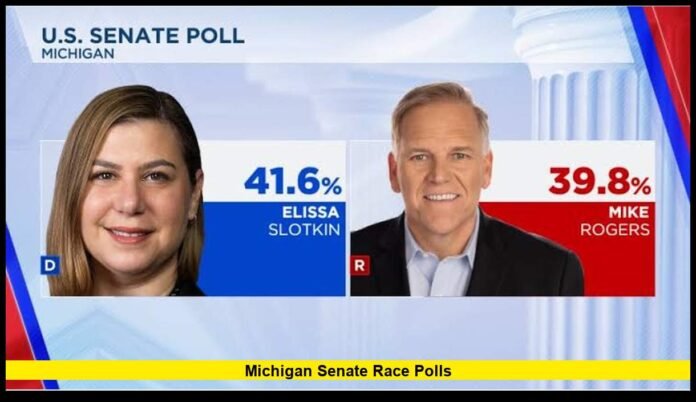

The Michigan Senate race polls continue to draw nationwide attention as one of the most closely watched contests of the 2026 election cycle. With an open U.S. Senate seat on the ballot, both major political parties have invested heavily in the race. Recent polling shows a highly competitive campaign, with only a narrow gap separating the leading candidates. As Election Day approaches, new surveys continue to provide insight into voter preferences, campaign momentum, and the issues shaping the race.
Latest Michigan Senate Race Polls
The latest Michigan Senate race polls suggest that the contest remains extremely competitive. Polling averages indicate that support for the leading candidates is close, with many surveys falling within the margin of error. Because of this, analysts believe the race could remain undecided until the final votes are counted.
Pollsters regularly update their findings throughout the campaign as they collect responses from likely voters across the state. While individual surveys may produce different results, polling averages often provide the clearest picture of the race.
Leading Candidates in the Race
Michigan’s open Senate race features several well-known political figures competing for one of the state’s most important offices.
The leading candidates include:
- Abdul El-Sayed (Democratic Party)
- Haley Stevens (Democratic Party)
- Mike Rogers (Republican Party)
The Democratic nomination has attracted significant attention because it features candidates representing different priorities within the party. Meanwhile, Republicans are focusing on winning back a Senate seat in one of the nation’s most competitive states.
Current Polling Trends
Recent polling trends suggest that voter support remains closely divided. Some surveys have shown a slight advantage for one candidate, while others have found the race effectively tied.
Several factors continue to influence polling trends, including campaign advertising, voter outreach efforts, debates, fundraising, and national political developments. Since a large number of voters remain undecided, even small shifts in public opinion could affect the final outcome.
Why Michigan Is a Key Battleground
Michigan has become one of America’s most competitive political states. Statewide elections have frequently been decided by narrow margins, making every major race important to both parties.
Several factors contribute to Michigan’s battleground status:
- Competitive suburban communities
- Strong labor and manufacturing workforce
- Diverse urban and rural populations
- Large independent voter base
- Historically high voter participation
Because of these characteristics, campaigns continue investing significant time and resources across the state.
Issues Driving the Michigan Senate Race Polls
Polling often reflects how voters respond to the issues dominating the campaign. Candidates continue adjusting their messages as public priorities evolve.
Among the top issues are:
- Inflation
- Economic growth
- Manufacturing jobs
- Healthcare
- Immigration
- Public safety
- Education
- Federal spending
- Energy policy
These topics remain central to campaign speeches, debates, and political advertising.
Understanding Polling Averages
Election experts often recommend reviewing polling averages instead of relying on a single survey. Individual polls may differ because organizations use different sample sizes, interview methods, and likely voter models.
Polling averages combine multiple surveys to reduce the impact of unusual results and provide a broader view of public opinion. However, they still represent a snapshot of voter preferences rather than a prediction of the final election result.
Could the Polls Change Before Election Day?
Yes. Poll numbers often change as campaigns enter their final weeks.
Several events may influence voter opinion, including:
- Candidate debates
- Major campaign endorsements
- Television advertising
- Fundraising success
- National political developments
- Economic news
- Early voting participation
As more voters make their decisions, polling organizations continue updating their surveys to reflect changing public sentiment.
The Importance of Undecided Voters
Undecided voters remain one of the biggest factors in the Michigan Senate race. In closely contested elections, these voters often determine the final outcome.
Campaigns spend considerable time reaching independent voters through advertising, public appearances, and grassroots organizing. Since Michigan elections have frequently been decided by small margins, every undecided voter represents an important opportunity.
What Political Observers Are Watching
Election analysts continue monitoring several indicators that could influence the race during the final stretch of the campaign.
These include:
- New statewide polling
- Fundraising totals
- Candidate debates
- Early voting participation
- Independent voter preferences
- Campaign endorsements
- Voter enthusiasm
Together, these developments provide valuable insight into the direction of the election.
How Reliable Are Election Polls?
Election polls offer useful information about current voter opinion, but they cannot guarantee election outcomes.
Every poll includes a margin of error, and public opinion can change quickly during a campaign. Unexpected events, increased voter turnout, or shifts among undecided voters may lead to results that differ from polling averages.
For this reason, most analysts recommend viewing polls as one tool for understanding the race rather than a definitive forecast.
Q: What do the latest Michigan Senate race polls show?
A: Recent polling indicates a highly competitive race, with only a narrow difference separating the leading candidates.
Q: Who are the major candidates in the Michigan Senate race?
A: The leading candidates include Abdul El-Sayed, Haley Stevens, and Republican Mike Rogers.
Q: Why is the Michigan Senate race important?
A: Michigan is considered a key battleground state, and the election could play an important role in determining the balance of power in the U.S. Senate.
Q: How often are Michigan Senate polls updated?
A: Polling organizations regularly release new surveys throughout the campaign, especially as Election Day approaches.
Q: Can polling results change before the election?
A: Yes. Debates, campaign events, advertising, endorsements, economic developments, and voter turnout efforts can all influence polling numbers.
Q: Should voters trust one poll or polling averages?
A: Most election experts recommend looking at polling averages because they combine multiple surveys and generally provide a more balanced picture of the race.
Key Points Summary
╔════════════════════════════════════════════════════════════════════╗
║ – Michigan Senate race polls continue to show one of the closest Senate contests in the country. ║
║ – Recent surveys indicate a competitive race with only a small margin between leading candidates. ║
║ – Michigan remains a crucial battleground state with a large independent voting population. ║
║ – Polling averages usually provide a clearer picture than individual surveys. ║
║ – Undecided voters and turnout will likely determine the final election outcome. ║
╚════════════════════════════════════════════════════════════════════╝
Stay tuned for the latest Michigan Senate race polls, candidate developments, and election updates as the campaign moves closer to Election Day.