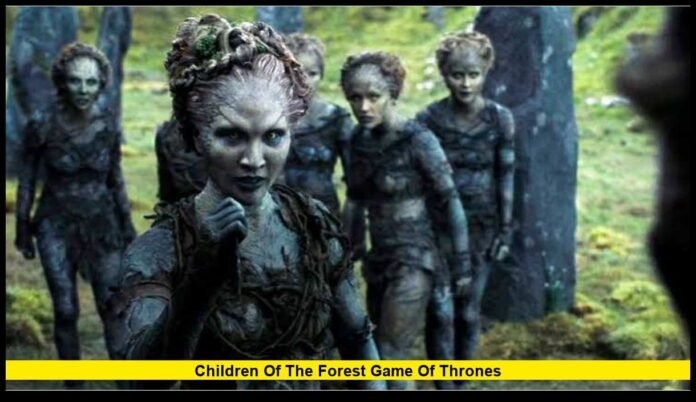

Children of the Forest Game of Thrones continues to attract fans eager to understand the oldest civilization in Westeros and its influence on the events of the hit fantasy franchise. Even years after the original HBO series concluded, the ancient race remains one of the most discussed parts of George R.R. Martin’s world. Recent interest in the early history of Westeros through House of the Dragon has encouraged many viewers to revisit the mysterious beings whose actions shaped thousands of years of history before the Targaryens, the Starks, or the Lannisters rose to power.
Who Are the Children of the Forest?
The Children of the Forest were the original known inhabitants of Westeros long before humans reached the continent. They lived among vast forests, rivers, mountains, and sacred groves, creating a civilization that existed in harmony with nature rather than dominating it.
Unlike the kingdoms later established by humans, the Children did not build massive castles or walled cities. Their homes blended naturally into forests and caves, reflecting their close relationship with the land around them.
They were considerably smaller than humans and possessed unique physical features. Their large eyes, pointed ears, and leaf-colored appearance distinguished them from every other race described in A Song of Ice and Fire. Their deep understanding of magic also separated them from ordinary people.
Although only a handful appear in the television adaptation, their influence reaches nearly every important chapter of Westerosi history.
Life Before the Arrival of Humans
Thousands of years before recorded history, the Children lived peacefully throughout Westeros. During this period, forests covered much of the continent, and wildlife flourished without major human settlements.
Their society revolved around balance with nature. Rather than changing the landscape, they protected sacred trees and natural locations that held spiritual importance.
Magic was not simply a tool for them. It formed the foundation of their culture, religion, and daily life.
The Children worshipped the Old Gods through the weirwood trees that grew across Westeros. These ancient trees eventually became one of the defining symbols of northern culture, even after humans spread across the continent.
The First Men Enter Westeros
Everything changed when the First Men crossed into Westeros from Essos thousands of years before the events shown in Game of Thrones.
The newcomers arrived with weapons, livestock, and plans to establish permanent settlements. Forests were cleared to create farmland and villages, bringing them into direct conflict with the Children of the Forest.
The sacred weirwood groves became major targets as expanding settlements spread throughout the continent.
The Children viewed these actions as attacks on both nature and their religion.
A long conflict followed.
Generations fought on both sides, making this one of the earliest and most important wars in Westerosi history.
Ancient Magic During the War
Unable to match human numbers, the Children relied heavily on powerful magic.
Legends describe one of their greatest magical acts as the Hammer of the Waters.
This event reportedly shattered much of the land bridge connecting Westeros and Essos. The destruction permanently altered the geography of the continent, although many First Men had already crossed before the land disappeared beneath the sea.
Whether every detail survives accurately through legend remains uncertain, but the story demonstrates how extraordinary the magical abilities of the Children were believed to be.
The Pact That Ended the Conflict
After centuries of war, both sides recognized that endless fighting would destroy them all.
Peace negotiations eventually took place on the Isle of Faces, one of the most mysterious locations in Westeros.
The resulting agreement became known simply as the Pact.
Its terms allowed humans to keep open lands suitable for farming while protecting forests that remained under the care of the Children.
The agreement also encouraged peaceful coexistence.
Perhaps even more importantly, many First Men gradually adopted the worship of the Old Gods after living alongside the Children.
This shared faith continues throughout the North thousands of years later.
The Importance of the Weirwood Trees
No discussion about the Children of the Forest is complete without examining the weirwood trees.
These remarkable trees possess white bark, blood-red leaves, and carved faces that seem almost alive.
For the Children, weirwoods served several purposes.
They acted as sacred religious sites, centers of magical knowledge, and connections between the living world and ancient memories.
Greenseers used these trees to experience visions extending across both distance and time.
Because thousands of weirwoods once covered Westeros, they created an enormous network unlike anything else in the fantasy series.
Many northern castles still maintain ancient weirwood trees inside their godswoods, preserving traditions that originated with the Children themselves.
Greenseers and Extraordinary Abilities
The magical talents of the Children varied greatly.
Some possessed abilities far beyond ordinary magic.
Greenseers represented the rarest among them.
They experienced prophetic dreams, viewed distant events, explored memories preserved within weirwood trees, and sometimes witnessed moments from the distant past.
These remarkable gifts later became central to Bran Stark’s journey.
His development as the new Three-Eyed Raven connected human history directly with the ancient knowledge first cultivated by the Children.
Skinchanging and Animal Bonds
Many members of the Children also displayed another remarkable ability known as skinchanging.
This allowed them to enter the minds of animals.
Wolves, ravens, deer, and other creatures became extensions of their awareness.
Humans later inherited similar talents in rare cases.
Characters such as Bran Stark demonstrate abilities closely connected to the magical traditions originally practiced by the Children of the Forest.
Read More – Cast of The Abandons Season 1: Meet the Stars Bringing Netflix’s New Western Epic to Life
The Creation of the White Walkers
One of the most important revelations in Game of Thrones concerns the origin of the White Walkers.
The television series shows the Children creating the first White Walker by using dragonglass during a powerful magical ritual performed on a captured First Man.
Their goal was straightforward.
Human expansion threatened their survival, and they hoped to create defenders capable of stopping the invasion.
Instead, the magical creation eventually developed beyond their control.
The White Walkers became enemies of every living race, including those responsible for creating them.
This decision changed the future of Westeros forever.
The Long Night
The rise of the White Walkers eventually led to the Long Night.
Darkness spread across the continent while the dead marched south.
Faced with extinction, humans and the Children united against their common enemy.
Together they resisted the supernatural threat that endangered all life.
Many famous legends surrounding the Night’s Watch and the Wall trace their origins to this ancient struggle.
Although much of that history survives only through stories, its importance remains central to the mythology of Westeros.
Leaf and the Final Survivors
The HBO series introduced viewers to Leaf, one of the last surviving Children of the Forest.
She guided Bran Stark after his journey beyond the Wall and helped explain many forgotten chapters of Westerosi history.
Leaf also revealed why her people created the White Walkers.
Despite recognizing the terrible consequences, she continued protecting Bran because she believed preserving human memory offered the greatest hope for the future.
During the attack by the undead army, Leaf sacrificed herself while helping Bran and his companions escape.
Her death symbolized the disappearance of one of Westeros’ oldest civilizations.
The Three-Eyed Raven Connection
The Children played a vital role in developing the magical traditions associated with the Three-Eyed Raven.
Through their connection with the weirwood trees, they preserved centuries of knowledge.
The Three-Eyed Raven inherited access to this remarkable network, allowing memories from countless generations to survive.
When Bran eventually accepted this responsibility, the legacy of the Children continued through him.
Although their civilization nearly vanished, their wisdom remained alive within Westeros.
Why the Children Nearly Disappeared
Several events contributed to the decline of the Children of the Forest.
Continuous warfare weakened their population.
Human expansion steadily reduced their territory.
The Long Night brought additional destruction.
Over time, magic itself appeared to fade from much of Westeros.
By the period shown in Game of Thrones, most people believed the Children existed only in fairy tales.
Only Bran’s journey beyond the Wall revealed that a few survivors still remained.
The Children of the Forest in Modern Westeros Lore
Although they rarely appear directly in modern stories, nearly every major magical tradition connects back to them.
The worship of the Old Gods.
The sacred weirwood trees.
Greenseeing.
Skinchanging.
The history of the White Walkers.
Even Bran Stark’s transformation into the Three-Eyed Raven reflects knowledge first developed by the Children thousands of years earlier.
Their influence stretches across nearly every supernatural element in George R.R. Martin’s fictional world.
Connections to House of the Dragon
While the current timeline of House of the Dragon focuses on the Targaryen dynasty, the series continues to remind audiences that Westeros possesses a much older history.
Ancient locations associated with the Children still exist during the reign of House Targaryen.
The Isle of Faces remains one of the continent’s greatest mysteries.
The Old Gods continue to be worshipped throughout the North.
Weirwood trees still stand inside many castles.
These reminders reinforce the idea that the oldest magic in Westeros never completely disappeared.
Instead, it quietly survived beneath the political struggles that dominate later generations.
Book and Television Differences
Readers of George R.R. Martin’s novels encounter a broader exploration of the Children than television viewers.
The books spend additional time explaining their magical traditions, history, and relationship with nature.
Some mysteries remain intentionally unresolved.
The exact origins of the Children have never been fully explained.
Likewise, several ancient events remain partially hidden behind myths passed down across thousands of years.
This uncertainty adds depth to the world while encouraging ongoing discussion among readers and viewers.
Why Fans Continue Discussing the Children
The Children of the Forest continue to fascinate audiences because they represent the beginning of Westerosi civilization.
Every important era connects back to decisions made by this ancient race.
Without them, the White Walkers would never have existed.
The Old Gods would not have spread among the First Men.
Bran Stark’s destiny would have unfolded very differently.
Their limited screen time has only increased curiosity about their history.
Many viewers enjoy exploring the deeper mythology behind familiar characters, making the Children one of the most enduring subjects within the franchise.
Their Legacy Across Westeros
The influence of the Children reaches every corner of Westeros despite their near extinction.
Sacred forests remain protected.
Ancient legends continue to shape northern traditions.
The magical connection between humans and weirwood trees survives through Bran Stark.
Their civilization disappeared, yet their achievements continue influencing events thousands of years later.
Very few fictional races have left such an enormous impact while appearing so briefly in a television adaptation.
That lasting importance explains why they remain one of the most memorable and mysterious parts of the Game of Thrones universe.
What fascinates you most about the Children of the Forest—their ancient magic, their connection to the weirwoods, or the role they played in shaping Westeros? Share your thoughts in the comments below.