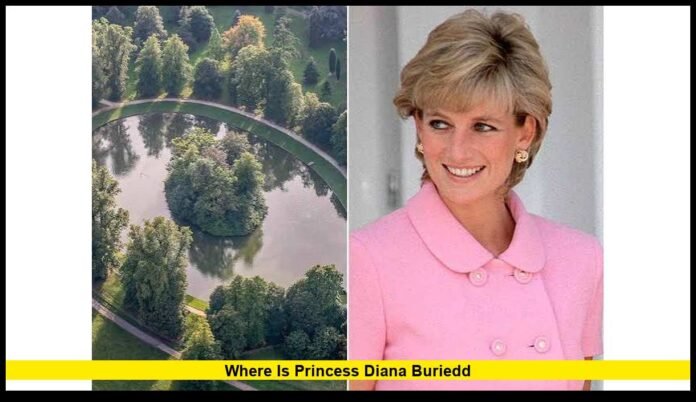

Princess Diana remains one of the most admired public figures in modern history, and where is princess diana buried continues to be a question that draws interest from people around the world. Decades after her passing, her life, charitable work, and influence continue to inspire millions. While many members of the British royal family are laid to rest in royal chapels or historic vaults, Diana’s burial site is different. Her family chose a peaceful location that reflects both her personal history and their desire to preserve her privacy.
Her final resting place has become a symbol of remembrance rather than a tourist destination, allowing admirers to honor her legacy while respecting the quiet sanctuary created in her memory.
Princess Diana’s Final Resting Place
Princess Diana is buried at Althorp Estate, the ancestral home of the Spencer family in Northamptonshire, England. The estate has belonged to Diana’s family for more than five centuries and played a significant role throughout her childhood.
Rather than being buried inside a church or royal mausoleum, Diana’s grave is located on a small island in the middle of Oval Lake. The island is surrounded by calm water and mature trees, creating a secluded setting that offers both beauty and privacy.
Following her funeral in London on September 6, 1997, Diana was laid to rest during a private ceremony attended by close relatives and friends. Since then, the island has remained inaccessible to the public.
Why the Spencer Family Chose Althorp Estate
The decision to bury Princess Diana at Althorp reflected several deeply personal considerations.
First, Althorp represented home. Diana spent much of her childhood on the estate after her father inherited the Spencer title. The property became one of the places most closely associated with her early life, making it a meaningful location for her final resting place.
The family also recognized the extraordinary public attention surrounding Diana. Even before her funeral, millions of mourners had gathered outside royal residences, leaving flowers, messages, and tributes. It was clear that any public cemetery or royal chapel would likely become overwhelmed by visitors for generations.
Choosing a private island within the family estate allowed Diana’s loved ones to create a peaceful memorial while protecting the dignity of the site.
A Burial Site Unlike Any Other Royal Memorial
Unlike many senior members of the British royal family, Princess Diana was not buried at Windsor Castle, Westminster Abbey, or St. George’s Chapel.
Her burial location reflects her unique place in British history. Although she married into the royal family, she remained closely connected to the Spencer family throughout her life.
The island itself is intentionally understated. There are no elaborate monuments visible from a distance, and the surrounding landscape emphasizes nature rather than grandeur. The setting creates an atmosphere of reflection rather than spectacle.
This approach mirrors the qualities many people admired most about Diana: compassion, humility, and warmth.
Can the Public Visit Princess Diana’s Grave?
One of the most common questions visitors ask is whether they can walk to Princess Diana’s grave.
The answer is no.
The burial island remains strictly private and is not open to visitors. Access is reserved for members of the Spencer family and invited guests.
However, Althorp Estate traditionally opens to the public during selected periods of the year, giving visitors the opportunity to explore many parts of the historic property.
Guests can view:
- The exterior of Althorp House
- Historic gardens and parkland
- Exhibitions about Princess Diana’s life
- Memorial displays
- The Memorial Temple overlooking Oval Lake
Although visitors cannot step onto the burial island, they can see it from designated viewing areas across the lake.
The Memorial Temple
The Memorial Temple serves as the principal location where visitors pay tribute to Princess Diana.
Positioned beside the lake rather than on the island itself, the structure provides a peaceful setting for reflection. Many visitors spend time there reading about Diana’s life, humanitarian efforts, and enduring influence.
The temple allows admirers to honor her memory without disturbing the privacy of her grave.
This careful balance between public remembrance and personal privacy has helped preserve the dignity of the memorial for nearly three decades.
The Story Behind Oval Lake
Oval Lake is more than simply a picturesque feature of Althorp Estate.
Its location naturally separates the burial island from surrounding walking paths, creating an effective barrier that requires no fences or heavy security. The water symbolizes peace and permanence while protecting the site from large crowds.
The island is surrounded by carefully maintained trees and gardens that blend seamlessly into the wider landscape.
Throughout the changing seasons, the area reflects the quiet atmosphere the Spencer family envisioned when selecting Diana’s burial place.
The Funeral That United the World
Princess Diana died following a car accident in Paris on August 31, 1997, at the age of 36.
News of her death prompted an unprecedented wave of grief across the globe. Millions of flowers covered the gates of Kensington Palace and other royal residences, while countless tributes arrived from every continent.
Her funeral took place at Westminster Abbey on September 6, 1997.
The service was watched by an estimated audience of more than two billion people worldwide, making it one of the most-viewed televised events in history.
Following the public ceremony, Diana’s coffin traveled privately to Althorp Estate, where she was buried away from the cameras in accordance with her family’s wishes.
How Althorp Continues to Preserve Diana’s Memory
Today, Althorp remains both a historic country estate and a place of remembrance.
Seasonal exhibitions often feature photographs, personal belongings, historical displays, and information about Diana’s charitable work.
The estate also highlights the long history of the Spencer family, offering visitors a broader understanding of the environment in which Diana spent much of her childhood.
The combination of history, architecture, gardens, and memorial spaces makes Althorp one of England’s most meaningful heritage destinations.
Diana’s Humanitarian Legacy
Although Princess Diana is remembered for her elegance and global popularity, her humanitarian work remains one of her greatest achievements.
She helped transform public attitudes toward several important causes, including:
- HIV and AIDS awareness
- Support for homeless individuals
- Children’s healthcare
- Campaigns against landmines
- Leprosy awareness
- Mental health conversations
- International humanitarian aid
Her willingness to meet patients, comfort families, and draw attention to overlooked issues changed public perceptions around the world.
Many charities continue to reference her example when discussing compassionate public service.
Why Interest in Diana Remains So Strong
Every generation seems to rediscover Princess Diana’s remarkable story.
Documentaries, television productions, books, museum exhibitions, and royal anniversaries regularly renew interest in her life. Public appearances by Prince William and Prince Harry also encourage people to reflect on the lasting influence their mother continues to have.
For many visitors to Britain, Althorp represents an important destination because it connects them with Diana’s personal story rather than the formal traditions of the monarchy.
This enduring fascination explains why where is princess diana buried remains one of the most frequently searched questions related to the late Princess of Wales.
Common Questions About Princess Diana’s Burial
Is Princess Diana buried with other members of the royal family?
No. She was buried at Althorp Estate rather than at one of the traditional royal burial locations.
Can visitors reach the burial island?
No. The island is private and closed to the public.
Can people still visit Althorp?
Yes. The estate generally welcomes visitors during seasonal openings, allowing them to explore exhibitions, gardens, and memorial areas while viewing the burial island from a distance.
Why was an island selected?
The Spencer family believed the secluded location would provide privacy, security, and a peaceful environment for Diana’s final resting place.
Is the grave marked by a large monument?
No. The site remains intentionally simple, allowing the natural surroundings to serve as a respectful memorial.
The Importance of Privacy
Even in life, Princess Diana lived under extraordinary public scrutiny.
Her family believed that her final resting place should offer the peace she rarely experienced during her lifetime.
Keeping the burial island closed has allowed family members to visit privately while ensuring the memorial remains protected from damage and excessive tourism.
The arrangement has earned respect from many visitors, who appreciate the opportunity to honor Diana without intruding upon her family’s wishes.
A Legacy That Continues Across Generations
Princess Diana’s influence extends well beyond her years as Princess of Wales. Her commitment to compassion, charity, and human connection continues to inspire public figures, nonprofit organizations, and ordinary people across the globe.
Her sons have frequently spoken about carrying forward many of the causes that mattered to their mother, ensuring that her humanitarian vision continues through new initiatives and charitable work.
Meanwhile, Althorp Estate remains a place where history, family heritage, and remembrance come together. Visitors leave with a deeper appreciation not only for Diana’s remarkable life but also for the thoughtful way her family chose to preserve her memory.
Nearly thirty years after her passing, the quiet island in Oval Lake stands as a powerful reminder that while fame may be temporary, kindness and compassion can leave an enduring mark on the world. Princess Diana’s story continues to resonate because it reflects resilience, empathy, and a genuine commitment to helping others—qualities that remain as meaningful today as they were during her lifetime.