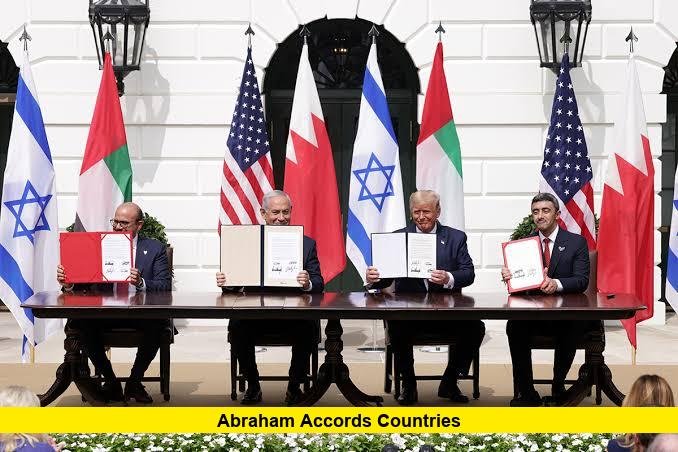

The term abraham accords countries refers to the nations that have established diplomatic relations with Israel under the Abraham Accords, a series of U.S.-brokered agreements first announced in 2020. The accords marked a major shift in Middle East diplomacy by promoting normalization, economic cooperation, and regional partnerships between Israel and several Arab nations.
Since their signing, the agreements have expanded trade, tourism, investment, and security cooperation. While discussions continue about whether additional countries may join in the future, the current list of Abraham Accords countries remains unchanged as of today.
What Are the Abraham Accords?
The Abraham Accords are normalization agreements designed to establish diplomatic and economic relations between Israel and participating Arab countries. They were officially signed at the White House on September 15, 2020.
The agreements aim to encourage peaceful relations, expand commercial ties, and strengthen cooperation in areas such as technology, healthcare, energy, education, and security.
The name “Abraham” symbolizes the shared heritage of Judaism, Christianity, and Islam through the biblical figure Abraham.
List of Abraham Accords Countries
As of today, the countries that have joined the Abraham Accords include:
- Israel
- United Arab Emirates (UAE)
- Bahrain
- Morocco
- Sudan
While Sudan agreed to normalize relations with Israel, some aspects of the process have progressed more slowly because of political developments within the country.
No additional country has officially joined the Abraham Accords since these nations became part of the framework.
United Arab Emirates
The United Arab Emirates became the first Gulf nation to establish formal diplomatic relations with Israel under the Abraham Accords.
Since 2020, cooperation between the two countries has expanded significantly in areas including:
- Trade and investment
- Tourism
- Artificial intelligence
- Renewable energy
- Financial services
- Healthcare
- Agriculture
The UAE and Israel have signed multiple business and technology agreements, making the relationship one of the most active outcomes of the accords.
Bahrain
Bahrain signed the Abraham Accords alongside the UAE in September 2020.
Since then, Bahrain has strengthened cooperation with Israel through diplomatic exchanges, economic initiatives, and security discussions. Trade and tourism have also increased as direct travel became easier between the two countries.
Morocco
Morocco joined the Abraham Accords later in 2020 and restored official diplomatic relations with Israel.
The agreement has supported cooperation in several sectors, including:
- Aviation
- Agriculture
- Water management
- Technology
- Education
- Business investment
Morocco has continued expanding bilateral ties while maintaining its broader regional relationships.
Sudan
Sudan announced its decision to normalize relations with Israel in 2020.
However, implementation has faced delays because of domestic political instability. While Sudan remains associated with the Abraham Accords framework, progress toward full normalization has been slower than in other participating countries.
Why These Countries Joined
Each nation entered the Abraham Accords based on its own strategic priorities.
Common objectives included:
- Expanding economic opportunities
- Increasing foreign investment
- Promoting regional stability
- Improving diplomatic relations
- Encouraging technological cooperation
- Enhancing security partnerships
Although motivations differed, the agreements created new channels for dialogue and cooperation across the Middle East.
Countries That Have Not Joined
Several countries have been discussed as possible future participants, but they have not officially joined the Abraham Accords.
Saudi Arabia remains one of the most closely watched countries. Despite years of diplomatic discussions involving the United States and Israel, Saudi Arabia has not established formal diplomatic relations with Israel. Saudi officials have consistently stated that meaningful progress toward an independent Palestinian state remains an essential condition for normalization.
Other countries in the region continue to monitor diplomatic developments but have not announced plans to become signatories.
Latest Developments
The Abraham Accords continue to be an important topic in international diplomacy.
In July 2026, U.S. President Donald Trump stated that a proposed civilian nuclear agreement with Saudi Arabia would be linked to the kingdom joining the Abraham Accords and normalizing relations with Israel. The remarks renewed attention on efforts to expand the agreements.
As of today, however, Saudi Arabia has not joined the Abraham Accords, and no official announcement has been made regarding additional member countries.
Why the Abraham Accords Countries Matter
The participating nations have demonstrated that diplomatic normalization can create opportunities beyond politics.
The Abraham Accords countries have expanded cooperation through:
- Increased trade
- Tourism growth
- Joint technology projects
- Scientific research
- Infrastructure investment
- Business partnerships
- Educational exchanges
These developments have strengthened economic ties and encouraged broader regional engagement.
Conclusion
The abraham accords countries currently include Israel, the United Arab Emirates, Bahrain, Morocco, and Sudan. Together, these nations have reshaped regional diplomacy by establishing formal relations and expanding cooperation across multiple sectors.
Although discussions continue regarding future expansion, no additional country has officially joined the Abraham Accords as of today. Any future additions will depend on diplomatic negotiations and the foreign policy priorities of the countries involved.
Enjoyed this guide? Share your thoughts below and stay tuned for the latest updates on the Abraham Accords and global diplomacy.