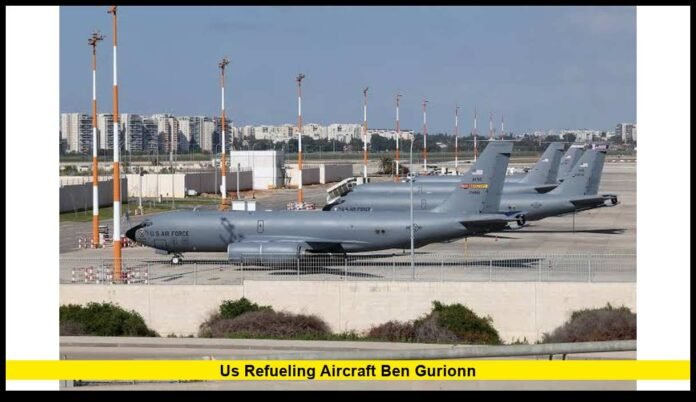

The presence of us refueling aircraft ben gurion has become one of the most closely followed aviation and defense stories in the Middle East during 2026. While Ben Gurion Airport remains Israel’s primary international gateway for millions of travelers each year, it has also played an important logistical role during heightened regional military operations. The continued deployment of U.S. Air Force aerial refueling aircraft has attracted attention not only because of their strategic value but also because of the operational challenges created at one of the region’s busiest airports. As officials work to balance military requirements with commercial aviation, travelers, airlines, and defense analysts alike continue to watch how the situation develops.
Why Ben Gurion Airport Has Become a Strategic Hub
Ben Gurion Airport is widely recognized as Israel’s busiest civilian airport, handling international passenger traffic, cargo operations, and diplomatic flights. Its modern infrastructure, long runways, extensive maintenance facilities, and secure environment make it capable of supporting a wide range of aircraft.
Although military aircraft are usually based at dedicated air bases, extraordinary operational requirements sometimes lead governments to utilize civilian airports that offer sufficient infrastructure and logistical support. During periods of increased military readiness, Ben Gurion has proven capable of accommodating large aircraft that require significant ground support and maintenance.
The airport’s location also provides quick access to regional air corridors, allowing aircraft to launch missions efficiently while remaining close to maintenance crews and supply chains.
What Are Aerial Refueling Aircraft?
Aerial refueling aircraft, commonly called tankers, serve as airborne fuel stations. Instead of forcing military aircraft to return to base for fuel, these specialized planes transfer fuel while both aircraft remain in flight.
This capability dramatically extends operational range and endurance.
Modern air forces rely heavily on aerial refueling because it allows fighter aircraft, reconnaissance platforms, transport aircraft, and strategic bombers to remain airborne for much longer periods than would otherwise be possible.
Without tanker support, aircraft are often limited by the amount of fuel they can carry during takeoff. With aerial refueling, missions lasting several hours—or even much longer—become possible.
Aircraft Commonly Supporting Regional Operations
Several types of tanker aircraft have supported U.S. military operations around the world.
KC-135 Stratotanker
The KC-135 has served for decades as one of the backbone aircraft of the U.S. Air Force.
Although originally introduced during the Cold War, continuous modernization has kept it relevant for today’s operational requirements. The aircraft can refuel multiple fighters during a single mission while also transporting cargo and personnel when necessary.
KC-46 Pegasus
The KC-46 Pegasus represents the newest generation of American aerial refueling capability.
Compared with older tankers, it offers:
- Improved fuel transfer systems
- Modern defensive technology
- Enhanced communications
- Greater cargo flexibility
- Medical evacuation capability
- Improved reliability
The aircraft has gradually become a central component of America’s future tanker fleet.
Why These Aircraft Matter
Aerial refueling influences nearly every aspect of modern military planning.
Instead of positioning fighters close to every potential operational area, commanders can deploy aircraft from more secure bases while relying on tankers to extend their reach.
This approach provides several advantages:
- Longer patrol missions
- Improved surveillance coverage
- Greater operational flexibility
- Faster response during emergencies
- Reduced dependence on forward air bases
For allied operations, tankers also improve coordination by allowing multiple nations’ aircraft to operate together over extended distances.
Operational Challenges at Ben Gurion Airport
While military aircraft provide valuable strategic capabilities, they also require considerable space on the ground.
Large tanker aircraft occupy parking positions designed for wide-body airplanes. Because they often remain parked between missions for maintenance, fueling, inspections, and crew changes, these aircraft can limit the availability of gates and remote stands normally used by commercial airlines.
Airport planners must continuously coordinate aircraft movement to ensure both military and civilian operations proceed safely.
During busy travel periods, this balancing act becomes increasingly complex.
Commercial airlines depend on predictable parking availability to maintain schedules. Even minor disruptions in aircraft positioning can create delays that ripple throughout an airline’s daily operations.
Impact on Commercial Airlines
The presence of additional large aircraft has forced airport authorities to carefully manage available infrastructure.
Potential operational impacts include:
Reduced Parking Capacity
Each military aircraft occupies valuable apron space that could otherwise accommodate commercial airliners arriving from Europe, North America, Asia, and neighboring countries.
Increased Ground Coordination
Air traffic controllers and ground crews must coordinate military and civilian movements while maintaining strict safety standards.
Longer Aircraft Turnaround
If parking becomes limited, arriving aircraft may occasionally wait longer before reaching an available stand.
Peak Travel Pressures
Summer vacations traditionally produce some of the highest passenger volumes of the year.
Combined with military operations, increased tourism creates additional pressure on airport infrastructure.
Efforts to Relocate Some Aircraft
Israeli authorities have explored options for relocating portions of the tanker fleet to reduce congestion.
Potential alternatives include military facilities capable of supporting large aircraft while maintaining operational readiness.
Relocation, however, is far from simple.
Moving a tanker fleet involves:
- Maintenance personnel
- Spare parts
- Fuel supplies
- Communications equipment
- Security infrastructure
- Flight planning coordination
Each relocation decision requires extensive planning to avoid disrupting ongoing operations.
For that reason, officials continue evaluating the best long-term solution while ensuring both military preparedness and efficient airport operations.
Israel’s Growing Refueling Capability
One important development during 2026 has been Israel’s continued modernization of its own aerial refueling fleet.
The Israeli Air Force has begun introducing the KC-46 tanker into service as part of a broader modernization effort designed to improve long-range operational capability.
These aircraft provide numerous improvements over older platforms, including:
- Increased fuel efficiency
- Advanced avionics
- Modern communications
- Greater cargo capacity
- Enhanced reliability
As additional aircraft enter service, Israel’s independent aerial refueling capability is expected to grow significantly.
Why Tankers Are Critical During Regional Tensions
Military aircraft consume fuel rapidly, especially during high-speed operations.
Aerial refueling provides commanders with greater flexibility because aircraft can remain airborne without returning to base repeatedly.
This supports missions such as:
- Air defense patrols
- Intelligence gathering
- Maritime surveillance
- Humanitarian support
- Search and rescue
- Long-distance deployments
Rather than relying solely on nearby airfields, military planners can position aircraft farther away while maintaining rapid response capability.
Security Measures at the Airport
Operating both civilian and military aircraft at the same airport requires extensive security coordination.
Authorities employ multiple layers of protection that include:
- Controlled access zones
- Enhanced perimeter security
- Continuous surveillance
- Air traffic monitoring
- Ground movement coordination
- Emergency response planning
Passengers generally experience little visible impact beyond occasional operational adjustments, as airport officials work to separate military activities from routine commercial travel.
How Travelers Could Be Affected
Most passengers continue using Ben Gurion Airport without significant disruption.
However, during exceptionally busy travel periods, travelers may notice:
- Longer taxi times before departure
- Slight arrival delays
- Gate changes
- Increased aircraft traffic
- Additional operational announcements
Airport authorities emphasize that passenger safety remains the highest priority regardless of military activity.
Airlines continue adjusting schedules whenever necessary to minimize inconvenience.
The Economic Importance of Maintaining Efficient Airport Operations
Ben Gurion Airport serves as an essential economic gateway for Israel.
Every year it supports:
- International tourism
- Business travel
- Cargo transportation
- High-value exports
- Technology industries
- Global connectivity
Maintaining efficient airport operations is therefore important not only for passengers but also for the broader economy.
Authorities must balance national security considerations with commercial aviation requirements to ensure both objectives are successfully achieved.
International Attention on the Situation
The continued presence of American tanker aircraft has attracted global attention because it highlights the close defense cooperation between the United States and Israel.
Military aviation experts have closely monitored developments, noting how civilian infrastructure can sometimes play an important supporting role during periods of elevated regional activity.
While similar arrangements have occurred elsewhere around the world, the visibility of aircraft parked at Israel’s main international airport has generated widespread discussion among aviation observers and defense analysts.
Looking Ahead
The situation surrounding us refueling aircraft ben gurion will likely continue evolving throughout the remainder of 2026. As military requirements change and regional conditions develop, authorities are expected to keep reviewing aircraft basing arrangements to ensure that both operational readiness and commercial aviation needs are effectively balanced.
For travelers, the airport continues operating normally, with airlines and airport officials working together to maintain reliable schedules despite increased demands on infrastructure. Meanwhile, the deployment of advanced aerial refueling aircraft underscores the growing importance of logistics, mobility, and international cooperation in modern defense planning.
Although future adjustments remain possible, one thing is clear: aerial refueling capability has become an indispensable component of contemporary military operations, and Ben Gurion Airport continues to play a significant supporting role during one of the most closely watched periods in regional aviation.
As developments continue to unfold, stay informed with the latest updates and share your thoughts on how military operations and commercial aviation can best coexist.