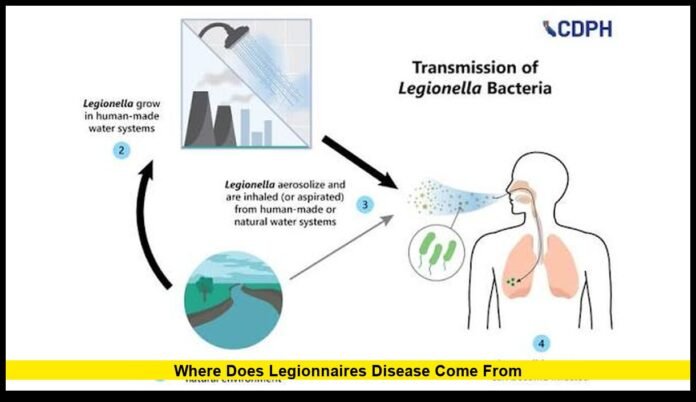

Legionnaires’ disease is a potentially serious lung infection caused by Legionella bacteria. A common question many people ask is where does legionnaires disease come from. Unlike viruses that spread from person to person, this illness is usually linked to contaminated water systems. The bacteria thrive in certain warm water environments and can infect people when tiny contaminated water droplets are inhaled. Understanding where the bacteria originate and how the disease spreads can help reduce the risk of infection.
╔════════════════════════════════════════════════════════════════════╗
║ – Legionnaires’ disease is caused by Legionella bacteria found naturally in freshwater. ║
║ – Infections usually occur after inhaling contaminated water mist from man-made water systems. ║
║ – Cooling towers, plumbing systems, hot tubs, and fountains are among the most common sources. ║
║ – The disease is rarely transmitted from one person to another. ║
║ – Proper maintenance and regular cleaning of water systems are key to preventing outbreaks. ║
╚════════════════════════════════════════════════════════════════════╝
What Is Legionnaires’ Disease?
Legionnaires’ disease is a severe form of bacterial pneumonia that primarily affects the lungs. It develops after a person breathes in microscopic water droplets containing Legionella bacteria. While many exposed individuals never become sick, others can develop serious respiratory illness that requires prompt medical treatment.
The disease can affect anyone, but the risk is significantly higher for older adults and people with underlying health conditions.
Where Does Legionnaires Disease Come From?
The bacteria responsible for Legionnaires’ disease occur naturally in lakes, rivers, ponds, and streams. In these natural settings, they usually exist at low levels and rarely pose a health risk.
The problem begins when the bacteria enter artificial water systems where conditions allow them to multiply rapidly. Warm water, stagnant sections of plumbing, and inadequate disinfection create an ideal environment for bacterial growth.
Common sources include:
- Cooling towers used in large buildings
- Hotel and resort plumbing systems
- Hospital water supplies
- Apartment building plumbing
- Hot tubs and whirlpool spas
- Decorative fountains
- Water storage tanks
- Industrial cooling systems
- Shower heads
- Humidifying equipment
When these systems release tiny water droplets into the air, people nearby may inhale the bacteria.
Why Do Legionella Bacteria Multiply?
Legionella bacteria flourish when water systems are not properly maintained.
Conditions that encourage growth include:
- Warm water temperatures
- Stagnant or low-flow water
- Mineral deposits and sediment
- Rust and corrosion inside pipes
- Biofilm buildup
- Low disinfectant levels
- Aging plumbing infrastructure
Without routine cleaning and monitoring, bacteria can multiply quickly inside complex water systems.
How Does Infection Occur?
People become infected mainly by breathing in contaminated water mist.
Examples include exposure to:
- Shower spray
- Hot tub steam
- Cooling tower mist
- Decorative fountain spray
- Industrial water systems
- Misting devices
A person does not become infected simply by being near someone who has the disease.
In uncommon situations, contaminated water entering the lungs while drinking may also cause infection.
Is Legionnaires’ Disease Contagious?
Legionnaires’ disease is generally not contagious.
Unlike influenza or COVID-19, it does not normally spread through coughing, sneezing, or close contact with infected individuals. Nearly all confirmed cases are linked to exposure to contaminated environmental water sources.
Who Faces the Highest Risk?
Certain individuals are more likely to develop severe illness after exposure.
High-risk groups include:
- Adults over 50 years old
- Smokers
- Former smokers
- People with chronic lung diseases
- Individuals with diabetes
- Kidney disease patients
- Cancer patients
- Organ transplant recipients
- People taking medications that suppress the immune system
- Heavy alcohol users
Healthy individuals may still become infected, but they generally experience less severe illness.
Signs and Symptoms
Symptoms typically begin within two to ten days after exposure.
Early symptoms may include:
- Fever
- Chills
- Muscle pain
- Headache
- Weakness
As the infection progresses, additional symptoms often develop:
- Persistent cough
- Shortness of breath
- Chest discomfort
- Confusion
- Nausea
- Vomiting
- Diarrhea
Some patients may also experience difficulty concentrating or changes in mental alertness.
How Is Legionnaires’ Disease Diagnosed?
Healthcare providers use several tests to confirm the infection.
These may include:
- Urine antigen testing
- Chest X-rays
- PCR laboratory testing
- Sputum cultures
- Blood tests
Early diagnosis helps ensure treatment begins as quickly as possible.
Treatment
Legionnaires’ disease is treated with antibiotics that effectively target Legionella bacteria.
Frequently prescribed medications include:
- Azithromycin
- Levofloxacin
- Moxifloxacin
Patients with severe illness may require hospitalization, oxygen therapy, intravenous fluids, or intensive care.
Most patients recover fully when treatment is started promptly.
Possible Complications
If left untreated, Legionnaires’ disease can lead to serious health problems, including:
- Respiratory failure
- Septic shock
- Kidney injury
- Multi-organ failure
- Prolonged fatigue
- Long-term lung damage
Older adults and people with weakened immune systems are more likely to experience complications.
How Can Legionnaires’ Disease Be Prevented?
Preventing Legionnaires’ disease largely depends on controlling bacterial growth in water systems.
Recommended preventive measures include:
- Cleaning cooling towers regularly
- Maintaining safe hot water temperatures
- Flushing little-used pipes
- Monitoring disinfectant levels
- Removing sediment from water tanks
- Inspecting plumbing systems routinely
- Maintaining decorative fountains and hot tubs
- Implementing water management programs in large buildings
Proper maintenance is one of the most effective ways to reduce the risk of outbreaks.
Why Large Buildings Require Extra Attention
Large facilities such as hospitals, hotels, office buildings, schools, and apartment complexes often have extensive plumbing systems with areas where water can remain stagnant. Without regular monitoring, these environments may allow Legionella bacteria to multiply.
For this reason, many building owners follow comprehensive water management plans that include routine inspections, temperature monitoring, and regular disinfection.
When Should You Seek Medical Care?
Anyone who develops pneumonia-like symptoms after staying in a hotel, hospital, cruise ship, or another large building should contact a healthcare provider promptly.
Immediate medical attention is recommended if you experience:
- High fever
- Persistent cough
- Difficulty breathing
- Chest pain
- Confusion
Early antibiotic treatment greatly improves the chances of a full recovery.
Final Thoughts
Knowing where does legionnaires disease come from helps people better understand how this serious infection develops and how it can be prevented. Although Legionella bacteria naturally exist in freshwater, they become a public health concern when they grow inside poorly maintained man-made water systems. Regular maintenance, proper water treatment, and awareness of the symptoms remain the best defenses against Legionnaires’ disease.
Have questions about Legionnaires’ disease or want more easy-to-understand health guides? Leave a comment below and stay connected for the latest health updates and expert insights.