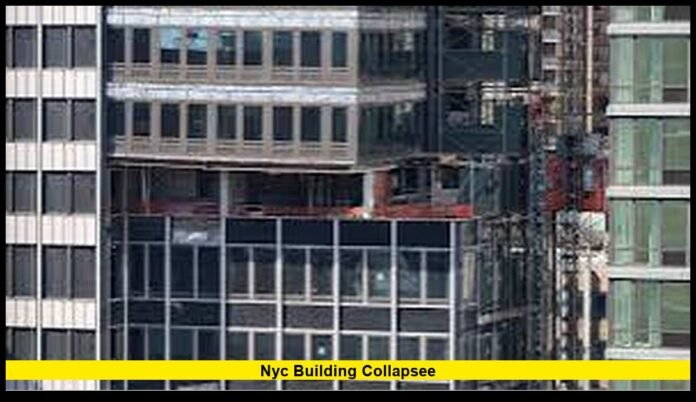

The nyc building collapse story has drawn nationwide attention after a serious structural emergency forced evacuations in Midtown Manhattan and prompted one of the city’s largest engineering response efforts in recent years. While the incident initially sparked fears of a catastrophic high-rise failure, emergency officials have since worked around the clock to stabilize the affected structure and prevent further damage. No complete collapse occurred, but the event has raised important questions about construction safety, aging commercial buildings, and the challenges involved in converting older office towers into residential housing.
As investigations continue, engineers, city officials, and developers are focused on understanding exactly what caused the structural distress and what lessons can be learned to help prevent similar incidents in the future.
Structural Emergency Unfolds in Midtown Manhattan
The incident centered on a high-rise redevelopment project located at 235 East 42nd Street in Manhattan, a building that once served as Pfizer’s longtime headquarters. The property is currently undergoing a large-scale conversion from office space into residential apartments, part of New York City’s broader effort to address housing shortages by repurposing older commercial buildings.
Construction workers reportedly identified signs of structural instability during ongoing renovation work. Engineers soon discovered that several steel columns had buckled, while portions of the building experienced noticeable floor deflection. Those findings immediately raised concerns about the integrity of part of the structure.
Because structural failures in high-rise buildings can rapidly worsen if left unchecked, city officials acted quickly. Emergency protocols were activated, nearby buildings were evacuated, and construction activities stopped while engineers assessed the situation.
Why Authorities Took Immediate Action
Modern steel-framed buildings are generally designed with multiple layers of redundancy, allowing loads to be redistributed if individual components become damaged. Even so, significant deformation in key structural members represents a serious safety concern.
Engineers determined that allowing construction work to continue without stabilization could increase the risk of additional movement. As a result, emergency crews established a large safety perimeter around the building while structural specialists began reinforcing weakened areas.
The rapid response reflected New York City’s strict approach to public safety whenever uncertainty exists about the condition of occupied or neighboring buildings.
Extensive Evacuations Across the Neighborhood
The emergency affected far more than the construction site itself.
Several nearby residential buildings, hotels, office towers, and commercial properties were evacuated while officials evaluated potential risks. Hundreds of residents, employees, visitors, and hotel guests were temporarily displaced as authorities worked to secure the area.
Traffic disruptions extended throughout sections of Midtown Manhattan, particularly around East 42nd Street and nearby intersections. Street closures complicated commuter travel near Grand Central Terminal, one of the busiest transportation hubs in the United States.
Public transit continued operating, but vehicle access around the immediate area remained restricted during much of the emergency response.
Businesses located inside the evacuation zone temporarily suspended operations, while local hotels worked with emergency personnel to assist displaced guests.
Emergency Engineering Response Begins
Once the danger area had been secured, structural engineers immediately focused on preventing further movement inside the building.
Specialized construction crews installed heavy steel shoring systems designed to temporarily carry structural loads away from damaged columns. Reinforcement beams were carefully positioned throughout affected floors to stabilize the building while permanent repair plans could be developed.
Engineers also used advanced monitoring equipment capable of detecting even slight structural movement.
Throughout the stabilization process, experts continuously measured:
- Vertical settlement
- Horizontal displacement
- Floor movement
- Column alignment
- Overall structural stability
The building remained under constant observation as engineers assessed whether additional reinforcement would be necessary.
Fortunately, stabilization efforts proved successful, with officials reporting that the structure remained stable following the emergency work.
Understanding the Building Conversion Project
The affected property represents one of New York City’s largest office-to-residential conversion projects.
Across Manhattan, many older office buildings have experienced declining occupancy rates in recent years as workplace habits evolved. City leaders have encouraged developers to convert suitable commercial buildings into apartments to help address housing demand.
While these projects offer important opportunities to create new housing, they also present significant engineering challenges.
Office buildings and residential buildings are designed differently in terms of floor layouts, utility systems, mechanical equipment, and occupancy loads. Converting one type of building into another often requires extensive structural modifications.
Those modifications must be carefully engineered to ensure the original framework continues meeting modern safety standards throughout construction and after completion.
Possible Causes Under Investigation
Investigators have not yet determined exactly what caused the structural problems.
Engineering teams continue examining multiple possibilities, including how temporary construction loads interacted with the existing steel frame, whether modifications affected load distribution, and how construction sequencing may have influenced structural behavior.
Experts are also reviewing design documents, construction records, inspection reports, and engineering calculations completed throughout the redevelopment project.
Because structural investigations involve detailed analysis of steel members, welding, connections, foundation performance, and loading conditions, officials expect the review to take considerable time before definitive conclusions are announced.
Until then, authorities have cautioned against speculation.
Safety Systems Help Prevent a Disaster
One of the most encouraging aspects of the incident is that existing safety procedures functioned as intended.
Construction personnel identified unusual structural conditions before a more serious failure developed.
Engineers rapidly evaluated the situation.
Emergency responders secured the surrounding area.
Temporary reinforcements were installed before additional movement could occur.
These coordinated actions significantly reduced the likelihood of injuries and prevented what might otherwise have become a far more dangerous situation.
The incident demonstrates why continuous inspections and engineering oversight remain essential during major redevelopment projects involving aging structures.
No Fatalities or Serious Injuries Reported
Despite the seriousness of the emergency, officials have reported no fatalities and no serious injuries related to the structural incident.
That outcome reflects both the early detection of the problem and the rapid evacuation efforts carried out by city agencies.
Emergency responders worked closely with building management, contractors, engineers, and surrounding businesses to ensure occupants left the affected area safely.
Medical personnel also remained on standby throughout the operation, although widespread medical treatment ultimately proved unnecessary.
Construction Remains Suspended
Work on the redevelopment project remains paused while investigators continue evaluating the building.
Before construction resumes, engineers must verify that the temporary stabilization measures provide sufficient protection and that any permanent repairs fully restore the building’s structural integrity.
City officials are expected to carefully review engineering recommendations before authorizing additional work.
Future construction activities may also proceed under enhanced monitoring requirements to ensure any structural movement is immediately detected.
Broader Impact on New York City’s Building Industry
The Midtown emergency has attracted significant attention throughout the engineering and construction communities.
New York City contains thousands of aging commercial buildings that may eventually undergo similar residential conversions. Each project presents unique engineering challenges based on building age, design standards at the time of construction, previous renovations, and current structural condition.
Industry professionals expect regulators to study this incident closely when considering future inspection requirements for major adaptive reuse projects.
Additional structural reviews, more frequent monitoring during construction, and expanded engineering documentation could become increasingly common for similar developments.
Although the investigation remains ongoing, many experts believe the event will contribute to future improvements in construction safety practices across the city.
Public Confidence and Transparent Investigations
Incidents involving high-rise buildings naturally generate public concern, particularly in densely populated areas like Midtown Manhattan.
Residents expect assurance that nearby buildings remain safe and that emergency agencies are prepared to respond quickly when problems arise.
City officials have emphasized that public safety remains their highest priority and that every necessary inspection will be completed before restrictions are lifted.
Developers involved in major construction projects also face increased pressure to maintain transparent communication with residents, businesses, and local authorities whenever unexpected structural issues emerge.
Maintaining public trust requires not only safe engineering practices but also timely updates throughout the investigation process.
Lessons From the Incident
Although no catastrophic collapse occurred, the emergency offers several important lessons for the construction industry.
Early detection of structural abnormalities remains one of the most effective ways to prevent disasters.
Routine inspections during construction can identify problems before they escalate.
Close coordination among engineers, contractors, emergency responders, and city regulators allows stabilization efforts to begin without delay.
Finally, adaptive reuse projects involving older high-rise buildings require particularly careful planning because modifications often introduce engineering complexities not encountered in new construction.
As cities across the United States continue converting office buildings into housing, experiences from this project will likely influence future engineering standards and redevelopment strategies.
What Comes Next
The investigation remains active as structural experts continue analyzing the damaged areas and reviewing the sequence of events that led to the emergency.
Officials are expected to complete detailed inspections, evaluate repair plans, and determine what permanent structural improvements may be required before work resumes.
The nyc building collapse incident has already become an important case study for engineers, architects, developers, and public safety officials. While the building was successfully stabilized without loss of life, the findings from this investigation could shape future construction oversight, inspection practices, and redevelopment policies across New York City for years to come.
As authorities continue their work, the focus remains on ensuring the building is fully secure, protecting nearby residents and businesses, and identifying the technical factors that contributed to one of the city’s most closely watched structural emergencies in recent memory.