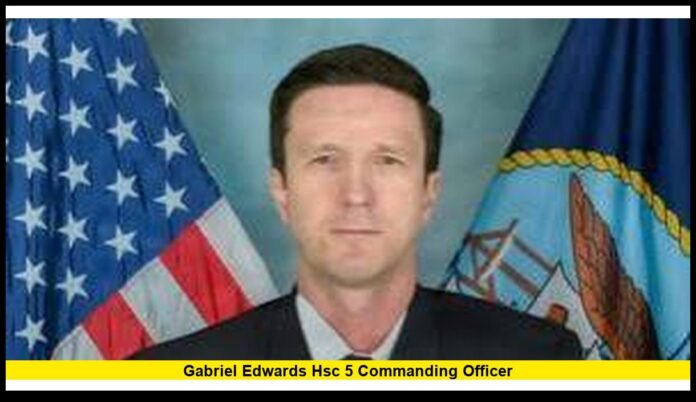

Gabriel Edwards HSC 5 commanding officer remains at the center of national attention after the U.S. Navy confirmed that Cmdr. Gabriel Edwards was the missing sailor following an MH-60S Seahawk helicopter emergency water landing in the Arabian Sea. As of July 8, 2026, the Navy has concluded its large-scale search operation, officially identified Edwards, and confirmed that he will receive a posthumous promotion to captain. The investigation into the incident is still underway, while military leaders, fellow service members, and family continue to honor his years of dedicated service.
The tragic incident has drawn widespread attention across the United States because it involved the commanding officer of an operational Navy helicopter squadron deployed aboard one of the country’s active aircraft carriers. While many questions about the helicopter emergency remain under investigation, officials have released verified information about Edwards’ career, the rescue effort, and the events surrounding the accident.
Who Was Cmdr. Gabriel Edwards?
Cmdr. Gabriel Edwards served as the commanding officer of Helicopter Sea Combat Squadron 5 (HSC-5), a Navy helicopter squadron responsible for supporting carrier strike group operations through a wide range of aviation missions.
Throughout his career, Edwards built a strong reputation as an experienced helicopter pilot, respected leader, and mentor. Fellow sailors described him as an officer who emphasized professionalism, teamwork, and mission readiness while maintaining a strong commitment to the well-being of the men and women under his command.
His nearly two decades of military service reflected years of operational experience, leadership assignments, and deployments supporting U.S. naval operations around the world.
Understanding Helicopter Sea Combat Squadron 5
HSC-5 is one of the U.S. Navy’s operational helicopter squadrons assigned to carrier aviation. The squadron flies the MH-60S Seahawk helicopter, one of the Navy’s most versatile rotary-wing aircraft.
Its responsibilities include numerous critical missions, including:
- Search and rescue
- Combat search and rescue
- Vertical replenishment
- Logistics support
- Medical evacuation
- Maritime security
- Personnel transportation
- Special warfare support
Every deployment requires extensive coordination between pilots, aircrew, maintenance personnel, and carrier leadership. As commanding officer, Edwards oversaw every aspect of squadron readiness, including training, flight safety, aircraft operations, and mission planning.
Emergency Water Landing in the Arabian Sea
The incident occurred on July 1, 2026, while an MH-60S Seahawk assigned to HSC-5 was conducting routine flight operations in the Arabian Sea.
During the mission, the helicopter encountered an emergency that forced the crew to perform a controlled water landing.
Four service members were aboard the aircraft.
Rescue teams quickly responded to the scene.
Three crew members were successfully recovered.
Cmdr. Gabriel Edwards could not be located despite immediate rescue efforts.
Officials have stated there is no indication that hostile action caused the emergency. Instead, investigators continue examining every aspect of the aircraft and flight conditions to determine what led to the water landing.
Rescue Efforts Began Immediately
Once the helicopter entered the water, nearby Navy personnel launched an extensive search and rescue operation.
Aircraft, helicopters, ships, and specialized rescue teams searched continuously across a vast section of the Arabian Sea.
The operation continued around the clock despite difficult maritime conditions.
The Navy later confirmed that search teams covered more than 14,000 square miles during the operation.
Search planners used multiple resources, including:
- Aircraft surveillance
- Surface ship patrols
- Search helicopters
- Advanced navigation systems
- Rescue coordination teams
The search represented one of the largest recovery efforts conducted during recent Navy operations.
More Than 102 Hours of Searching
The rescue mission continued for more than 102 hours.
During that time, search crews repeatedly examined designated search areas based on current patterns, weather forecasts, and other operational factors.
Military personnel worked continuously in hopes of locating Cmdr. Edwards.
After reviewing all available information and considering survival probabilities, Navy leadership made the difficult decision to suspend active search operations on July 5.
Although active searching ended, officials emphasized that every available resource had been used throughout the operation.
Official Identification
Following standard military procedures, the Navy delayed publicly identifying the missing sailor until family notification had been completed.
Several days after the incident, officials confirmed that the missing service member was Cmdr. Gabriel Edwards, commanding officer of HSC-5.
The announcement brought national recognition to Edwards’ distinguished military career while allowing fellow service members to publicly honor his contributions to naval aviation.
A Career Built on Leadership
Gabriel Edwards entered the Navy after completing his education and later earned his designation as a naval aviator.
Over the years, he accumulated more than 2,000 flight hours while serving in numerous operational assignments.
His aviation experience included deployments aboard Navy ships and leadership roles supporting helicopter operations.
His professional development eventually led to command of HSC-5, a position that requires exceptional operational knowledge and leadership ability.
Being selected as a squadron commanding officer represents one of the most significant milestones in a Navy aviation career.
It reflects years of demonstrated performance, leadership, and dedication.
Read More – Pete Hegseth military record: A full look at his verified service history
Responsibilities as Commanding Officer
Commanding an operational helicopter squadron involves much more than flying aircraft.
Edwards was responsible for:
- Leading hundreds of sailors
- Supervising pilot training
- Maintaining operational readiness
- Overseeing aircraft safety
- Planning missions
- Managing maintenance priorities
- Supporting carrier operations
- Ensuring personnel preparedness
Every deployment demands constant decision-making while balancing mission requirements with crew safety.
Those responsibilities made his leadership role central to the squadron’s daily operations.
Deployment Aboard USS George H.W. Bush
At the time of the incident, HSC-5 was deployed aboard USS George H.W. Bush (CVN-77).
The aircraft carrier was operating with Carrier Strike Group Ten in the U.S. Central Command region.
Carrier strike groups regularly conduct missions supporting maritime security, regional stability, and operational readiness.
Helicopter squadrons like HSC-5 play an essential role during these deployments by transporting personnel and cargo, conducting rescue missions, supporting aviation operations, and responding to emergencies.
Every day, helicopters launch and recover from the carrier’s flight deck as part of normal operational activities.
MH-60S Seahawk: A Multi-Mission Aircraft
The MH-60S Seahawk is among the Navy’s primary utility helicopters.
Its flexibility allows it to perform many different assignments during deployment.
Common missions include:
- Search and rescue
- Cargo transportation
- Fleet logistics
- Medical evacuation
- Humanitarian assistance
- Disaster response
- Special operations support
The aircraft is specifically designed to operate from aircraft carriers and other Navy ships in challenging maritime environments.
Its reliability has made it one of the most frequently deployed helicopters in the Navy fleet.
Navy Honors Gabriel Edwards
Following public identification, Navy leaders issued statements recognizing Edwards’ service and leadership.
Senior officers described him as a dedicated commander whose influence reached far beyond his own squadron.
His commitment to excellence earned respect from pilots, enlisted sailors, and fellow commanders throughout naval aviation.
Military leaders also recognized the emotional impact of the incident on the entire carrier strike group.
Support services, chaplains, and counseling resources were made available to sailors affected by the loss.
Family Pays Tribute
Edwards’ family also shared a heartfelt statement remembering him as a loving husband, devoted father, and caring leader.
His wife expressed appreciation to every sailor and rescue professional who participated in the search operation.
The family thanked those who offered support during the difficult days following the incident while requesting privacy as they continue mourning his loss.
Their message reflected both gratitude and pride in Edwards’ years of military service.
Posthumous Promotion to Captain
One of the most significant announcements following the incident involved Edwards’ military rank.
The Navy confirmed that he had already been selected for promotion to captain before the accident.
Following his death, Acting Secretary of the Navy Hung Cao directed that the promotion be awarded posthumously.
The promotion recognizes Edwards’ distinguished record of service and leadership throughout his Navy career.
For many within the military community, the decision reflects the lasting respect he earned during nearly twenty years in uniform.
Investigation Remains Active
Although rescue operations have concluded, investigators continue examining the circumstances surrounding the emergency water landing.
Several areas remain under review, including:
- Aircraft systems
- Flight data
- Maintenance records
- Environmental conditions
- Operational procedures
- Crew actions
Officials have not released a final determination regarding the cause of the emergency.
Until investigators complete their work, the Navy has avoided drawing conclusions about the incident.
This careful approach ensures that findings will be based on verified evidence rather than assumptions.
Why This Story Matters
The loss of a squadron commanding officer during an operational deployment is a significant event for the Navy.
Commanding officers carry tremendous responsibility for mission success, aviation safety, and the welfare of their personnel.
Edwards’ role placed him at the center of daily flight operations aboard one of the Navy’s active aircraft carriers.
His disappearance during an emergency water landing also highlighted the risks military aviators face, even during routine missions.
The extensive search effort demonstrated the Navy’s commitment to recovering every missing service member whenever possible.
Legacy of Service
Gabriel Edwards leaves behind a record of leadership, professionalism, and dedication to the United States Navy.
His years of service included operational deployments, thousands of flight hours, and the responsibility of leading one of the Navy’s helicopter squadrons during an overseas deployment.
Beyond his military accomplishments, many who served alongside him remember him as a mentor who encouraged younger sailors and emphasized teamwork throughout the squadron.
His leadership extended beyond mission planning and flight operations, helping build a culture centered on accountability, discipline, and mutual respect.
While the investigation into the July 1 helicopter emergency continues, his contributions to naval aviation remain firmly established.
The Navy continues honoring his service while supporting his family, his squadron, and the broader military community during this difficult period.
As more information becomes available through the official investigation, Gabriel Edwards’ career will continue to be remembered not only for the tragic circumstances surrounding his final mission but also for the years of dedicated service that defined his life in uniform.
The story of Gabriel Edwards HSC 5 commanding officer reflects a lifetime of service, leadership, and commitment. Readers can continue following verified developments as the Navy completes its investigation and honors his enduring legacy.