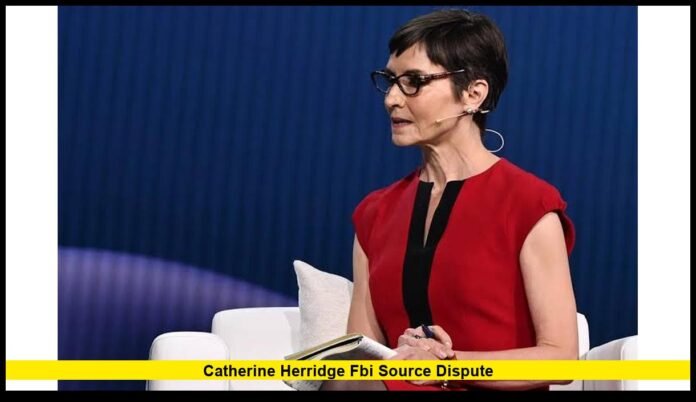

The catherine herridge fbi source dispute remains one of the most closely watched legal battles involving journalists and confidential sources in the United States. As of today, the U.S. Supreme Court has declined to halt a lower court order requiring veteran investigative journalist Catherine Herridge to either reveal a confidential source or continue facing an $800-per-day civil contempt fine. The decision has intensified the national conversation about reporter protections, confidential sources, and the balance between press freedom and civil litigation.
Latest Update
The newest development came when the U.S. Supreme Court denied Herridge’s emergency application seeking to pause enforcement of the contempt order while she pursues further legal review.
Chief Justice John Roberts had previously issued a temporary administrative stay, allowing the Court time to consider the request. After reviewing the filings, the Court denied the application, meaning the lower court’s contempt order remains in effect. Justice Brett Kavanaugh noted that he would have granted temporary relief, but the majority did not.
The ruling does not end the broader legal dispute, but it allows the daily civil fine to move forward unless the matter is resolved through additional legal proceedings.
How the Dispute Began
The case dates back to investigative reports published by Catherine Herridge while she worked at Fox News in 2017.
Her reporting focused on Yanping Chen, a Chinese American scientist who founded the University of Management and Technology in Virginia. The reports discussed an FBI counterintelligence investigation involving Chen and examined questions surrounding her background and alleged connections to Chinese institutions.
Although Chen had been investigated, she was never charged with a crime.
Later, Chen sued the federal government, alleging that protected information from the FBI investigation had been unlawfully leaked. She argued those disclosures caused significant personal and professional harm.
Why Catherine Herridge Was Ordered to Testify
Herridge was never accused of illegally obtaining information.
Instead, she became involved because Chen sought to identify the government official who allegedly leaked confidential records.
During discovery, Chen’s legal team questioned numerous government employees but was unable to determine who disclosed the information.
After exhausting those efforts, Chen subpoenaed Herridge, seeking testimony about the confidential source behind the reporting.
Herridge declined to answer questions identifying the source, maintaining that protecting confidential sources is a fundamental responsibility of investigative journalists.
Civil Contempt and the $800 Daily Fine
When Herridge refused to comply with the subpoena, the federal district court found her in civil contempt.
Rather than imposing criminal penalties, the court ordered an $800-per-day civil fine designed to encourage compliance with the subpoena.
Civil contempt differs from criminal contempt because its purpose is to encourage obedience to a court order instead of punishing past conduct.
The fine continues unless the legal obligation changes or the reporter complies with the order.
Why the Courts Required Disclosure
Federal courts acknowledged that protecting confidential journalism serves an important public interest.
However, judges concluded that the facts of this lawsuit justified compelling testimony.
The courts determined that:
- Chen had already pursued numerous alternative methods to identify the alleged leaker.
- The identity of the source was central to proving her Privacy Act claims.
- Without identifying the source, Chen would have difficulty pursuing the case against the government.
Based on those findings, the courts ruled that disclosure was appropriate under the circumstances presented in this case.
Herridge’s Legal Position
Herridge has consistently argued that revealing confidential sources would undermine investigative journalism.
Her legal filings maintain that confidential communications between journalists and sources are essential to reporting involving government accountability, national security, and public interest matters.
She has argued that compelling disclosure could discourage future whistleblowers from speaking with reporters.
That position has received support from numerous press freedom organizations and media groups that view confidential sourcing as a cornerstone of investigative reporting.
The Privacy Act Lawsuit
At the center of the dispute is the federal Privacy Act.
The law generally restricts unauthorized disclosure of protected government records about individuals.
Chen alleges government employees improperly disclosed investigative information relating to her.
According to court filings, identifying the individual responsible for the alleged disclosure is an important part of her effort to prove liability under the Privacy Act.
Read More – Nancy Guthrie Breaking News: FBI Declares Ransom Notes Fake as Investigation Continues
Timeline of Major Events
| Date | Development |
|---|---|
| 2017 | Catherine Herridge publishes investigative reports concerning Yanping Chen. |
| 2018 | Chen files a Privacy Act lawsuit against the federal government. |
| 2024 | Herridge is held in civil contempt after refusing to reveal a confidential source. |
| 2025 | Federal appeals court upholds the contempt order. |
| June 2026 | Chief Justice Roberts temporarily pauses enforcement while the Supreme Court reviews the emergency application. |
| July 2026 | Supreme Court declines to halt the contempt order, allowing the daily fine to proceed. |
What Makes This Case Significant
The dispute has attracted national attention because it addresses competing legal interests.
On one side is the importance of protecting confidential sources who provide information to journalists.
On the other is the legal right of a plaintiff to obtain evidence considered essential to proving a civil claim.
The courts concluded that the circumstances in this lawsuit justified compelling testimony despite the recognized importance of confidential journalism.
That balancing approach has become the central issue in discussions surrounding the case.
The Federal Shield Law Debate
The litigation has renewed calls for a federal shield law.
Many states recognize protections for journalists through statutes or court decisions.
Federal law, however, does not contain a comprehensive nationwide shield law protecting reporters from revealing confidential sources in every circumstance.
Supporters of federal legislation argue it would:
- Create consistent national standards.
- Protect investigative reporting.
- Provide greater certainty for journalists.
- Encourage confidential sources to come forward.
Others believe courts should continue evaluating disputes individually instead of adopting a single nationwide rule.
The Herridge litigation has become one of the most prominent examples in that ongoing debate.
Reaction Across the Journalism Community
News organizations and press freedom advocates have closely monitored every stage of the litigation.
Many have expressed concern that compelling reporters to identify confidential sources could discourage future whistleblowers from sharing information about matters of public interest.
Advocacy groups argue confidential sourcing plays a vital role in investigations involving government conduct, national security, and public accountability.
The case has therefore become an important reference point in discussions about the relationship between journalism and the legal system.
What the Supreme Court’s Decision Means
The Supreme Court’s action was limited to the emergency request before it.
The Court did not issue a broad constitutional ruling on reporter privilege.
Instead, it declined to pause enforcement of the lower court’s order while additional legal options remain available.
As a result:
- The contempt order remains effective.
- The $800 daily civil fine continues under the lower court’s ruling.
- The underlying Privacy Act litigation is still ongoing.
The decision leaves unresolved broader questions regarding confidential journalism at the federal level.
Potential Impact on Investigative Reporting
The outcome of this litigation is being closely followed because confidential sources have historically played an important role in investigative reporting.
Many stories involving government oversight, public corruption, intelligence matters, and national security have relied on individuals willing to provide information only under promises of confidentiality.
Media organizations believe legal uncertainty surrounding source protection may influence how future investigative reporting is conducted.
Legal experts also note that future courts may continue examining similar disputes until Congress adopts broader statutory protections or higher courts establish additional precedent.
Current Status
As of today, the lower court’s contempt order remains in place following the Supreme Court’s refusal to grant emergency relief.
Herridge continues to be at the center of a nationally significant legal dispute involving confidential journalism, reporter privilege, and the Privacy Act.
The underlying lawsuit has not yet reached its final conclusion, ensuring that the case will remain closely watched by journalists, attorneys, media organizations, and constitutional scholars across the United States.
What are your thoughts on protecting confidential sources while ensuring accountability in court? Share your opinion in the comments and stay updated as this important case continues to develop.