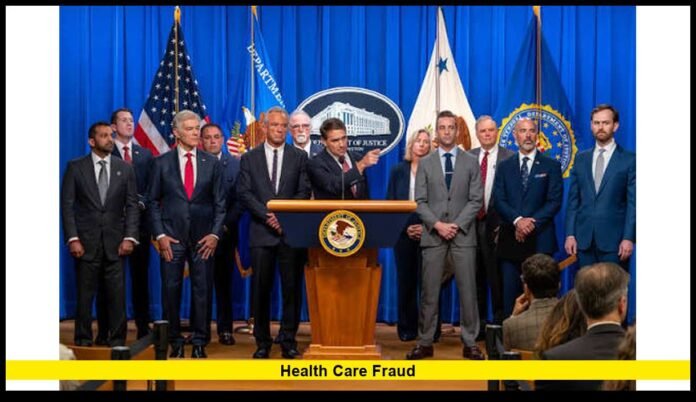

Health care fraud is once again at the center of a major nationwide enforcement effort after federal authorities announced one of the largest healthcare fraud takedowns in U.S. history. Hundreds of defendants now face criminal charges connected to schemes that allegedly generated billions of dollars in false claims submitted to Medicare, Medicaid, and private health insurance programs. The latest actions highlight the government’s ongoing effort to protect taxpayers, patients, and public healthcare resources from abuse.
The announcement has renewed national attention on healthcare fraud, a problem that continues to cost the United States billions of dollars every year. Investigators say many of the cases uncovered in 2026 involved sophisticated networks that used fake records, unnecessary medical services, illegal kickbacks, and fraudulent billing practices to obtain large payments from federal healthcare programs.
Federal Authorities Announce Massive Enforcement Operation
The Justice Department’s latest healthcare fraud enforcement action resulted in charges against 455 defendants across numerous states. Prosecutors allege that the combined schemes involved more than $6.5 billion in fraudulent claims.
The operation brought together federal agents, prosecutors, inspectors general, healthcare analysts, and state law enforcement agencies. Investigators spent months reviewing billing records, financial transactions, patient files, and insurance claims before making arrests and filing charges.
Officials described the operation as one of the most significant healthcare fraud crackdowns ever conducted in the United States.
The defendants include:
- Doctors
- Nurse practitioners
- Clinic owners
- Medical company executives
- Pharmacy operators
- Hospice providers
- Durable medical equipment suppliers
- Healthcare marketers
Authorities also seized large amounts of cash, luxury vehicles, real estate holdings, and other assets that investigators believe were purchased using proceeds from illegal healthcare activities.
Why Health Care Fraud Continues to Grow
Healthcare spending in the United States exceeds several trillion dollars annually. Medicare and Medicaid process millions of claims every day, creating opportunities for dishonest individuals and organizations to exploit the system.
Fraud schemes often involve false documentation that makes improper claims appear legitimate. Criminal organizations may create shell companies, recruit patients, falsify diagnoses, or bill for services that were never provided.
As healthcare systems become increasingly digital, some fraud schemes have become more sophisticated. Investigators now encounter operations that use advanced technology to submit large volumes of fraudulent claims across multiple states.
Federal agencies continue investing heavily in technology and data analysis tools designed to identify suspicious billing patterns before losses become even larger.
The Financial Impact on Taxpayers
Healthcare fraud affects more than government agencies.
Every fraudulent claim paid through Medicare or Medicaid ultimately impacts taxpayers. Fraudulent activity can also increase costs throughout the healthcare system by diverting resources away from legitimate patient care.
Experts have long warned that large-scale fraud weakens public confidence in healthcare programs and creates additional administrative burdens for providers that follow the rules.
When billions of dollars are lost to fraudulent activity, fewer resources remain available for seniors, disabled Americans, low-income families, and other individuals who rely on federal healthcare programs.
The latest enforcement action demonstrates how seriously federal officials view these financial losses.
Major Wound Care Billing Schemes Under Investigation
One of the largest investigations announced this year centered on wound care products.
Prosecutors allege that certain companies and healthcare providers participated in schemes involving wound allograft products that generated enormous reimbursement claims. Authorities claim products were acquired and then billed to federal healthcare programs at highly inflated rates.
Investigators allege that some providers repeatedly applied expensive products regardless of medical necessity while submitting claims that resulted in significant government reimbursements.
Federal authorities believe these operations generated billions of dollars in claims over several years.
The investigation remains one of the largest healthcare fraud cases announced during the 2026 enforcement effort.
Hospice Fraud Receives Increased Attention
Hospice fraud has emerged as a growing concern among federal investigators.
Hospice care serves patients facing terminal illnesses and provides comfort-focused treatment during the final stages of life. Medicare offers specific benefits for eligible patients receiving hospice services.
Authorities allege that some providers improperly enrolled patients who did not meet eligibility requirements. In certain cases, investigators claim false diagnoses and inaccurate medical records were used to justify enrollment.
Federal officials have stated that improper hospice billing not only wastes taxpayer dollars but can also affect vulnerable patients and families who rely on legitimate hospice services.
Several recent prosecutions indicate that hospice-related investigations will remain a major enforcement priority moving forward.
Unnecessary Medical Testing Remains a Key Focus
Healthcare fraud investigations frequently involve allegations that providers ordered tests or procedures that patients did not actually need.
Investigators say unnecessary testing schemes can generate large reimbursements while exposing patients to avoidable medical procedures.
In several recent cases, prosecutors alleged that providers submitted claims for diagnostic testing that lacked sufficient medical justification.
These investigations often require extensive reviews of patient records, physician notes, billing documentation, and reimbursement histories.
Federal agencies continue working closely with medical experts to determine whether services billed to healthcare programs were medically necessary.
Read More – Medicaid Payments Suspension California Sparks National Debate Over Healthcare Fraud Enforcement
Prescription and Pharmacy Fraud Cases Increase
Pharmacy-related fraud remains another major concern.
Investigators continue examining allegations involving prescription billing, reimbursement practices, and improper reporting of drug pricing information.
Some cases involve accusations that providers submitted claims for medications that patients never received. Others focus on pricing practices that allegedly resulted in inaccurate reimbursement calculations.
Because prescription drug spending accounts for a substantial portion of healthcare expenditures nationwide, enforcement agencies continue dedicating significant resources to pharmacy fraud investigations.
Officials say maintaining integrity within pharmaceutical reimbursement programs remains essential to protecting taxpayer-funded healthcare systems.
The Growing Problem of Medicaid Transportation Fraud
Transportation services help many Medicaid recipients access healthcare appointments and treatments.
However, investigators say certain operators have abused the system through false billing practices and other fraudulent activities.
Common allegations include:
- Billing for trips that never occurred
- Inflating mileage records
- Charging for multiple riders improperly
- Submitting duplicate claims
- Using kickback arrangements to increase business volume
Recent criminal cases demonstrate that transportation-related fraud can generate millions of dollars in improper payments.
Federal and state authorities continue auditing transportation providers across multiple jurisdictions.
How Criminal Networks Operate
Many healthcare fraud investigations now involve organized criminal enterprises rather than isolated individuals.
These networks often include multiple participants working together to maximize reimbursements.
A typical operation may involve:
- Recruiting patients
- Creating false medical records
- Billing for unnecessary services
- Laundering proceeds through shell companies
- Distributing profits among participants
Investigators say organized fraud networks frequently move between states and healthcare sectors to avoid detection.
The increasing complexity of these operations has prompted agencies to enhance coordination among federal, state, and local law enforcement partners.
Technology Is Changing Fraud Detection
Federal agencies now use advanced analytical tools to detect healthcare fraud more efficiently.
Modern systems can review millions of claims and identify unusual billing patterns within seconds.
Artificial intelligence and predictive analytics help investigators spot providers whose billing practices differ significantly from industry norms.
Technology can also identify:
- Duplicate claims
- Excessive billing volumes
- Geographic anomalies
- Unusual patient patterns
- High-risk reimbursement activity
Officials believe these tools have significantly improved the government’s ability to uncover fraud before losses escalate.
The increased use of analytics played a major role in several recent investigations.
Healthcare Fraud Strike Forces Expand Operations
Specialized healthcare fraud strike forces continue producing significant enforcement results.
These teams combine prosecutors, FBI agents, healthcare experts, analysts, and inspectors general into coordinated units focused on complex fraud cases.
The government recently expanded strike force operations into additional regions as investigators identified growing fraud activity.
Strike forces have become one of the most effective tools available for combating large-scale healthcare fraud.
Their investigations frequently involve years of financial analysis, surveillance, interviews, and electronic evidence collection.
Federal officials credit these units with helping recover billions of dollars and securing thousands of convictions over the past decade.
Whistleblowers Play a Critical Role
Many major healthcare fraud cases begin with information provided by insiders.
Employees, contractors, billing specialists, and healthcare professionals often report suspicious conduct to authorities.
Whistleblowers may help investigators uncover:
- False claims
- Kickback arrangements
- Billing manipulation
- Fabricated diagnoses
- Improper patient recruitment
Federal laws provide protections for individuals who report fraud involving government healthcare programs.
Authorities continue encouraging people with credible information to come forward.
Several of the most significant healthcare fraud settlements in recent years originated from whistleblower allegations.
The Impact on Patients
Healthcare fraud affects patients in numerous ways.
Fraudulent schemes may lead to inaccurate medical records, unnecessary procedures, delayed care, or misuse of personal information.
Patients sometimes discover they were listed as receiving services they never received.
In other situations, criminals use stolen personal information to submit fraudulent healthcare claims.
Identity theft connected to healthcare fraud can create long-term complications for victims, including billing disputes and inaccurate medical histories.
Protecting patient information remains a key objective of healthcare enforcement efforts.
What Investigators Look For
Healthcare fraud investigations often begin when analysts identify suspicious billing trends.
Warning signs may include:
- Unusually high reimbursement totals
- Excessive testing volumes
- Repeated use of expensive procedures
- Large numbers of identical claims
- Claims submitted for deceased patients
- Billing activity inconsistent with medical specialties
Once suspicious activity is identified, investigators review records and conduct interviews to determine whether fraud occurred.
Complex investigations can take months or even years before charges are filed.
Convictions Continue Across the Country
Federal prosecutors continue securing convictions in healthcare fraud cases nationwide.
Recent convictions have involved a wide range of schemes, including:
- Medicare fraud
- Medicaid fraud
- Telemedicine fraud
- Laboratory testing fraud
- Durable medical equipment fraud
- Prescription drug fraud
Authorities report that modern cases increasingly involve large financial losses and sophisticated criminal structures.
As a result, prosecutors continue pursuing substantial penalties against individuals found guilty of healthcare-related crimes.
Future Enforcement Efforts
Federal officials have made it clear that healthcare fraud enforcement will remain a top priority throughout 2026 and beyond.
Agencies continue expanding data-sharing partnerships, improving analytical capabilities, and strengthening cooperation among enforcement organizations.
Investigators are focusing on large-scale schemes that generate significant financial losses while also pursuing smaller operations that exploit federal healthcare programs.
The latest nationwide enforcement action demonstrates a commitment to identifying fraud quickly, recovering taxpayer funds, and holding offenders accountable.
Healthcare programs serve millions of Americans every day. Protecting those programs remains essential to ensuring that public resources support legitimate patient care rather than fraudulent activity.
As new investigations continue to unfold, healthcare fraud remains one of the most closely watched enforcement issues in the United States, with federal authorities signaling that additional actions are likely in the months ahead.
The fight against health care fraud continues to shape the future of Medicare, Medicaid, and healthcare oversight across America. Share your views and follow ongoing developments as authorities work to protect patients and taxpayer dollars.