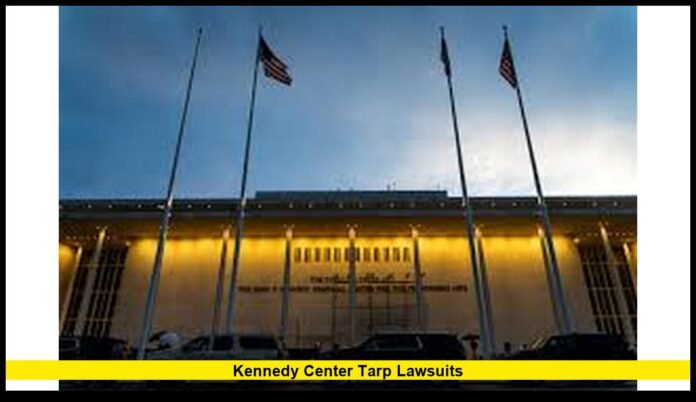

The kennedy center tarp lawsuit continues to generate headlines across the United States as legal disputes surrounding the John F. Kennedy Center for the Performing Arts move through federal courts. What began as a challenge over governance decisions and building signage has evolved into a broader conflict involving historic preservation, renovation plans, federal authority, and the future direction of one of America’s most recognizable cultural institutions.
Located on the banks of the Potomac River in Washington, D.C., the Kennedy Center has served as the nation’s premier performing arts venue for decades. The center hosts thousands of performances each year and stands as a living memorial to President John F. Kennedy. Because of its unique status as both a cultural institution and a federally designated memorial, changes involving the center often attract significant public and political attention.
Recent developments have placed the organization under intense scrutiny. Court rulings, appeals, and public disagreements have transformed what was initially viewed as an internal governance issue into a national legal battle with implications that extend far beyond the walls of the performing arts complex.
The Origins of the Legal Dispute
The controversy began after a series of leadership and governance changes at the Kennedy Center prompted questions from elected officials, preservation advocates, and members of the public.
At the center of the disagreement was a decision to place former and current President Donald Trump’s name on portions of the building. Supporters viewed the move as appropriate recognition of presidential leadership, while critics argued that the action conflicted with the center’s legal identity as a memorial dedicated to President Kennedy.
Opponents contended that Congress established the institution with a specific purpose and that changing the building’s name or presentation required legislative approval rather than administrative action.
The dispute quickly escalated into a federal court case. Plaintiffs argued that existing laws governing the center did not permit such a change without congressional authorization. The case attracted national attention because it involved questions about federal memorials, executive influence, and the limits of administrative authority.
As the litigation progressed, judges examined whether the actions taken by Kennedy Center leadership complied with the statutes that govern the institution.
Court Ruling Changes the Direction of the Case
The decision concluded that the Kennedy Center’s legal status as a memorial to President Kennedy could not be altered through internal decisions alone. The court determined that any significant change involving the institution’s official identity would require action by Congress.
Following the ruling, the center faced a deadline to remove signage associated with the disputed naming effort.
The decision represented one of the most significant legal setbacks for the institution since the controversy began. It also sparked broader discussions about how federal memorials should be managed and whether political leadership can influence their identity without legislative approval.
The ruling did not end the conflict. Instead, it opened a new chapter in an already complex legal battle.
Removal of Signage Sparks New Questions
After the court’s decision, crews moved to remove lettering connected to the disputed naming initiative.
The removal process drew widespread public attention. Images and videos circulated showing workers dismantling signage while observers gathered nearby.
Although the physical letters were taken down, many expected the controversy to fade once the court order had been implemented.
Instead, a new issue emerged almost immediately.
A large tarp was installed over the section of the building where the signage had previously appeared. The covering quickly became a subject of debate among legal observers, elected officials, preservation advocates, and visitors to the center.
Questions soon surfaced regarding why the tarp had been placed on the building and how long it would remain there.
Why the Tarp Became a Major Issue
Critics argued that the covering created the impression that the institution was attempting to obscure the results of the court ruling. Others questioned whether the tarp served a practical purpose related to maintenance, repairs, or construction work.
Because the covering remained visible after the signage had been removed, speculation grew regarding its intended purpose.
Public officials involved in the legal dispute sought answers about who authorized the tarp, how long it would remain in place, and whether it was connected to ongoing litigation.
The issue attracted media attention because it represented a visible reminder that the broader conflict remained unresolved.
As a result, the kennedy center tarp lawsuit became associated not only with questions about signage but also with concerns regarding transparency and compliance with court rulings.
The Role of Representative Joyce Beatty
Representative Joyce Beatty has emerged as one of the most prominent figures involved in the legal battle.
As an ex-officio member of the Kennedy Center board, Beatty challenged decisions she believed conflicted with the institution’s legal obligations.
Her involvement helped bring national attention to the case. Following the court’s ruling, she continued pressing for additional information regarding actions taken by Kennedy Center leadership.
Beatty has argued that the institution must fully comply with judicial directives and maintain its mission as a national cultural landmark.
Her legal efforts have focused not only on the disputed naming issue but also on broader questions involving governance and accountability.
The continued presence of the tarp became one of several concerns raised by parties seeking greater transparency regarding decisions made at the center.
Renovation Plans Add Another Layer of Conflict
The signage dispute is only one aspect of the larger controversy.
At the same time legal battles were unfolding over naming issues, the Kennedy Center was also facing challenges related to renovation and redevelopment proposals.
Plans announced earlier this year included significant construction projects that would affect operations at the facility.
Some proposals envisioned extensive work that critics said could result in long-term disruptions to performances and public access.
Supporters argued that modernization efforts were necessary to maintain the center’s infrastructure and ensure its long-term viability.
Opponents countered that major alterations required additional review because of the building’s historic and symbolic significance.
Those disagreements eventually reached federal court as well.
Judges reviewed whether certain actions complied with applicable laws governing preservation and public access. The resulting decisions added another layer of complexity to an already contentious situation.
Historic Preservation Concerns Continue
Preservation advocates have played a major role in the ongoing debate.
The Kennedy Center is widely regarded as one of the nation’s most important cultural landmarks. For many preservation groups, any substantial alteration to the building warrants careful review.
Advocates argue that the center’s architectural features and memorial status deserve protection under existing federal frameworks.
Concerns have focused on whether proposed changes could affect the historical integrity of the structure.
The issue has resonated with preservation organizations because it touches on broader questions about how national landmarks should evolve while retaining their historic identity.
As legal proceedings continue, preservation concerns remain closely tied to discussions about future renovation plans.
Appeals Keep the Legal Battle Alive
Despite the court ruling that required removal of the disputed signage, the litigation is far from over.
Appeals remain active, meaning higher courts could revisit important aspects of the case.
The appellate process may address questions involving governance authority, statutory interpretation, and the limits of administrative decision-making.
Legal experts note that appeals often take months to resolve, especially in cases involving complex federal issues.
As long as appellate proceedings continue, uncertainty will remain regarding the final outcome.
Future rulings could influence not only the Kennedy Center but also other federally chartered institutions and memorials across the country.
Because of those potential implications, legal scholars continue to follow the case closely.
Impact on the Kennedy Center’s Mission
While court battles dominate headlines, many observers remain focused on the institution’s primary mission: supporting the performing arts.
The Kennedy Center hosts theater productions, musical performances, educational programs, and cultural events throughout the year.
Questions about governance and legal disputes have raised concerns regarding how ongoing litigation could affect day-to-day operations.
Artists, patrons, donors, and community members have all expressed interest in ensuring that performances and educational programming remain accessible.
Center officials have emphasized their commitment to continuing operations while legal matters proceed.
Nevertheless, uncertainty surrounding future leadership decisions and renovation plans has contributed to ongoing debate about the institution’s direction.
Why the Case Matters Beyond Washington
The significance of this dispute extends beyond the nation’s capital.
The Kennedy Center occupies a unique position in American public life. It is simultaneously a performing arts venue, a federal memorial, and a symbol of national cultural achievement.
Because of that status, legal decisions involving the center can have broader implications.
The case raises questions about the relationship between politics and public institutions.
It also highlights debates regarding federal authority, congressional oversight, preservation law, and the management of nationally significant landmarks.
For many observers, the outcome could help define how similar institutions are governed in the future.
The dispute demonstrates how decisions involving public memorials often intersect with legal, cultural, and political considerations.
What Happens Next?
Several key developments could shape the next stage of the controversy.
Appeals courts will continue reviewing legal arguments related to the naming dispute.
Discussions regarding renovation plans are expected to continue as officials evaluate options that comply with judicial guidance.
Questions surrounding the tarp remain unresolved and could remain a point of public interest as long as it remains visible on the building.
Board members, elected officials, preservation advocates, and community stakeholders are all likely to remain engaged as the situation evolves.
For now, the Kennedy Center finds itself navigating one of the most significant legal challenges in its history.
The outcome could influence not only the future of the institution itself but also broader conversations about governance, historic preservation, and the stewardship of America’s cultural landmarks.
As court proceedings continue and new developments emerge, the legal and public debate surrounding the Kennedy Center shows little sign of slowing down.
The coming months may determine how one of the nation’s most treasured cultural institutions balances its historic legacy with the challenges of the present day.