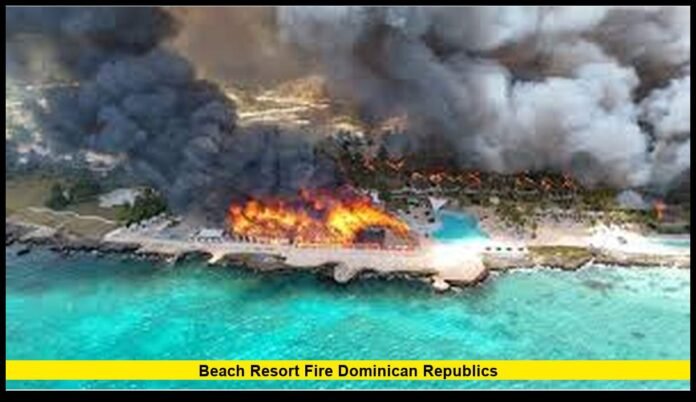

A devastating beach resort fire dominican republic incident has captured international attention after flames swept through a popular all-inclusive resort in Bayahibe, forcing the evacuation of nearly 1,700 people and resulting in the death of a tourist. The large-scale emergency unfolded on June 19, 2026, prompting a massive response from firefighters, medical teams, police officers, and local authorities who worked throughout the day to contain the blaze and assist guests.
The incident occurred at the Viva Wyndham Dominicus Beach resort, one of the best-known beachfront properties along the southeastern coast of the Dominican Republic. Thick smoke rising above the shoreline could be seen from miles away as emergency crews rushed to prevent the fire from spreading further across the property.
The tragedy has raised important questions about resort safety, emergency preparedness, and the challenges of fighting fires in tropical vacation destinations where natural building materials are often part of the architectural design.
A Quiet Vacation Destination Turns Into an Emergency Scene
Bayahibe is widely recognized as one of the Dominican Republic’s most visited tourism areas. Known for crystal-clear waters, diving excursions, island tours, and beachfront resorts, the community welcomes travelers from around the world throughout the year.
What began as a normal day for hundreds of vacationers quickly transformed into a large-scale emergency when fire broke out within the resort complex.
Guests reported seeing smoke before alarms sounded across parts of the property. Within a short period, flames became visible and emergency procedures were activated. Resort staff moved rapidly to direct visitors toward designated assembly points while emergency responders were dispatched to the scene.
Videos shared by witnesses showed towering smoke plumes rising above palm trees and beachfront structures. The images quickly spread across social media, drawing attention from travelers, tourism officials, and families of guests staying at the resort.
Tourist Dies During Fire
Authorities confirmed that a 46-year-old Italian tourist lost her life during the incident.
Emergency personnel provided medical assistance to several individuals affected by the fire while hospitals and medical teams remained prepared to receive anyone requiring treatment.
The loss of life marked a tragic turn in what was already a major emergency operation.
Officials have focused on supporting affected families while continuing their investigation into the circumstances surrounding the incident.
The identity of the victim was released by authorities, and consular officials have been involved in coordinating assistance for relatives and loved ones.
Massive Evacuation Effort Involving Nearly 1,700 People
One of the most significant aspects of the response was the successful evacuation of approximately 1,690 guests and employees from the property.
Large hotel complexes often house hundreds or even thousands of people at any given time, making emergency evacuations extremely complex operations. In this case, resort personnel and emergency responders worked together to move people away from dangerous areas while firefighters battled the growing blaze.
Guests were directed toward safe gathering locations as emergency teams assessed the situation.
Many tourists arrived at assembly points carrying only essential belongings. Others left rooms quickly after hearing alarms and instructions from staff members.
The evacuation included travelers from numerous countries, hotel workers, maintenance crews, restaurant staff, and contractors who happened to be on-site at the time.
Officials later stated that the large-scale evacuation played a critical role in preventing additional casualties.
Firefighters Face Difficult Conditions
Firefighters encountered significant challenges while trying to contain the blaze.
According to authorities, weather conditions and building materials contributed to the rapid spread of the fire.
Several structures within the resort featured traditional tropical-style roofing and decorative elements made from natural materials. Such materials can ignite quickly and allow flames to travel faster than in buildings constructed entirely with concrete and steel.
Strong winds reportedly accelerated the movement of the fire across affected sections of the resort.
Emergency crews worked from multiple positions around the property in an effort to stop the flames from reaching additional buildings.
Fire suppression operations continued for hours as teams battled hotspots and attempted to prevent flare-ups.
Even after the main fire was brought under control, firefighters remained on-site to monitor conditions and ensure no hidden pockets of fire remained within damaged structures.
Extensive Damage Across Parts of the Resort
Preliminary assessments indicate that several areas of the resort sustained severe damage.
Photographs from the scene showed destroyed roofing, blackened walls, and sections of the property reduced to charred debris.
Officials have not yet released a final estimate of financial losses. However, the extent of visible destruction suggests that repairs and reconstruction efforts could take considerable time.
Structural engineers are expected to conduct detailed inspections before authorities determine which buildings can be repaired and which may require complete rebuilding.
Safety evaluations will also focus on electrical systems, plumbing infrastructure, support structures, and guest accommodations affected by heat and smoke.
The full impact of the damage may not be known until investigators complete their assessments.
Resort Guests Relocated to Other Accommodations
Following the evacuation, tourism officials and hotel operators coordinated efforts to relocate guests.
Many travelers were transferred to nearby hotels and resorts in the region.
Transportation arrangements were made to help displaced visitors continue their vacations while recovery efforts began at the affected property.
Local tourism authorities worked with hospitality providers to ensure visitors had access to accommodations, food services, transportation, and information regarding travel plans.
For many guests, the relocation process helped reduce uncertainty after a stressful and unexpected experience.
Despite the disruption, tourism infrastructure in the surrounding area remained operational.
Bayahibe Tourism Continues
Although the fire caused significant damage to one resort, tourism activity across Bayahibe continued.
The coastal destination remains one of the Dominican Republic’s most important tourism centers.
Restaurants, excursion operators, beaches, dive shops, transportation providers, and nearby resorts continued serving visitors following the incident.
Authorities emphasized that the emergency was limited to the affected property and did not impact broader tourism operations in the region.
Many travelers with upcoming reservations have sought information regarding accommodations and travel arrangements, but officials have stressed that Bayahibe remains open to visitors.
The area continues to attract tourists interested in marine activities, island excursions, snorkeling, and Caribbean beach vacations.
Investigation Into the Cause Begins
Authorities launched an investigation immediately after firefighters gained control of the blaze.
Investigators are reviewing evidence from the scene, examining structural conditions, interviewing witnesses, and analyzing available surveillance footage.
At this stage, officials have not announced what caused the fire.
Determining the origin of a major resort fire can be a lengthy process involving multiple agencies and technical experts.
Investigators typically examine electrical systems, maintenance records, mechanical equipment, construction materials, and environmental conditions as part of their work.
The findings may help authorities develop recommendations aimed at preventing similar incidents in the future.
Safety Procedures Come Under Review
Major incidents often lead to broader discussions about emergency preparedness and fire safety.
Hotels and resorts around the world regularly conduct emergency drills and maintain evacuation plans designed to protect guests and employees during crises.
The Dominican Republic’s tourism industry has invested heavily in safety standards over the years due to the importance of international tourism to the national economy.
Following this incident, experts are expected to examine how quickly alarms were activated, how efficiently guests were evacuated, and how effectively emergency teams coordinated their response.
Such reviews are common after significant emergencies and can lead to improvements in procedures, equipment, and training.
Caribbean Resorts Face Unique Challenges
The beach resort fire dominican republic disaster has also highlighted challenges specific to tropical resort environments.
Many Caribbean resorts incorporate open-air designs, thatched roofs, wooden decorative structures, and landscaping features intended to create an authentic island atmosphere.
While these elements enhance the guest experience, they can also create additional risks during fire emergencies if flames reach combustible materials.
Resort operators throughout the Caribbean frequently balance architectural aesthetics with modern safety requirements.
Fire protection systems, emergency exits, sprinkler networks, smoke detection technology, and staff training programs play critical roles in reducing risks.
Industry observers believe lessons learned from this incident may influence future discussions about resort design and safety standards.
Response Praised by Authorities
Despite the tragic loss of life, officials noted that the evacuation of nearly 1,700 people represented a significant achievement under difficult circumstances.
Emergency responders, firefighters, medical personnel, police officers, and hotel employees worked together throughout the operation.
Authorities credited coordination between agencies for helping manage a rapidly developing emergency.
Many guests also praised resort staff members who assisted with evacuations, provided directions, and helped maintain order during the crisis.
Emergency management experts frequently point out that trained staff members are often the first line of defense during large-scale incidents.
Their actions can make a substantial difference in protecting lives.
Recovery and Reconstruction Ahead
Attention is now turning toward recovery efforts and future rebuilding plans.
The resort operator will likely conduct extensive evaluations before announcing next steps regarding damaged facilities.
Insurance assessments, engineering inspections, and safety reviews are expected to guide decisions about reconstruction.
Local businesses connected to tourism will also monitor developments closely, as the resort has long been an important part of the Bayahibe hospitality sector.
While recovery may take time, tourism officials remain optimistic about the region’s ability to continue welcoming visitors.
The Dominican Republic has built a reputation as one of the Caribbean’s leading travel destinations, and authorities are committed to maintaining confidence in the country’s tourism industry.
Looking Ahead
As investigators continue their work, many questions remain unanswered regarding how the fire started and how damage spread so rapidly through parts of the property.
What is clear, however, is that the incident represents one of the most significant resort emergencies reported in the Dominican Republic in recent years.
The death of a tourist, the evacuation of nearly 1,700 people, and the extensive property damage have made this a major event for the Caribbean tourism sector.
Officials are expected to release additional information as the investigation progresses and recovery operations continue.
Travelers, industry leaders, and local communities will be watching closely as authorities work to understand the causes of the fire and determine what lessons can be learned moving forward.