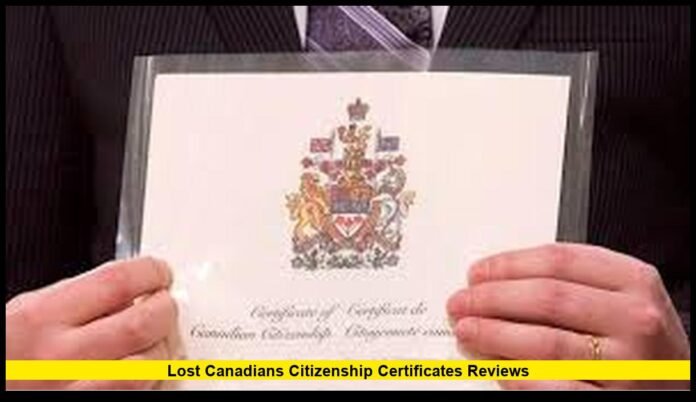

Canada’s citizenship system is facing renewed scrutiny as the lost canadians citizenship certificates review affects a number of individuals who recently received official proof of Canadian citizenship through ancestry-based applications. The issue has drawn attention across North America because many of those seeking citizenship under recent legal changes live in the United States and have longstanding family ties to Canada.
The situation comes after major reforms to Canadian citizenship law expanded eligibility for thousands of people who had previously been excluded from citizenship by descent. While the changes were welcomed by many families, recent government actions involving the reassessment of certain citizenship certificates have raised concerns among applicants who believed their citizenship status had already been settled.
For many affected individuals, the review process has become an unexpected development after years of gathering family records, tracing ancestry, and navigating the citizenship application system.
A Long-Running Citizenship Issue
Over the years, lawmakers have revised citizenship legislation multiple times to address historical gaps that left some individuals without recognition as Canadian citizens. Earlier laws often contained technical requirements that produced unintended consequences for people born abroad to Canadian parents.
Many families discovered that citizenship rights were affected by factors such as the year of birth, the citizenship status of parents, registration requirements, or historical provisions that no longer reflected modern views on nationality and citizenship.
As a result, several generations of descendants found themselves excluded from citizenship even though their family histories were deeply connected to Canada.
Citizenship Reforms Opened the Door for Thousands
Recent legislative reforms dramatically expanded access to citizenship for many descendants of Canadians living abroad.
The changes followed years of legal challenges and policy debates regarding the fairness of citizenship-by-descent restrictions. Courts and policymakers increasingly examined whether existing rules created unequal treatment among descendants of Canadian citizens.
The revised law restored eligibility for many individuals who had previously been unable to obtain proof of citizenship. Thousands of people immediately became eligible to submit applications for citizenship certificates.
Many applicants came from the United States, where generations of migration between the two countries created extensive family connections. Some individuals discovered they qualified through parents or grandparents, while others found eligibility through more distant family relationships.
The reforms were widely viewed as one of the most significant updates to Canadian citizenship law in recent years.
Surge in Applications Creates Administrative Challenges
Following the legislative changes, immigration authorities experienced a substantial increase in citizenship-related applications.
The surge included requests for proof of citizenship, document verification, ancestry reviews, and citizenship certificate issuance.
Officials suddenly faced a much larger volume of cases requiring detailed examination. Unlike many routine immigration applications, citizenship-by-descent cases often involve records that stretch back decades.
Applicants frequently submit extensive documentation, including birth records, marriage records, death certificates, adoption records, historical registrations, and other evidence needed to establish family lineage.
Processing such applications can be complex because officials must verify that each generation in a family line meets legal requirements under citizenship law.
The sharp increase in demand placed considerable pressure on administrative systems already handling a wide range of immigration responsibilities.
Why Some Citizenship Certificates Are Being Reexamined
In some instances, recipients were informed that immigration authorities were reassessing their eligibility documentation. Certain individuals were reportedly asked to return certificates while officials conducted further examinations of their files.
The reviews appear to focus primarily on the evidence used to support citizenship claims rather than on broad policy changes affecting all applicants.
Authorities are examining whether documentation submitted during the application process sufficiently established eligibility under the law.
This distinction is important because a document review is different from a citizenship revocation proceeding. The government is evaluating specific files and supporting evidence rather than implementing a widespread cancellation of citizenship status.
For affected individuals, however, the distinction may provide little immediate comfort because citizenship certificates often serve as the primary proof of Canadian citizenship.
Why Documentation Matters So Much
Citizenship-by-descent cases rely heavily on documentary evidence.
Applicants must demonstrate a clear connection to a Canadian citizen ancestor through a continuous chain of family records.
That process often requires official documentation covering multiple generations. Even a single missing document can complicate efforts to establish eligibility.
Challenges commonly arise when:
- Records were created many decades ago.
- Family members were born in different countries.
- Historical documents contain spelling variations.
- Older records have been lost or damaged.
- Government registration practices changed over time.
- Family relationships require additional verification.
In many cases, applicants spend years collecting evidence from archives, local governments, churches, and civil registries.
Because of the complexity involved, authorities may occasionally revisit cases if questions emerge regarding the completeness or accuracy of supporting documents.
Growing Interest Among Americans
The citizenship changes have generated considerable interest throughout the United States.
Millions of Americans have family roots in Canada. In some regions, cross-border movement between the two countries has occurred for generations.
States near the Canadian border have especially strong historical connections. Families often have relatives living on both sides of the border, making dual citizenship an attractive option for some descendants.
The possibility of obtaining Canadian citizenship has encouraged many Americans to explore family history in greater detail.
Genealogy research, ancestry records, and family documentation have become increasingly important as individuals seek to determine whether they qualify under current citizenship rules.
For many applicants, citizenship recognition represents more than a legal status. It is also a connection to family heritage and identity.
Understanding the Role of Citizenship Certificates
A citizenship certificate is one of the most important documents issued by Canadian authorities.
The certificate serves as official proof that an individual is recognized as a Canadian citizen.
People may need the document for numerous purposes, including:
- Applying for a Canadian passport.
- Verifying citizenship status.
- Accessing government services.
- Establishing legal identity.
- Completing employment or travel-related requirements.
Because the certificate carries such significance, any review involving the document naturally attracts attention.
Individuals who have already used their certificates for official purposes may face uncertainty while authorities conduct additional examinations.
How Reviews Could Affect Applicants
For applicants whose files are under review, the process often involves providing additional supporting information.
Officials may request:
- Additional birth records.
- Certified copies of historical documents.
- Clarification regarding family relationships.
- Evidence supporting lineage claims.
- Corrections to incomplete records.
The outcome of each review depends on the specific facts of the case.
Some individuals may be able to quickly resolve questions by supplying supplemental documentation. Others may need to conduct further research into family history and obtain records from multiple jurisdictions.
Because citizenship-by-descent applications vary significantly, no single outcome applies to every case.
The Legal Complexity Behind Citizenship by Descent
Canadian citizenship law has evolved repeatedly over the last century.
Changes in legislation, court rulings, and administrative practices have created a complicated legal framework governing citizenship transmission across generations.
Determining eligibility often requires examining which law applied at the time of a person’s birth and how later legislative changes affected that status.
As a result, even experienced immigration professionals sometimes encounter complicated cases involving historical provisions and family circumstances.
The recent reforms addressed many longstanding concerns, but they also introduced new administrative responsibilities as officials worked to process a growing number of applications.
The complexity of these cases helps explain why authorities may take a cautious approach when reviewing supporting documentation.
The Broader Impact of the Lost Canadians Citizenship Certificates Review
The lost canadians citizenship certificates review highlights the challenges governments face when implementing major citizenship reforms.
Expanding eligibility can provide long-awaited recognition for thousands of people, but it also requires careful verification procedures to ensure applications meet legal standards.
The situation underscores the importance of maintaining accurate records while balancing fairness for applicants seeking recognition of citizenship rights.
For descendants of Canadians living abroad, the review process serves as a reminder that documentation remains central to citizenship determinations.
The issue also demonstrates how historical citizenship policies continue to influence modern administrative decisions.
Even decades after earlier laws were enacted, their effects can still shape outcomes for families seeking official recognition today.
What Applicants Should Keep in Mind
Individuals pursuing citizenship-by-descent applications continue to benefit from assembling thorough and well-organized documentation.
Comprehensive records can help reduce delays and provide clearer evidence supporting eligibility claims.
Applicants often find it useful to gather documentation covering every generation relevant to their citizenship claim. Maintaining certified copies and ensuring consistency among records may also help streamline the review process.
As immigration authorities continue processing large numbers of applications, attention to detail remains essential.
The experiences of individuals currently undergoing reviews highlight the importance of preserving family records and carefully documenting ancestral connections.
Looking Ahead
Canada’s efforts to address historical citizenship issues have opened opportunities for thousands of people seeking recognition as Canadian citizens. The reforms have already changed the lives of many individuals who previously lacked a clear pathway to citizenship through descent.
At the same time, the ongoing reviews illustrate the complexity of administering broad citizenship changes in a way that balances accessibility with documentation requirements.
As authorities continue evaluating applications and reviewing certain certificates, affected individuals will be watching closely for additional guidance and decisions.
The outcome of these reviews may influence how future citizenship-by-descent applications are processed and how documentation standards are applied in the years ahead.
For many families, the issue extends beyond paperwork. It involves questions of identity, heritage, and a legal connection to Canada that spans generations.
The continuing developments surrounding citizenship certificate reviews ensure that the Lost Canadians issue will remain an important topic in immigration and citizenship discussions throughout 2026.