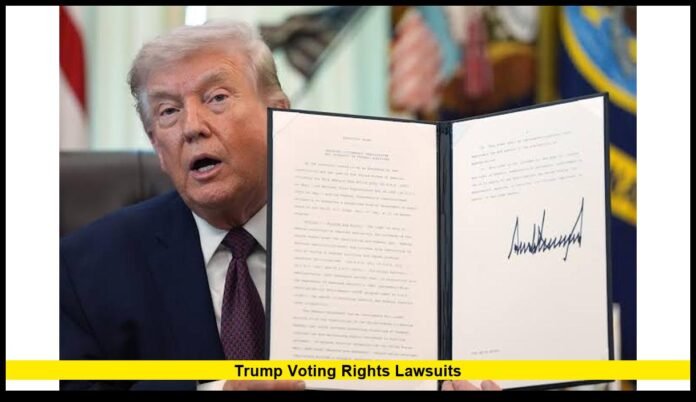

Trump voting rights lawsuits continue to shape the national conversation about election administration, voter access, federal authority, and election security in 2026. Several legal disputes involving the Trump administration, state governments, voting-rights organizations, and election officials remain active in federal courts. These cases address major questions about mail voting, voter-registration records, federal oversight of elections, and the balance of power between Washington and the states.
As the country moves closer to another major election cycle, these lawsuits are attracting significant attention because the outcomes could influence how elections are managed across the United States for years to come. Courts are reviewing whether recent federal actions comply with constitutional limits and existing election laws while states continue to defend their authority over election procedures.
Why Voting Rights Cases Have Become a National Focus
Election law has become one of the most contested areas of public policy in the United States. Questions about voter eligibility, election security, ballot access, and federal involvement have generated legal battles in courts throughout the country.
The Trump administration has supported measures aimed at strengthening voter verification and increasing federal oversight in certain areas of election administration. Supporters argue that these policies help ensure confidence in election outcomes and strengthen public trust.
Opponents contend that some actions could interfere with state authority or create unnecessary barriers for eligible voters. Those disagreements have led to multiple lawsuits that now sit before federal judges.
The legal disputes are not limited to a single state or region. Instead, they involve nationwide issues that affect voters from coast to coast.
Federal and State Authority at the Center of the Debate
One of the biggest questions in current election litigation involves the division of power between the federal government and the states.
The U.S. Constitution grants states significant responsibility for administering elections. States determine many voting procedures, manage voter registration systems, and oversee ballot counting.
At the same time, federal laws establish protections designed to ensure fair access to voting and prevent discrimination.
The current legal battles often focus on where those responsibilities begin and end.
Judges are being asked to determine whether federal agencies and executive actions have remained within constitutional boundaries or whether certain policies exceed federal authority.
The answers could influence election administration far beyond the current disputes.
Mail Voting Remains a Key Legal Issue
Mail voting continues to be one of the most important subjects in ongoing litigation.
Recent legal challenges have focused on federal efforts to influence how mail ballots are processed and handled. Critics argue that states have traditionally controlled many of these procedures and that significant changes should come through legislation rather than executive action.
Supporters of tighter controls say stronger verification measures help ensure election integrity and reduce opportunities for fraud.
The debate has reached federal courtrooms, where judges are reviewing legal arguments about constitutional authority, election law, and voter access.
Because millions of Americans rely on absentee and mail voting, these cases carry substantial importance.
Any court ruling affecting mail ballots could influence future elections across the country.
Disputes Over Voter Registration Data
Another major area of litigation involves voter-registration information.
Federal officials have sought access to certain voter records as part of broader election oversight efforts. These requests have triggered legal challenges from advocacy groups and some state officials.
Those opposing the requests argue that voter privacy deserves protection and that states should retain control over sensitive election information.
Supporters maintain that accurate voter rolls are essential for election security and that federal review can help identify potential problems.
The lawsuits seek judicial clarification regarding how much voter information can be collected, shared, and reviewed under existing law.
These cases have become some of the most closely watched election disputes of 2026.
Privacy Concerns Drive Additional Court Challenges
Privacy remains a central issue in several voting-rights cases.
Many lawsuits focus on whether voter information should be shared beyond state election agencies. Personal details contained within voter databases have become a point of concern for advocacy organizations and election officials.
Legal arguments often center on whether broad requests for voter information are necessary and whether adequate protections exist to safeguard sensitive records.
Federal courts are now examining these concerns while weighing the government’s interest in maintaining accurate voter-registration systems.
The decisions could establish important standards regarding voter privacy and election administration.
Wisconsin Decision Draws National Attention
A significant court ruling in Wisconsin attracted nationwide interest during 2026.
The case involved a dispute over access to voter information and highlighted broader questions about election administration authority.
The decision was viewed as an important development because it addressed issues that appear in similar lawsuits across multiple states.
Election-law observers noted that while the ruling applied specifically to Wisconsin, the legal reasoning could influence future cases elsewhere.
As additional courts consider related disputes, judges may examine similar constitutional and statutory arguments.
That possibility has made the Wisconsin case one of the year’s most discussed election rulings.
Read More – Federal Judge Blocks Trump: Court Rulings Redefine Limits of Presidential Power in 2026
Voting Rights Organizations Continue Legal Efforts
Several national organizations remain actively involved in election-related litigation.
These groups have challenged policies they believe could affect voter participation or alter longstanding election procedures.
Their legal efforts cover a range of topics, including:
- Mail voting rules
- Voter-registration practices
- Election administration authority
- Federal oversight initiatives
- Voter data access
- Election security policies
The organizations argue that courts should carefully review changes that affect voting procedures.
Many of the lawsuits seek temporary court orders while broader legal questions are resolved.
Those requests are especially important because election timelines often move faster than lengthy court proceedings.
The Role of Federal Courts
Federal judges have become key decision-makers in the ongoing disputes.
Courts are reviewing constitutional questions, statutory requirements, and administrative procedures.
In many cases, judges must determine whether challenged actions comply with federal law while also respecting state authority.
These decisions often involve detailed legal analysis rather than political considerations.
Court rulings can influence election administration immediately, especially when judges issue injunctions that block or allow policies before elections occur.
Because of the high stakes involved, appeals frequently follow major decisions.
Some cases may eventually reach higher federal courts.
Election Security Remains a Central Theme
Election security continues to play a major role in the litigation.
Supporters of stronger oversight argue that voters deserve confidence in election outcomes. They believe accurate voter rolls, identity verification measures, and secure ballot handling procedures contribute to that confidence.
Election security has become a prominent issue in public debate since the 2020 presidential election.
As a result, many current policies focus on verification processes and administrative safeguards.
The courts are now examining whether those measures align with existing laws and constitutional requirements.
The resulting decisions could influence future election-security initiatives nationwide.
How States Are Responding
States have taken different approaches to the federal election initiatives.
Some states have supported greater federal involvement in election oversight.
Others have challenged federal actions and defended their authority to manage elections independently.
These differing approaches reflect the diverse election systems used across the country.
Because each state operates under its own election framework, legal disputes often involve unique facts and procedures.
Even so, many cases raise common constitutional questions that affect the entire nation.
Impact on Election Officials
Local election officials are closely monitoring ongoing litigation.
County clerks, election administrators, and state election offices must prepare for elections while legal disputes remain unresolved.
Changes in voting procedures can require updates to training, voter education materials, and administrative systems.
Officials generally prefer stability because consistent rules reduce confusion among voters and election workers.
Court decisions issued close to an election can create operational challenges.
For that reason, judges often consider election schedules when evaluating requests for emergency relief.
Congressional Interest in Voting Rights Issues
The lawsuits have unfolded alongside continued debate in Washington over election legislation.
Lawmakers remain divided on proposals involving voter identification requirements, election security measures, voter registration processes, and federal election standards.
Some proposals would expand federal involvement in election administration.
Others emphasize state control and decentralized election systems.
Although legislative debates occur separately from court cases, the two frequently intersect because legal challenges often arise when governments implement new election policies.
As Congress continues discussing election reforms, ongoing litigation provides additional context for policymakers.
Potential Long-Term Effects
The significance of these cases extends beyond the current election cycle.
Court rulings issued in 2026 may establish precedents that influence election administration for years.
Future presidents, governors, election officials, and lawmakers could rely on these decisions when developing election policies.
The cases may also clarify important constitutional questions regarding federal authority, state powers, and voting-rights protections.
Because elections are fundamental to American democracy, even narrow legal decisions can have broad consequences.
That reality explains why these lawsuits continue to attract national attention.
What Voters Should Watch
Several developments could shape the next phase of election litigation.
Key areas to monitor include:
| Issue | Why It Matters |
|---|---|
| Mail voting disputes | Could affect absentee ballot procedures |
| Voter data lawsuits | May define privacy protections |
| Federal authority cases | Could clarify constitutional limits |
| Election security policies | May influence future safeguards |
| Appeals and higher court reviews | Could establish nationwide precedents |
Many of these cases remain active, meaning additional rulings are expected throughout the year.
Future court decisions may provide greater clarity regarding how elections will be administered in upcoming federal contests.
The Broader Importance of Voting Rights Litigation
Voting rights litigation has become one of the most influential legal battlegrounds in modern American politics.
The disputes touch on fundamental questions about democracy, voter access, election security, and governmental authority.
While individual cases focus on specific policies, the broader legal debate centers on how elections should be conducted and who should control those decisions.
Federal courts now occupy a pivotal position in resolving these conflicts.
Their rulings will help determine the legal framework governing future elections throughout the United States.
For voters, election officials, policymakers, and advocacy organizations, the outcomes of these cases carry lasting significance.
The decisions issued in the coming months could influence election administration, voting procedures, and public confidence in the electoral system for years to come.
As legal challenges continue to move through the courts, the national conversation surrounding voting rights and election administration remains one of the most important issues facing American democracy today.