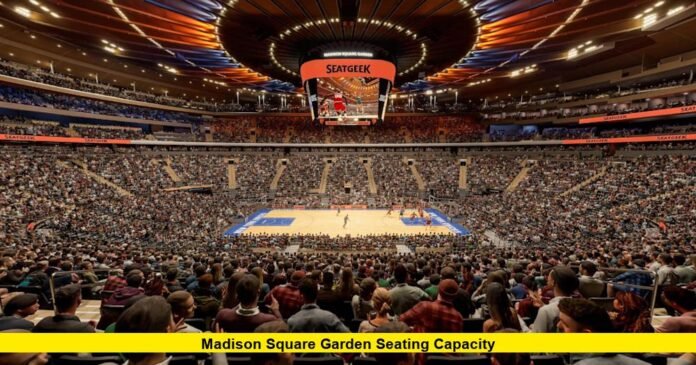

If you are planning to catch a New York Knicks game, a New York Rangers match, a world-class concert, or a major boxing event at the most famous arena on the planet, understanding Madison Square Garden seating capacity is the first step to choosing the perfect seat. From the roaring lower bowl to the legendary Chase Bridges suspended high above the floor, MSG is a vertical, electric, and sometimes unforgiving venue — and knowing what to expect before you buy your ticket makes all the difference.
What Is the Official Seating Capacity of Madison Square Garden?
Madison Square Garden does not have a single fixed capacity. The number of seats available changes depending on the type of event hosted. Here is a breakdown of the official figures:
| Event Type | Seating Capacity |
|---|---|
| Basketball (NBA) | 19,812 |
| Ice Hockey (NHL) | 18,006 |
| Boxing / MMA | 20,789 |
| Concerts | Up to 22,000 |
| Pro Wrestling | 18,538 |
The variation exists because the arena floor is reconfigured for each type of event. Concert setups can open up floor space for general admission standing, boosting total attendance significantly, while hockey requires a full ice surface that reduces available seating around the rink.
A Brief History of Madison Square Garden
Before diving into sections and rows, it helps to understand why MSG commands such reverence. The current arena — the fourth building to carry the Madison Square Garden name — opened on February 11, 1968, built at a cost of $123 million (equivalent to roughly $1.14 billion in 2025 dollars). It sits atop Pennsylvania Station at 4 Pennsylvania Plaza, Midtown Manhattan.
The arena has hosted everything from heavyweight championship bouts to papal visits, legendary rock concerts, and NBA Finals games. It is home to the New York Knicks (NBA) and the New York Rangers (NHL), both of whom have called MSG home since 1968, as well as St. John’s Red Storm college basketball (since 1969).
The $1 Billion Transformation (2011–2013)
Perhaps the single biggest chapter in MSG’s modern story is the three-year, $1 billion renovation completed in October 2013. The overhaul — dubbed “The Transformation” — touched almost every part of the building:
- The Chase Bridges: Two iconic sky bridges suspended from the arena’s ceiling, each 233 feet long and 22 feet wide, together weighing 662 tons. They seat 430 fans in a premium, elevated position high above the event floor and have become one of the arena’s most distinctive features.
- GardenVision Scoreboard: A state-of-the-art, center-hung LED display system with 3,400 square feet of total LED surface.
- New Suite Levels: Three brand-new suite tiers — the Event Level, Lexus Madison Level, and Signature Level — were added, including 18 renovated suites with center-stage views.
- Renovated Concourses: Upgraded food, beverage, and fan experience spaces throughout, including celebrity chef dining options.
- Updated Sound and Lighting: Overhauled acoustics and stage infrastructure to support world-class performances.
The renovation solidified MSG’s standing not just as a historic venue, but as a genuinely modern, premium arena experience.
Madison Square Garden Seating Levels Explained
MSG is a vertical arena — it rises steeply and quickly, meaning every level feels distinct in atmosphere, proximity, and price. Here is a full breakdown:
The Floor / Event Level
For concerts, the floor (sections labeled A through F, sometimes with a pit or general admission zone) is the closest you can get to the action. For basketball and hockey, this level contains the most coveted courtside and rinkside seats. Floor configurations change significantly from event to event.
100 Level — The Lower Bowl
The 100-level sections form the lower bowl and are widely considered the best seats in the house for sports fans. Sections run from roughly 101 to 120. Lower bowl sideline seats offer clean sightlines, full court visibility, and the ability to feel the speed of the game. Lower bowl corners offer strong value — slightly less expensive than center sidelines but with angles that open up well a few rows in.
For concerts with an end-stage setup, sections 110 to 112 put fans closest to the stage. The lower bowl delivers an immersive, up-close experience regardless of the event type.
200 Level — The Middle Bowl
The 200 level is arguably the smartest buy at MSG. Positioned above the lower bowl, these seats provide an elevated view that lets fans see plays develop, read the full court or ice surface, and stay close enough to feel the crowd energy. Many regular MSG attendees actually prefer sections in the 200 level over lower bowl behind-the-basket seats.
One important note: the Chase Bridges run along the 10th floor of the arena, roughly at the 200 level. Fans seated in row 15 or higher and along the sidelines of the 200 level may find their view of the main center-hung scoreboard partially blocked by the bridge structure. Video screens are mounted on the back of the bridges to compensate, but if an unobstructed view of the main board is important to you, aim for row 15 or lower in this section.
300 Level — The Upper Bowl
The upper deck at MSG is steep, loud, and unapologetic. The 300-level sections rise sharply from the arena bowl and deliver some of the best crowd energy in the building. Nosebleed seats at MSG have a reputation among fans — the altitude is real, but the atmosphere is unmatched.
However, avoid rows tucked directly under the Chase Bridges if possible, as sightlines and scoreboard visibility can be compromised. Sections 220–224 (upper bowl center) offer a notably balanced view of the court or stage for those wanting a centered perspective without paying lower bowl prices.
The Chase Bridge Seats
The Chase Bridges are a category of their own. Suspended from the ceiling above the seating bowl, they seat 430 fans in a premium gondola-style perch with first-class food and beverage service. The view is unlike anything else in the arena — almost directly above the action, looking straight down the length of the court or stage. For concert-goers in particular, this is one of the most unique vantage points in live entertainment. These seats are sold as premium packages and sell out quickly for high-profile events.
Seating Capacity by Sport and Event
New York Knicks — NBA Basketball (19,812)
The Knicks configuration uses the full bowl, with the court sitting at arena floor level. The lower bowl sidelines are the most coveted seats. For a classic Knicks game experience, courtside and lower bowl sections fill up fast, especially for marquee matchups. The official basketball capacity of 19,812 makes MSG one of the larger NBA arenas in the league.
New York Rangers — NHL Hockey (18,006)
Hockey at MSG seats 18,006 fans, slightly lower than basketball due to the larger footprint of the ice rink. The lower bowl along the glass offers an intense hockey experience, but sections directly behind the goals in the upper bowl can feel disconnected from the neutral-zone play. Sections along the sides of the 100 and 200 levels are the sweet spot for Rangers fans who want to follow the puck naturally.
Concerts (Up to 22,000)
MSG’s concert capacity is the highest of any configuration, reaching up to 22,000 when the floor is used for general admission standing. The arena changes personality dramatically depending on the stage layout:
- End-stage concerts: Lower bowl side sections closest to the stage are premium. Upper bowl center sections (220–224) give a balanced, centered view.
- Center-stage/360° concerts: The Chase Bridge seats become exceptionally desirable, offering overhead views perfect for arena-in-the-round formats. Sections around the full bowl become more equal in quality.
- Catwalk configurations: Some shows use an extended runway or thrust stage, which opens up more sections to close-up views.
Boxing and MMA (20,789)
Combat sports draw some of the most passionate MSG crowds. The boxing and MMA configuration seats a maximum of 20,789 fans, with the ring or octagon placed at center floor. Ringside floor seats command the highest prices, while 100- and 200-level sections offer solid elevated angles of the action.
The Infosys Theater at Madison Square Garden
Attached to the main arena is a separate, smaller venue — formerly known as the Hulu Theater and now officially renamed the Infosys Theater at Madison Square Garden following a naming rights deal announced in February 2026 with India-based technology company Infosys. This theater holds 5,600 fans and hosts smaller concerts, comedy shows, and special events. No seat is more than 177 feet from the stage, making it an intimate experience by arena standards.
Tips for Choosing the Best Seat at MSG
Here are practical takeaways to help you choose wisely:
- For basketball: Lower bowl sidelines are the gold standard; 200 level sidelines below row 15 offer excellent value.
- For hockey: Lower bowl glass seats are electric; avoid directly behind the goals in the upper 300s if following the puck matters to you.
- For concerts: End-stage shows favor lower bowl side sections; 360° shows make Chase Bridge seats uniquely rewarding.
- Avoid: Upper bowl rows directly beneath the Chase Bridges for sightline-sensitive events.
- Best value pick: 200-level center sections (220–224) for virtually any event — balanced view, strong energy, and often better priced than the lower bowl.
Getting to Madison Square Garden
Located at 4 Pennsylvania Plaza above Penn Station, MSG is one of the most accessible arenas in the world. It connects directly to:
- Amtrak, LIRR, and NJ Transit via Penn Station
- New York City Subway at 34th Street–Penn Station (both 7th and 8th Avenue entrances)
- PATH trains at 33rd Street
- Multiple city bus routes (M4, M7, M20, M34 SBS, and more)
Driving is possible but expensive; most locals and visitors take the train.
Madison Square Garden by the Numbers
- Year opened (current location): 1968
- Construction cost: $123 million (≈$1.14 billion in 2025 dollars)
- Renovation cost (2011–2013): $1 billion
- Total arena floor size: 820,000 sq ft
- Chase Bridge length: 233 feet each
- Chase Bridge combined weight: 662 tons
- Chase Bridge seating: 430 fans
- Infosys Theater capacity: 5,600
- Primary tenants: New York Knicks (NBA), New York Rangers (NHL), St. John’s Red Storm (NCAA)
Conclusion
Madison Square Garden is not just an arena — it is a living piece of sports and entertainment history. Whether you are buying your first ticket or your fiftieth, understanding Madison Square Garden seating capacity by event type, level, and configuration will help you get the most out of your visit. With a maximum concert capacity of 22,000, a basketball capacity of 19,812, and signature features like the Chase Bridges unlike anything else in live sports, MSG continues to earn its title as the World’s Most Famous Arena.
Have you been to an event at MSG? Drop a comment below and tell us your favorite section — or subscribe to stay updated on our latest arena guides and seating tips!