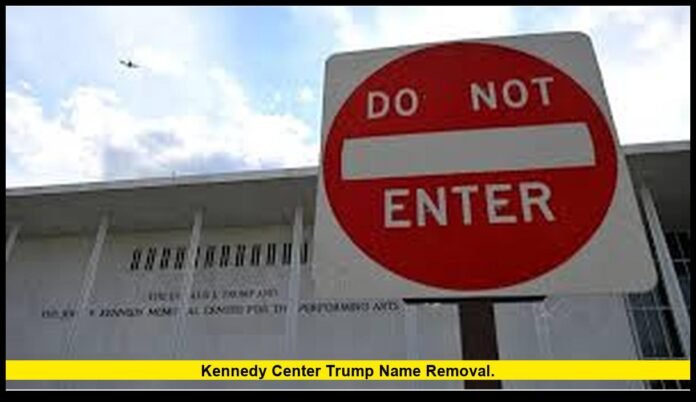

The kennedy center trump name removal issue remains one of the most talked-about cultural and legal stories in the United States as of June 2026. Recent court actions have led the John F. Kennedy Center for the Performing Arts to begin removing references to President Donald Trump from official branding, marking a major development in a dispute that has drawn attention from lawmakers, artists, legal experts, and the public.
The controversy centers on whether the Kennedy Center’s governing board had the authority to add Trump’s name to the institution and whether such a change could legally occur without congressional approval. A federal court ruling has now provided a clear answer, setting the stage for significant changes at one of America’s most recognized cultural landmarks.
A Major Turning Point for the Kennedy Center
For decades, the Kennedy Center has stood as a symbol of American arts and culture. Located on the banks of the Potomac River in Washington, D.C., the institution serves as the nation’s official memorial to President John F. Kennedy and hosts thousands of performances and cultural events every year.
The recent legal battle has placed the center at the center of a national conversation that extends beyond performing arts. Questions involving presidential influence, board authority, federal law, and historic preservation have all become part of the discussion.
The latest court decision has required the institution to restore its traditional identity and remove branding associated with Donald Trump.
How the Dispute Began
The roots of the controversy stretch back to changes in leadership and governance that followed Trump’s return to the White House.
During 2025, significant shifts occurred within the Kennedy Center’s board structure. New appointments changed the balance of influence within the organization, leading to discussions about the future direction of the institution.
In December 2025, the board approved a proposal that added Trump’s name to the center’s official title. The move immediately generated strong reactions from both supporters and critics.
Backers argued that Trump deserved recognition for efforts to reshape and modernize the institution. Opponents maintained that the Kennedy Center’s name and mission were established by federal law and could not be altered by a board vote alone.
The disagreement quickly moved from public debate into the legal system.
Why the Kennedy Center Holds Special Status
Unlike many arts organizations, the Kennedy Center occupies a unique position in American public life.
Congress established the institution as a living memorial to President John F. Kennedy. Because federal law created the center and defined its purpose, its governance differs from that of private performing arts venues.
The center serves multiple roles:
- National performing arts venue
- Presidential memorial
- Educational institution
- Cultural gathering place
- Home to major national arts programs
Its special legal status became one of the central issues in the lawsuit challenging the name change.
Federal Court Rules Against the Renaming
The dispute reached a critical stage when a federal judge reviewed whether the board acted within its legal authority.
The court concluded that Congress, not the Kennedy Center board, controls the institution’s official name.
As a result, the judge ruled that the board exceeded its authority when it approved the addition of Trump’s name to the center.
The ruling ordered the institution to stop using the revised title and begin removing references that suggested an official renaming had occurred.
The decision represented a major setback for supporters of the change and a significant victory for those who argued that congressional approval was required.
What the Court Ordered
The court’s order extends beyond simply changing a name on paper.
Kennedy Center officials must update numerous materials and platforms to comply with the ruling.
Required changes include:
- Official website content
- Public communications
- Press materials
- Digital branding
- Administrative documents
- Marketing materials
- Institutional references
The center also faces deadlines for removing physical displays that reflect the disputed branding.
Compliance efforts began shortly after the ruling became public.
Website and Digital Changes Already Underway
One of the first visible signs of compliance appeared online.
Visitors to the Kennedy Center’s website noticed that references connected to the disputed branding had begun disappearing. Staff members were instructed to use the institution’s traditional legal name in public-facing communications.
Digital platforms often provide the fastest route for organizations to implement court-ordered changes, making website updates among the earliest actions taken.
The process continues as administrators work through the broader requirements outlined by the court.
The Legal Argument at the Heart of the Case
The court’s reasoning focused heavily on congressional authority.
Federal lawmakers established the Kennedy Center through legislation and designated it as a memorial honoring President Kennedy.
Because Congress created the institution, the court determined that Congress alone possesses the power to formally alter its official name.
The ruling emphasized that administrative decisions cannot override statutes enacted by lawmakers.
This legal principle formed the foundation of the decision requiring the removal of Trump’s name.
Reaction Across Washington
The decision immediately sparked discussion throughout Washington’s political and cultural communities.
Supporters of the ruling viewed it as a reaffirmation of constitutional and legislative authority. They argued that historic federal institutions should remain consistent with the purposes established by Congress.
Critics of the ruling expressed disappointment and maintained that the board should have greater flexibility in recognizing individuals who influence the institution.
The debate quickly spread beyond government circles and into the national media landscape.
Artists and Performers Closely Watch Developments
The arts community has followed the situation with particular interest.
The Kennedy Center plays a central role in American performing arts. Musicians, actors, dancers, directors, and arts organizations frequently rely on the venue for performances and public engagement.
Many artists have expressed concern over political controversies affecting the center’s reputation.
Others believe governance disputes should remain separate from artistic programming.
Regardless of political views, many performers agree that stability at the institution remains important for the broader cultural sector.
Impact on the Kennedy Center’s Public Image
Public institutions often depend on trust and credibility.
The controversy surrounding the name change created challenges for the Kennedy Center’s public image. Headlines about legal battles and governance disputes frequently overshadowed discussions about performances and educational programs.
For many observers, the court’s ruling represents an opportunity for the institution to refocus attention on its cultural mission.
Restoring public confidence may become a key objective for leadership moving forward.
Read More – Pete Hegseth Education: From Ivy League Halls to the Pentagon
Historical Importance of the Kennedy Center
The Kennedy Center opened in 1971 and has become one of the most recognizable performing arts venues in the world.
The institution hosts:
- Broadway productions
- Symphony concerts
- Ballet performances
- Opera presentations
- Jazz programs
- Educational initiatives
- National celebrations
Generations of Americans have visited the center to experience performances and participate in cultural events.
Its connection to President Kennedy remains central to its identity and historical significance.
That connection played a major role in the court’s analysis.
A Broader Debate About Cultural Institutions
The legal battle has sparked larger questions about the role of politics in public cultural organizations.
Many Americans view institutions such as the Kennedy Center as places that should unite people through artistic expression.
Others argue that leadership changes naturally influence the direction of publicly supported organizations.
The dispute has highlighted how cultural institutions can become focal points for broader national debates.
As a result, the case has attracted attention far beyond the arts community.
Governance Questions Remain
Although the court resolved the naming dispute, several governance questions continue to generate discussion.
Observers are closely watching how the Kennedy Center’s leadership will navigate future challenges while complying with federal law.
Areas receiving attention include:
- Board authority
- Administrative oversight
- Institutional independence
- Long-term planning
- Public accountability
The answers to these questions may shape the center’s future for years to come.
Plans for the Institution’s Future
The Kennedy Center continues to operate while addressing legal and administrative issues.
Leadership has emphasized maintaining performances, educational programming, and public engagement activities throughout the process.
Visitors continue to attend concerts, theater productions, and special events.
Despite the controversy, the institution remains one of the nation’s most active cultural venues.
Its ongoing operations demonstrate the importance of the center’s role in American artistic life.
Why This Story Matters Beyond Washington
The significance of this dispute extends far beyond the nation’s capital.
The case addresses fundamental questions involving:
- Federal authority
- Congressional powers
- Cultural preservation
- Historic memorials
- Governance of public institutions
Because the Kennedy Center occupies such a prominent national role, decisions affecting it often carry broader implications.
The court’s ruling may influence future discussions involving other federally established institutions.
The Return to the Original Identity
As compliance efforts continue, the Kennedy Center is returning to the identity established when Congress created the institution.
For many Americans, the restoration of the original name reflects continuity with the center’s historical mission.
The venue remains dedicated to honoring President John F. Kennedy while serving as a leading destination for performing arts and cultural programming.
Administrators now face the task of moving beyond the controversy and focusing on the institution’s long-term goals.
Looking Ahead
The legal battle over the Kennedy Center’s name may be remembered as one of the most significant governance disputes in the institution’s history.
The court’s decision has already reshaped branding, administrative practices, and public discussions surrounding the center.
While debate over the issue continues, the ruling has established a clear legal framework regarding who has the authority to change the name of a federally created cultural institution.
For now, the Kennedy Center remains focused on carrying out its mission as America’s national performing arts center while complying with the requirements set forth by the court.
Conclusion
The kennedy center trump name removal controversy has become a defining story at the intersection of politics, law, and culture in 2026. With a federal court ordering the restoration of the Kennedy Center’s traditional identity, one chapter of the dispute has come to a close. The institution now enters a new period focused on compliance, governance, and its continuing role as a cornerstone of American arts and cultural life.
What are your thoughts on the Kennedy Center’s future after this landmark ruling? Share your perspective and follow the latest developments as this story continues to unfold.