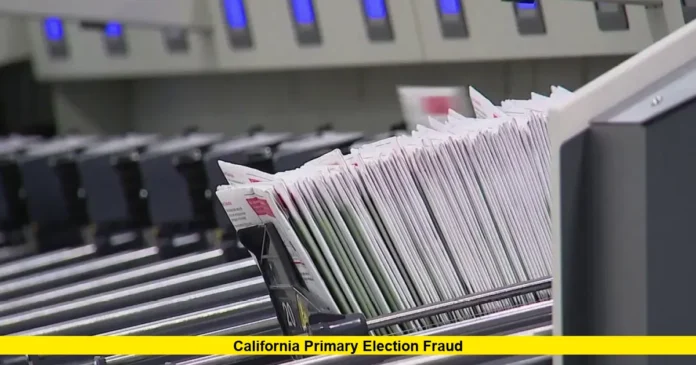

California’s June 2, 2026, primary election has ignited a firestorm of controversy, with federal prosecutors announcing multiple election fraud investigations, President Donald Trump leveling accusations of ballot manipulation, and state officials pushing back hard against what they call baseless political attacks. Here is everything you need to know about the unfolding California primary election fraud saga.
What Triggered the California Primary Election Fraud Probe?
The controversy erupted in the immediate aftermath of California’s June 2, 2026, primary election. As is typical for California, the ballot count stretched well beyond Election Night — a legally mandated process that requires officials to count mail-in ballots arriving after Election Day, verify signatures on envelopes, process provisional ballots, and give voters time to correct errors.
However, the slow pace of counting quickly became a political flashpoint. With the governor’s race and the Los Angeles mayoral race both too close to call and trending toward Democratic candidates as late-arriving mail ballots were tabulated, President Trump took to Truth Social with explosive claims.
According to reports, Trump wrote: “The Dumocrats are at it again! They are trying to STEAL THE GOVERNOR OF CALIFORNIA PRIMARY, AND THE MAYOR OF LOS ANGELES, PRIMARY, AWAY FROM TWO GREAT REPUBLICAN CANDIDATES.” He specifically called out the volume of late-arriving mail ballots as evidence of wrongdoing, despite providing no supporting evidence.
U.S. Attorney Bill Essayli Announces Federal Election Fraud Investigations
Just one day after Trump’s allegations, on June 5, 2026, First Assistant U.S. Attorney Bill Essayli, the top federal prosecutor in the Central District of California, announced the investigations in a social media post.
Essayli wrote on X: “Protecting the integrity of California’s elections is a top priority for my office. California’s election system has serious structural vulnerabilities. Universal vote-by-mail with no voter ID requirements creates conditions where fraud can go undetected and unpunished, eroding public confidence.”
Essayli said his office was pursuing “multiple election fraud investigations” alongside the FBI, without providing specific details. “We will follow the evidence wherever it leads and prosecute any violations of federal election law to the fullest extent,” he stated.
In addition to the fraud investigations, Essayli also said his office is working in coordination with Assistant Attorney General Harmeet Dhillon to conduct a comprehensive audit of California’s voter rolls, citing the state’s resistance to voter eligibility verification efforts.
Federal Observer Sent Inside LA County Ballot Processing Center
Beyond the announcement on social media, the U.S. attorney’s office took a more concrete step. The Department of Justice dispatched Assistant U.S. Attorney Robert Renner as a federal observer to the Los Angeles County Ballot Processing Center.
The U.S. attorney’s office in Los Angeles confirmed it had opened “multiple election fraud investigations” related to California’s elections and sent a prosecutor to the county’s vote-counting center.
Asked about the investigations, Laura Eimiller, a spokesperson for the FBI in Los Angeles, told NBC News that “while the FBI does investigate election violations, the FBI doesn’t confirm or deny the existence of investigations as a rule.”
What Are the Specific Fraud Allegations?
While Essayli did not publicly detail each open investigation, he pointed to a recent case as illustrative of the vulnerabilities he cited. Essayli referenced a case from May in which an LA woman was charged with paying homeless people on Skid Row to register to vote in a 20-year scheme tied to illegal petition signature collection.
More broadly, Essayli cited “serious structural vulnerabilities” in California’s universal vote-by-mail system, and it remains unclear whether the federal probes have uncovered any widespread voting irregularities that could impact the outcomes of the gubernatorial or mayoral primaries.
State Officials Defend the Ballot Count
California’s state government has been swift and pointed in its response to the fraud claims. As per reports, California Secretary of State Shirley Weber stated: “The slow pace of our count is a direct reflection of our commitment to accuracy and security. We will not allow politically motivated attacks or baseless claims of fraud to undermine the hard work of our county election officials.”
State officials noted that the gradual results are the product of laws requiring election officials to count valid mail-in ballots that arrive after Election Day, verify signatures, process provisional ballots, and give voters time to fix ballot problems so their votes can count.
Governor Gavin Newsom’s press office was blunt in its response, posting online: “Trump is lying about California again.” Newsom’s press office shared a clip explaining how California prioritizes accuracy and accessibility over speed, and also noted: “For the record: we wish the votes were counted faster, too.”
According to the California Secretary of State, “vote-by-mail ballots postmarked on or before Election Day and received within seven days after the election, as well as any provisional ballots cast, must still be counted.” County election officials have up to 30 days after the election to count ballots, with final results due to the Secretary of State by July 3, 2026.
Where Do the Governor’s Race Numbers Stand?
The governor’s race has been at the center of the fraud controversy, largely because the count remained extremely close and continued shifting as more ballots arrived.
With Democratic Governor Gavin Newsom unable to run for re-election due to term limits, a large field entered the race. The top two candidates from the all-party primary advance to the general election regardless of party. Xavier Becerra is advancing to the general election.
In a new drop of election results on Friday evening, Becerra took the lead over Republican Steve Hilton. In the latest totals, Becerra had 26.7% of the vote, and Hilton had 26.4%, with Tom Steyer in third at 21%. At that point, 65% of the expected votes had been counted.
Hilton’s campaign said it is monitoring the process closely but has not seen evidence requiring legal intervention, with Hilton himself saying: “We’re watching everything very closely. Our team is on top of everything. We’ve got lawyers standing by if needed.”
Republican Candidate Steve Hilton Calls for Election Reform
While Trump’s allegations have been the loudest, Hilton has not made the same fraud allegations as Trump but has called for changes to California’s election system. He proposed requiring mail-in ballots to arrive by Election Day and limiting mail-in voting to those who request it, rather than the current universal system.
Republican gubernatorial candidate Steve Hilton also scheduled a press conference in San Mateo to propose an Emergency Election Support Corps to address ongoing ballot-counting backlogs.
The Riverside County Sheriff’s Parallel Investigation
The June 2026 primary probe is not the first election integrity controversy California has seen in recent months. The California Supreme Court had earlier ordered Riverside County Sheriff Chad Bianco — himself a Republican gubernatorial candidate — to pause his probe into election fraud allegations and preserve seized ballots, while the court reviewed the legal challenge against his actions.
Bianco’s department had executed warrants to seize roughly 1,000 boxes of ballot materials related to the November 2025 special election on redistricting, with local election officials stating the underlying complaint was unfounded. California Attorney General Rob Bonta had argued the sheriff had no authority over election materials.
Critics Say the Probe Is Politically Motivated
Many election law experts and election officials have been direct about their concerns. The Los Angeles County GOP Chair Roxanne Hoge even acknowledged the situation, writing: “Following the June 2, 2026 primary election, the vote counting process is underway and will continue in accordance with California law.”
Stephen Richer, a former Republican election official in Maricopa County, Arizona, wrote on X: “We might not like how California administers its elections (and I don’t). But that doesn’t make it fraud.”
California AG Rob Bonta had previously warned that Trump may use false reports of voting irregularities to challenge election results, saying he is “100%” concerned about false accusations of wrongdoing at polling places, and that it would be “naive” to assume Trump would accept election results given his history.
Key Dates to Watch
- June 2, 2026 — California primary election held
- June 5, 2026 — U.S. Attorney Essayli announces multiple election fraud investigations in coordination with the FBI
- June 15, 2026 — Deadline for counties to report most standard mail-in ballots under Assembly Bill 5
- July 3, 2026 — Hard deadline for county officials to submit final primary results to the Secretary of State
- July 10, 2026 — California Secretary of State scheduled to officially certify the primary election results
FAQ: California Primary Election Fraud 2026
Q: Has election fraud actually been proven in California’s 2026 primary? A: No. As of June 7, 2026, the U.S. attorney’s office has announced investigations but has not confirmed any specific findings of widespread fraud. State officials maintain the slow count is a routine and legally required process.
Q: Why does California take so long to count ballots? A: California law requires that all mail-in ballots postmarked on or before Election Day and received within seven days after the election must be counted. Signature verification and processing of provisional ballots also contribute to the timeline.
Q: Who is Bill Essayli? A: Bill Essayli is the First Assistant U.S. Attorney for the Central District of California, appointed under the Trump administration. He announced the multiple election fraud investigations on June 5, 2026.
Q: What is California’s universal vote-by-mail system? A: California automatically mails a ballot to every active registered voter for each election. Critics argue this creates vulnerabilities; supporters say it increases accessibility and has extensive safeguards including signature verification.
Q: When will the California governor’s primary results be certified? A: The California Secretary of State is scheduled to officially certify the primary election results on July 10, 2026.
The California primary election fraud controversy is moving fast — drop your thoughts in the comments below and bookmark this page for the latest updates as federal investigations unfold and the final vote count comes in.