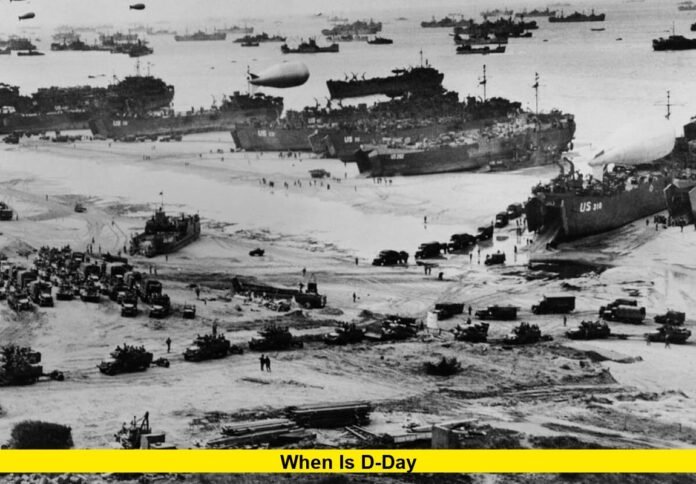

Many people ask, when is D-Day and why it remains one of the most remembered dates in modern history. D-Day is observed every year on June 6, commemorating the Allied invasion of Normandy, France, during World War II on June 6, 1944.
More than eight decades later, D-Day continues to symbolize courage, sacrifice, and the fight for freedom. It was a military operation that changed the course of World War II and helped lead to the liberation of Western Europe from Nazi occupation.
As annual remembrance ceremonies take place across Europe and North America, interest in the historic date remains strong among students, historians, veterans, and the general public.
When Is D-Day?
The answer is straightforward: D-Day is June 6 every year.
The term specifically refers to June 6, 1944, when Allied forces launched the Normandy invasion, known as Operation Overlord.
In 2026, D-Day falls on Saturday, June 6, 2026. Communities around the world are marking the anniversary with memorial services, educational programs, military tributes, and historical exhibitions.
While June 6 is not a federal holiday in the United States, it is recognized as one of the most significant dates of World War II.
What Happened on D-Day?
On the morning of June 6, 1944, Allied troops crossed the English Channel and launched a massive assault on the coast of Normandy in northern France.
The invasion involved:
- More than 150,000 Allied troops
- Thousands of ships and landing craft
- Thousands of aircraft providing support
- Soldiers from the United States, United Kingdom, Canada, and other Allied nations
The operation targeted five beaches along the Normandy coastline:
Utah Beach
American forces landed here and successfully pushed inland despite challenging conditions.
Omaha Beach
Omaha Beach witnessed some of the fiercest fighting and highest casualties of the invasion.
Gold Beach
British troops secured key positions and advanced toward strategic objectives.
Juno Beach
Canadian forces overcame strong resistance and made significant progress inland.
Sword Beach
British troops landed successfully and began advancing toward important transportation routes.
The success of these landings established a crucial foothold in France and allowed Allied forces to continue their advance into Europe.
Why Is D-Day Important?
D-Day is widely regarded as one of the most important military operations in history.
Before the invasion, much of Western Europe remained under Nazi control. The Normandy landings opened a major western front against Germany and significantly weakened German defenses.
The operation demonstrated extraordinary planning, coordination, and bravery. Soldiers faced machine-gun fire, artillery bombardments, underwater obstacles, and difficult weather conditions.
Historians often describe D-Day as a turning point because it accelerated the eventual defeat of Nazi Germany and helped restore freedom to occupied nations across Europe.
Without the success of the Normandy invasion, the timeline of World War II could have been dramatically different.
What Does the Term “D-Day” Mean?
Many people assume D-Day stands for a specific phrase, but in military terminology, it simply refers to the designated day on which an operation begins.
Military planners often use letters such as:
- D-Day = Day of operation
- H-Hour = Hour an operation begins
Although the term was used for other military operations, it became permanently associated with the Normandy invasion because of the event’s historical significance.
Today, when people mention D-Day, they almost always mean the Allied landings in Normandy on June 6, 1944.
How Is D-Day Remembered Today?
Every year on June 6, remembrance ceremonies are held across several countries.
France
Normandy hosts major commemorative events, especially near the historic landing beaches and military cemeteries.
United States
Veterans organizations, military institutions, museums, and local communities honor those who served during the invasion.
United Kingdom
Special ceremonies recognize the contributions of British troops and support personnel who participated in Operation Overlord.
Canada
Canadians remember the sacrifices of the soldiers who landed at Juno Beach and fought during the campaign.
These commemorations ensure that future generations understand the importance of the operation and the sacrifices made by those who participated.
D-Day’s Lasting Legacy
More than 80 years after the invasion, D-Day remains a powerful reminder of what can be achieved through international cooperation and determination.
The bravery displayed by Allied soldiers continues to inspire people worldwide. Museums, memorials, documentaries, books, and educational programs help preserve the stories of those who fought on June 6, 1944.
For many families, D-Day is not only a historical event but also a personal connection to relatives who served during World War II.
Conclusion
If you are searching for when is D-Day, the answer is June 6 every year. The date commemorates the Normandy landings of 1944, one of the most significant military operations ever undertaken. D-Day helped change the course of World War II and remains a lasting symbol of courage, sacrifice, and the defense of freedom.
As each June 6 arrives, the world remembers the heroes of Normandy. Share your thoughts in the comments and stay updated for more historical anniversaries and World War II insights.