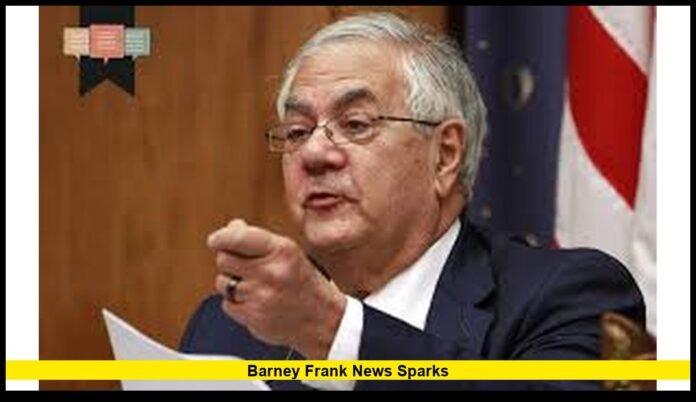

The latest barney frank news has triggered widespread reactions throughout Washington and beyond following the death of the longtime former Massachusetts congressman at age 86. Frank, who spent more than three decades in the U.S. House of Representatives, became one of the most influential Democratic lawmakers of his era through his work on financial reform, civil rights, and national economic policy.
His passing has renewed conversations about the political battles that defined his career, the impact of the Dodd-Frank banking law, and the role he played in changing public attitudes toward LGBTQ representation in government. Political leaders, advocacy groups, economists, and former colleagues have spent the past day reflecting on the legacy of a man who shaped some of the country’s most important policy debates during moments of national crisis.
Frank died after dealing with serious health complications in recent months. He had reportedly been receiving hospice care in Maine while remaining publicly engaged in political discussions and national interviews. Even in the final stage of his life, Frank continued speaking openly about the direction of American politics and the future of the Democratic Party.
His death marks the end of one of the most recognizable congressional careers of the modern era.
From New Jersey Roots to Capitol Hill Power
Barney Frank was born in Bayonne, New Jersey, in 1940 and later attended Harvard University, where he developed an early interest in politics and public service. After graduating, he entered Massachusetts politics and eventually became associated with liberal Democratic causes focused on economic fairness, housing rights, and government accountability.
Before arriving in Congress, Frank worked as a political aide and later served in the Massachusetts House of Representatives. His sharp debating skills and deep policy knowledge quickly helped him stand out among fellow lawmakers.
In 1980, voters elected him to the U.S. House of Representatives, where he would remain for more than 30 years.
Over time, Frank built a national reputation as one of Congress’s most outspoken and intellectually aggressive Democrats. He frequently appeared on television during heated policy debates and became known for delivering blunt, often humorous responses during hearings and interviews.
Supporters viewed him as fearless and highly informed.
Critics often considered him combative and unapologetically partisan.
Either way, Frank became impossible to ignore in national politics.
A Central Figure During the Financial Crisis
One of the defining moments of Frank’s political career came during the 2008 financial collapse, when the United States faced one of the worst economic crises since the Great Depression.
Major banks failed or required emergency intervention. Housing markets collapsed. Millions of Americans lost jobs, retirement savings, and homes.
As chair of the House Financial Services Committee, Frank suddenly found himself at the center of the national response.
Working alongside Senate Banking Committee Chairman Chris Dodd, Frank helped craft sweeping financial legislation aimed at tightening oversight of banks and financial institutions.
That legislation became known as the Dodd-Frank Wall Street Reform and Consumer Protection Act.
The law introduced major changes to the American banking system. It created stricter rules for large financial institutions, expanded federal oversight powers, and established the Consumer Financial Protection Bureau to monitor lending practices and consumer abuse.
The legislation also attempted to reduce the likelihood of another catastrophic banking collapse by requiring stronger safeguards and stress testing within the financial sector.
Supporters argued the law strengthened protections for ordinary Americans and prevented risky behavior that contributed to the financial crisis.
Opponents claimed the regulations placed excessive burdens on banks and reduced lending flexibility.
Years later, debates surrounding Dodd-Frank continued shaping discussions about federal regulation, Wall Street oversight, and economic policy.
Frank consistently defended the legislation after leaving office and remained vocal whenever political leaders discussed weakening parts of the law.
Many economists and political historians still consider the legislation one of the most significant financial reforms in modern U.S. history.
An Early LGBTQ Trailblazer in Congress
Beyond banking policy, Frank became a historic figure in American civil rights and LGBTQ representation.
In 1987, he publicly acknowledged he was gay, becoming one of the first members of Congress to do so openly.
At the time, openly gay national politicians remained rare, and public attitudes toward LGBTQ Americans were far less accepting than they are today.
Frank’s decision carried enormous political and cultural significance.
He later described the announcement as a matter of honesty and practicality rather than political strategy, but the moment became a landmark event in American political history.
Over the following decades, Frank advocated for broader LGBTQ protections and supported efforts to end discriminatory federal policies.
He became heavily involved in efforts to repeal the military’s “Don’t Ask, Don’t Tell” policy, which barred openly gay Americans from serving openly in the armed forces.
Frank also supported same-sex marriage rights years before the issue gained widespread political support nationally.
In 2012, he married Jim Ready, becoming the first sitting member of Congress to enter a same-sex marriage.
For many Americans, Frank represented a major turning point in visibility and representation inside national government institutions.
Younger LGBTQ lawmakers frequently cited him as an inspiration for entering politics openly and publicly.
Political Style Made Him a National Figure
Part of Barney Frank’s lasting public image came from his unique political personality.
He rarely softened his opinions or avoided confrontation.
During congressional hearings, Frank often delivered sharp remarks that became widely replayed on television and online. His sarcastic humor and quick responses made him a memorable figure during tense political moments.
Even political opponents frequently acknowledged his intelligence and command of policy details.
Frank became especially well known for dismantling arguments during committee hearings involving financial executives and political adversaries.
That direct communication style helped him build a loyal following among Democratic voters while also making him a frequent target for conservative criticism.
Still, Frank embraced debate rather than avoiding it.
He often argued that political disagreements should be handled openly and directly rather than through carefully scripted talking points.
That approach kept him in national headlines for decades.
Life After Congress Kept Him in the Spotlight
Although Frank retired from Congress in 2013, he remained deeply involved in political discussions.
He regularly appeared on television, participated in interviews, and commented on national elections and Democratic Party strategy.
In later years, Frank also joined the board of Signature Bank, a New York-based financial institution that later became a major focus of national attention during the regional banking turmoil of 2023.
The collapse of Signature Bank reignited public debate around Frank’s role in the financial industry after leaving office.
Some critics argued it was contradictory for the architect of major banking regulations to later work within the banking sector.
Frank defended his involvement and insisted the bank’s collapse resulted largely from panic-driven withdrawals connected to broader instability in the regional banking system.
He also argued federal regulators unfairly targeted crypto-connected banks during the crisis.
The controversy once again placed Frank at the center of national economic discussions years after he had formally left Congress.
His ability to remain politically relevant long after retirement reflected the lasting influence he carried in both financial and Democratic Party circles.
Final Public Remarks Reflected Concern About Democrats
In the final months before his death, Frank continued offering blunt assessments about American politics.
He publicly expressed concern that Democrats risked alienating moderate voters by focusing too heavily on ideological purity and divisive cultural debates.
While he remained firmly liberal on many issues, Frank warned that political messaging could sometimes push away working-class and independent voters.
Those comments sparked significant discussion because Frank had long been identified with the progressive wing of the Democratic Party.
Some activists agreed with his concerns about political strategy.
Others argued the party needed to remain aggressive on social issues and progressive reforms.
Frank’s willingness to criticize his own party reflected the same independent style that defined his congressional career.
Even near the end of his life, he showed little interest in avoiding controversy.
Tributes Highlight His Lasting Influence
Following news of his death, current and former lawmakers from both parties released statements honoring Frank’s public service and influence on American politics.
Many described him as one of the most knowledgeable lawmakers in Congress during his time in office.
Others praised his role in expanding LGBTQ representation and visibility at the national level.
Financial experts pointed to his role during the 2008 crisis and his efforts to stabilize the banking system during an exceptionally dangerous economic moment.
Civil rights advocates emphasized the courage required to serve openly as a gay congressman during an earlier era of American politics.
Several tributes also mentioned Frank’s humor and personality, which often turned tense political exchanges into memorable moments.
People who disagreed strongly with his politics still frequently respected his preparation, intelligence, and willingness to engage directly in debate.
Plans for memorial events in Massachusetts and Washington are expected to bring together political leaders, former colleagues, and supporters from across the country.
Why Barney Frank’s Legacy Still Shapes America
The continuing attention surrounding the latest barney frank news reflects how deeply his career influenced modern American politics.
His fingerprints remain visible across financial regulation, consumer protection policy, civil rights progress, and Democratic Party strategy.
The Dodd-Frank law still shapes how banks operate and how regulators monitor financial risk.
At the same time, Frank’s visibility as an openly gay lawmaker helped normalize LGBTQ representation in Congress during a period of enormous cultural change.
His career also demonstrated how one politician could simultaneously become admired, controversial, influential, and polarizing.
Frank never attempted to present himself as universally likable.
Instead, he focused on policy fights, public debate, and direct confrontation when necessary.
That approach made him one of the most recognizable lawmakers of his generation.
As Americans reflect on his death, many are revisiting not only his achievements but also the larger political battles that defined his era — economic collapse, banking reform, social change, and shifting national attitudes toward equality and representation.
Few members of Congress left behind a political legacy that touched so many areas of American public life.
Frank’s story now stands as part of a larger chapter in modern U.S. political history.
What are your thoughts on Barney Frank’s impact on American politics and financial reform? Share your perspective and stay connected for more national political coverage and breaking updates.