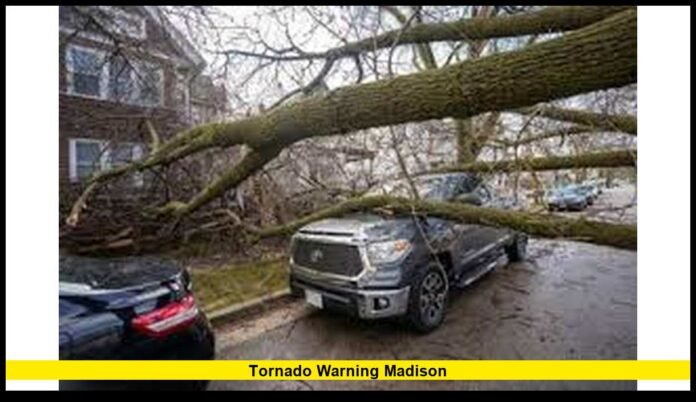

Tornado warning Madison alerts remained in focus across southern Wisconsin as dangerous thunderstorms pushed through the region, bringing threats of destructive winds, large hail, flash flooding, and possible tornado activity. Residents in Madison and nearby communities spent the weekend closely monitoring weather updates as unstable conditions created repeated rounds of severe storms across Dane County and surrounding areas.
Meteorologists warned that the weather pattern over Wisconsin had become increasingly volatile due to humid air surging northward and strong atmospheric energy moving into the Upper Midwest. Those conditions created an environment capable of producing fast-developing storms that could intensify quickly during the afternoon and overnight hours.
Emergency management officials urged residents to stay alert throughout the weekend and into the start of the new week. Weather agencies emphasized that severe conditions could change rapidly, especially after sunset when storms become harder to track visually.
Severe Thunderstorms Spread Across Madison Area
Storm systems developed across southern Wisconsin as temperatures climbed and humidity levels increased. The combination of heat, moisture, and strong upper-level winds helped fuel severe thunderstorm development across the Madison region.
Forecasters identified several major weather threats connected to the storms:
- Tornado potential
- Damaging straight-line winds
- Large hail
- Intense lightning
- Flash flooding
Several thunderstorms intensified quickly as they moved through the state. Radar signatures indicated strong rotation in some storm cells, leading to heightened concern about tornado formation near populated areas.
Residents across Madison received repeated weather notifications as conditions evolved throughout the day and evening.
Why Tornado Conditions Increased in Southern Wisconsin
Wisconsin frequently experiences severe weather during late spring and early summer, but this system brought an especially unstable setup across the region.
Warm air flowing north from the Gulf combined with cooler air moving across the Upper Midwest. That atmospheric collision created the instability needed for strong thunderstorm development.
Meteorologists closely monitored several key ingredients that raised tornado concerns:
| Weather Factor | Impact on Storms |
|---|---|
| High humidity | Increased storm energy |
| Wind shear | Enhanced storm rotation |
| Warm surface temperatures | Rapid thunderstorm growth |
| Cold upper atmosphere | Stronger instability |
| Fast-moving fronts | Organized storm development |
The Madison area sat within a corridor where severe weather conditions became favorable for rotating thunderstorms. Even isolated tornadoes can become dangerous quickly in densely populated areas.
Emergency Officials Stress Preparedness
Local emergency agencies urged families across Madison to review severe weather safety plans before storms intensified.
Officials reminded residents that tornado warnings require immediate action. Unlike tornado watches, warnings mean dangerous storm rotation has either been detected on radar or observed directly.
Preparedness recommendations included:
- Keep phones fully charged
- Enable wireless emergency alerts
- Identify basement or interior shelter areas
- Store flashlights and batteries nearby
- Avoid outdoor travel during warnings
Emergency managers also encouraged residents to avoid relying on outdoor tornado sirens alone. Officials stressed that sirens are designed to alert people outdoors and may not always wake sleeping residents overnight.
Weather radios and mobile alerts remained the most reliable tools during nighttime severe weather events.
Madison Residents Face Overnight Storm Threat
One of the biggest concerns surrounding the tornado warning Madison situation involved overnight storm development.
Meteorologists warned that nighttime tornadoes can become especially dangerous because visibility drops dramatically after dark. Many residents may not hear warnings while sleeping unless multiple alert systems are active.
Overnight storms also increase risks tied to:
- Downed trees
- Sudden power outages
- Road flooding
- Emergency response delays
- Structural damage
Officials encouraged residents to keep shoes, flashlights, and emergency supplies near their beds in case storms intensified overnight.
Some communities across southern Wisconsin activated emergency response teams as severe thunderstorm clusters approached populated areas.
Large Hail and Damaging Winds Cause Additional Concerns
While tornadoes remained a major focus, forecasters warned that straight-line winds and giant hail could create widespread damage even without confirmed tornado touchdowns.
Some stronger storms showed the potential to produce:
- Wind gusts exceeding 60 mph
- Large hail capable of damaging vehicles
- Broken windows
- Roof damage
- Fallen utility poles
Severe wind events often produce destruction similar to weaker tornadoes. Meteorologists reminded residents not to underestimate severe thunderstorm warnings.
Utility companies across Wisconsin prepared crews for possible outages as storms continued moving through the region.
Power disruptions remained possible due to falling trees and damaged transmission lines.
Heavy Rain Creates Flash Flooding Risk
Flash flooding also emerged as a major concern across Madison and nearby counties.
Slow-moving thunderstorms and repeated storm development increased the chance of excessive rainfall in some locations. Urban areas faced particular flooding concerns because pavement and drainage systems can become overwhelmed quickly during intense downpours.
Officials warned drivers never to cross flooded roadways.
Flood-related hazards included:
- Water-covered intersections
- Rapidly rising creeks
- Poor visibility
- Vehicle stalling
- Dangerous road washouts
Emergency responders reminded residents that even shallow moving water can sweep vehicles off roadways.
Several areas across southern Wisconsin experienced temporary travel disruptions as heavy rain moved through the region.
Storm Chasers and Weather Spotters Monitor Activity
Weather spotters and storm tracking teams closely followed severe weather development across Wisconsin during the outbreak.
Storm spotters play a critical role during severe weather because they help confirm tornado sightings and dangerous storm conditions in real time.
Meteorologists rely on several tools during severe weather events:
- Doppler radar
- Satellite imagery
- Ground reports
- Storm spotter observations
- Atmospheric modeling
Rapid communication between weather agencies and emergency officials helps improve warning times for residents in threatened areas.
During severe outbreaks, every minute of advance warning can help save lives.
Wisconsin’s Active Severe Weather Season Continues
The Madison storm threat comes during an already active severe weather season across the Midwest.
Several tornado outbreaks have affected nearby states during recent weeks, raising awareness about spring storm dangers throughout the central United States.
Wisconsin has experienced:
- Multiple severe thunderstorm outbreaks
- Tornado warnings across several counties
- Wind damage incidents
- Hail-producing storms
- Flash flood emergencies
Meteorologists noted that atmospheric conditions across the Midwest have remained highly favorable for repeated severe weather development this spring.
The combination of warmer temperatures and increased moisture often leads to volatile weather patterns during May and June.
How Residents Can Stay Safe During Tornado Warnings
Safety experts continue urging residents to act immediately once tornado warnings are issued.
Recommended tornado safety actions include:
Inside a Home
- Move to the basement
- Stay in an interior room
- Avoid windows
- Cover your head and neck
In an Apartment Building
- Go to the lowest floor possible
- Use interior hallways
- Stay away from glass
In a Vehicle
- Do not try to outrun a tornado
- Seek sturdy shelter immediately
- Avoid overpasses
Mobile Home Residents
- Leave immediately if safe
- Move to a stronger shelter
- Follow local emergency guidance
Emergency officials stressed that preparation before storms arrive often makes the biggest difference during severe weather emergencies.
Travel Impacts Across Southern Wisconsin
Storm conditions also affected travel across Madison and nearby communities.
Heavy rain and lightning created hazardous driving conditions throughout the weekend. Some roads experienced temporary closures due to flooding and fallen debris.
Drivers faced multiple dangers:
- Hydroplaning
- Reduced visibility
- Sudden wind gusts
- Tree branches in roadways
- Traffic signal outages
Transportation officials encouraged residents to postpone non-essential travel during severe weather warnings whenever possible.
Air travel disruptions also remained possible due to strong thunderstorms moving across regional flight paths.
Read more – Tornado Warning Rochester MN
Community Shelters and Public Safety Measures
Several communities reviewed shelter procedures as storms intensified across southern Wisconsin.
Schools, businesses, and event organizers monitored weather conditions carefully throughout the outbreak. Public safety agencies worked closely with local officials to communicate emergency updates to residents.
Preparedness efforts included:
- Emergency operation center monitoring
- Public alert coordination
- Utility response planning
- Shelter readiness checks
- Storm damage assessment preparations
Officials reminded residents that severe weather can escalate quickly, especially during rapidly changing atmospheric conditions.
Meteorologists Warn Conditions May Continue
Forecasters indicated that additional rounds of severe weather could continue affecting Wisconsin as the active pattern remains in place.
Storm systems moving across the Midwest may continue producing:
- Thunderstorms
- Heavy rainfall
- Damaging winds
- Hail
- Isolated tornadoes
Residents were encouraged to monitor weather alerts daily as conditions continue evolving.
Weather experts emphasized that severe weather forecasts can shift rapidly depending on storm development, temperature changes, and atmospheric boundaries.
Technology Improves Tornado Warning Response
Modern weather technology has improved tornado warning systems significantly over the past decade.
Meteorologists now use advanced radar systems capable of detecting:
- Storm rotation
- Debris signatures
- Wind velocity changes
- Hail development
- Rainfall intensity
Wireless emergency alerts also help deliver warnings directly to mobile phones within threatened areas.
Many Madison residents received severe weather alerts automatically as storms intensified nearby.
Experts recommend keeping emergency alerts enabled on all smartphones during severe weather season.
Families Urged to Build Emergency Kits
Emergency preparedness specialists encourage every household to maintain a basic storm emergency kit.
Recommended supplies include:
- Bottled water
- Nonperishable food
- Flashlights
- Batteries
- Portable chargers
- First-aid supplies
- Prescription medications
- Important documents
Families with pets should also prepare supplies for animals during severe weather emergencies.
Preparedness becomes especially important during extended power outages caused by damaging storms.
Public Awareness Grows During Severe Weather Outbreaks
The tornado warning Madison situation once again highlighted how quickly dangerous weather can develop across Wisconsin.
Public awareness surrounding tornado safety has increased in recent years as communities across the Midwest experience more frequent severe weather outbreaks.
Meteorologists continue encouraging residents to:
- Understand weather terminology
- Take warnings seriously
- Prepare shelter plans early
- Stay informed during storms
Fast action during severe weather events can reduce injuries and protect families when storms intensify unexpectedly.
Madison Residents Continue Monitoring Weather Alerts
As storms moved across southern Wisconsin, Madison-area residents remained focused on changing forecasts and emergency notifications.
Officials stressed that severe weather threats may continue developing with little warning as unstable atmospheric conditions remain active across the region.
Residents were encouraged to stay indoors during severe thunderstorms, monitor local weather updates frequently, and remain prepared for rapidly changing conditions throughout the coming days.
Severe weather season is far from over in Wisconsin, so residents across Madison should stay alert, prepared, and ready to respond whenever new storm warnings are issued.