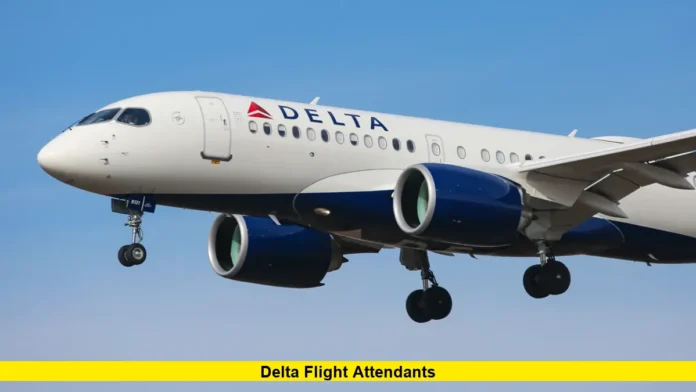

Passengers preparing for summer travel may soon notice a major change once they board certain domestic flights. Delta flight attendants are now working under updated cabin procedures after the airline confirmed it will suspend food and beverage service on hundreds of daily routes beginning May 19, a move tied largely to rising turbulence concerns and onboard safety risks.
The policy adjustment has triggered widespread debate among travelers online. Some customers argue that airlines continue reducing onboard perks while fares remain expensive. Others believe the safety-focused decision is reasonable as turbulence incidents become more unpredictable across the aviation industry.
Inside the cabin, crew members say the discussion goes far beyond snacks and drinks. For many attendants, the issue centers on injury prevention during flights where sudden air movement has become more common.
Airline Industry Adapts to New Safety Reality
Commercial airlines have spent the past several years reevaluating in-flight service operations due to changing weather patterns and increased reports of severe turbulence.
Flight attendants remain among the most exposed workers in aviation because they spend significant portions of flights standing, lifting equipment, and moving through narrow aisles while passengers are seated.
On routes with shorter travel times or known turbulence risks, cabin crews often have limited windows to complete beverage service safely. Even minor turbulence can quickly turn heavy beverage carts into hazards inside the aircraft cabin.
As a result, airlines are increasingly shortening service periods or canceling them entirely on select flights.
The upcoming changes affecting roughly 450 flights each day represent one of the largest recent operational adjustments connected directly to cabin safety procedures.
Why Cabin Crews Support the Decision
Public reaction on social media has been mixed, but many airline employees have strongly defended the updated policy.
Crew members say passengers rarely see the detailed turbulence forecasts reviewed before departure. While skies may appear calm from the cabin, pilots and dispatch teams often anticipate unstable air conditions well before takeoff.
Cabin workers argue that securing attendants in their jump seats earlier reduces the likelihood of serious injuries. Hot coffee, metal carts, and unsecured equipment can become dangerous within seconds if turbulence strikes unexpectedly.
Several attendants also pointed out that turbulence injuries frequently happen without warning, even during routine domestic flights.
The debate has highlighted how flight attendants balance customer expectations with responsibilities tied directly to emergency preparedness and onboard safety.
Travelers Divided Over Reduced Amenities
Many frequent flyers have expressed disappointment over the loss of complimentary beverages and snacks on affected routes.
Some passengers say the reduced service creates frustration because ticket prices have continued rising across the airline industry. Others worry the changes could gradually spread to additional flights over time.
However, another group of travelers has voiced support for the crews.
Passengers who regularly fly through regions known for rough air conditions say they understand the decision to prioritize safety over convenience. Some travelers shared personal experiences involving sudden turbulence that caused drinks to spill or passengers to lose balance while moving through the cabin.
The online discussion has also sparked broader conversations about how much pressure airline employees face during increasingly crowded travel seasons.
Changing Weather Patterns Raise Concerns
Aviation analysts continue monitoring reports suggesting turbulence may be becoming more frequent and intense in some parts of the world.
Meteorologists have linked certain changes in atmospheric conditions to stronger pockets of unstable air at cruising altitude. Clear-air turbulence, which can occur without visible storm clouds, remains especially difficult for passengers to anticipate.
For airlines, this creates operational challenges because flight crews must make real-time decisions about whether cabin movement remains safe.
In recent years, several high-profile turbulence incidents involving injuries have pushed airlines to adopt stricter onboard movement policies.
That includes asking passengers to remain seated longer and limiting the amount of time attendants spend conducting service.
Flight Attendants Serve a Much Larger Role
The current debate has also reminded many travelers that cabin crews are trained primarily for safety and emergency response — not simply customer hospitality.
Flight attendants receive instruction covering evacuations, onboard medical emergencies, fire response, passenger conflict management, and security procedures.
During turbulence events, attendants must rapidly secure loose items, monitor passenger compliance, and protect vulnerable travelers inside the cabin.
A sudden drop in altitude or violent shaking can quickly create dangerous conditions, particularly when carts and service equipment are already in motion.
Aviation experts note that minimizing unnecessary aisle activity remains one of the simplest ways to reduce onboard injuries.
Operational Efficiency Also Plays a Role
Beyond safety, shorter flights leave limited time for traditional service routines.
Many domestic routes now operate on tighter schedules due to congestion, weather delays, and airport traffic. Crews often must complete safety demonstrations, prepare the cabin, conduct service, and secure the aircraft within compressed timelines.
Eliminating beverage service on selected routes can also help crews prepare cabins faster before descent and landing.
While airlines publicly emphasize safety, operational efficiency likely contributes to the broader strategy as carriers attempt to manage increasingly complex travel demand during peak seasons.
Still, the airline’s messaging has focused heavily on crew protection and passenger well-being.
Passengers Advised to Prepare Before Boarding
Travelers scheduled on affected routes may want to adjust expectations before arriving at the airport.
Experts recommend purchasing water, snacks, or meals before boarding, especially for passengers connecting between flights or traveling during busy travel periods.
Passengers are also being encouraged to keep seatbelts fastened whenever seated, even when the seatbelt sign is switched off.
Unexpected turbulence can occur without warning, and aviation officials continue stressing that seatbelts remain one of the most effective safety measures available onboard commercial aircraft.
Cabin crews also advise travelers to avoid standing unnecessarily during flights where turbulence warnings are active.
Summer Travel Season Adds More Challenges
The timing of the service changes comes as airlines prepare for one of the busiest travel periods of the year.
Airports across the United States are expected to see heavy passenger traffic through late spring and summer vacations. Airlines are already managing staffing demands, weather disruptions, and rising operational costs.
For flight attendants, summer schedules often mean longer workdays, crowded cabins, and increased passenger interactions.
The added pressure surrounding service expectations can create tension when travelers are frustrated by delays, limited overhead bin space, or reduced onboard offerings.
Industry observers say airlines may continue adjusting cabin procedures throughout the year depending on turbulence data and operational trends.
Aviation Safety Continues to Evolve
Air travel remains statistically one of the safest forms of transportation, but airlines constantly update procedures in response to new risks and changing conditions.
The latest service reductions reflect how carriers are adapting to a travel environment where weather volatility and operational efficiency increasingly influence onboard experiences.
For passengers, the changes may feel inconvenient.
For crews working in the aisles thousands of feet above the ground, however, the conversation centers on personal safety and injury prevention.
As airlines continue reassessing cabin operations, travelers may see more adjustments designed to reduce movement during flights, particularly on shorter domestic routes where service windows remain limited.
The growing debate surrounding onboard service demonstrates how modern air travel continues shifting between customer comfort, operational demands, and evolving safety priorities.