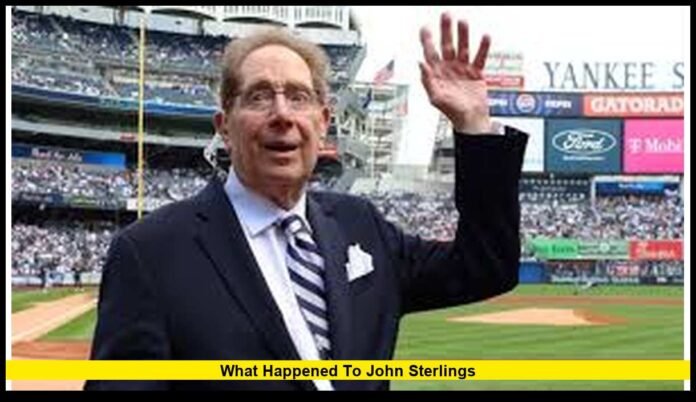

The question what happened to john sterling has taken on new meaning as baseball fans reflect on the life and passing of one of the sport’s most recognizable voices. John Sterling, best known as the longtime radio play-by-play announcer for the New York Yankees, died at the age of 87, closing the chapter on a career that defined generations of listeners and helped shape the sound of baseball in America.
A Familiar Voice That Became Part of the Game
For more than three decades, John Sterling was not just a broadcaster—he was part of the Yankees experience. From 1989 until his retirement in 2024, he delivered play-by-play coverage that reached millions of fans across the country.
His voice carried through radios in cars, living rooms, and stadium concourses, often becoming the primary connection to the game for fans who could not watch it live. That connection grew stronger with each passing season.
Sterling had a distinctive cadence, a dramatic tone, and an unmistakable enthusiasm that made even routine plays feel important. His delivery brought a theatrical energy to baseball, a sport often defined by its slow pace and long stretches of quiet.
Follow along as we explore his final chapter, career highlights, and the legacy he leaves behind.
Final Chapter: Retirement and Health Struggles
John Sterling stepped away from the broadcast booth in April 2024, ending one of the longest tenures in sports broadcasting history. He made the decision after acknowledging the physical demands of the job, particularly the constant travel required during the Major League Baseball season.
After retiring, Sterling largely withdrew from public life. While he occasionally remained connected to the Yankees community, he no longer maintained a regular presence in the media.
In early 2026, it became known that he had suffered a heart attack. The incident underscored the health challenges he had been facing in his later years. Despite efforts to recover, his condition remained fragile.
His passing later that year marked the end of a remarkable life dedicated to broadcasting and storytelling.
From Radio Beginnings to National Recognition
Long before he became the voice of the Yankees, John Sterling had already built a diverse career in broadcasting.
He began working in radio in the late 1950s and quickly developed a reputation for versatility. Over the years, he covered multiple sports, including basketball, baseball, and hockey.
His early roles included:
- Calling games for the Atlanta Hawks in the NBA
- Broadcasting for the Atlanta Braves in Major League Baseball
- Covering hockey and college sports at various levels
These experiences helped refine his skills and allowed him to experiment with different styles. By the time he arrived in New York, he had already spent decades behind the microphone.
Becoming the Voice of the Yankees
Sterling’s career reached new heights when he joined the Yankees in 1989. It didn’t take long for him to become a central figure in the team’s identity.
His broadcasts were characterized by:
- High-energy narration
- Creative storytelling
- Memorable home run calls
Over time, he developed personalized calls for individual players, adding a unique layer of entertainment to each game. Fans came to anticipate these moments, turning them into a signature part of his broadcasts.
His famous declaration after victories—“The Yankees win!”—became one of the most recognizable phrases in baseball.
A Front-Row Seat to a Dynasty
Sterling’s tenure with the Yankees coincided with one of the most successful periods in the franchise’s history.
He called games during five World Series championship seasons:
- 1996
- 1998
- 1999
- 2000
- 2009
Those years cemented his role as the voice of a dynasty. His calls during postseason games carried a heightened intensity, capturing the drama and significance of each moment.
Fans who experienced those seasons often associate their memories with his voice, making his contributions inseparable from the team’s success.
An Ironman Streak Behind the Microphone
One of the most remarkable aspects of Sterling’s career was his streak of consecutive games called.
From 1989 through 2019, he did not miss a single Yankees game, calling more than 5,000 consecutive broadcasts.
That level of consistency required extraordinary discipline and endurance. Baseball seasons are long, with games played nearly every day for months at a time.
Sterling embraced the challenge, rarely taking time off and maintaining his presence regardless of circumstances. Even when faced with injuries or unexpected setbacks, he returned quickly to the booth.
His commitment became a defining part of his legacy.
A Style That Divided and Delighted
John Sterling’s broadcasting style was unlike any other.
He approached each game with a sense of drama, often elevating moments through his voice alone. His home run calls, in particular, became a hallmark of his work.
Some listeners praised his creativity and energy, while others felt his style was too theatrical. Despite differing opinions, there was no denying his impact.
He stood out in a field where many broadcasters aimed for neutrality and restraint. Sterling chose a different path—one that prioritized excitement and personality.
That choice made him unforgettable.
Recognition and Career Achievements
Over the course of his career, Sterling received numerous honors that reflected his influence in sports broadcasting.
His accolades included multiple Emmy Awards and widespread recognition from peers and organizations within the industry.
He was also frequently mentioned in discussions about the most influential broadcasters in baseball history.
While awards highlighted his professional success, they only told part of the story. His true achievement was the connection he built with fans over decades of consistent work.
Life Away From Baseball
Outside the broadcast booth, Sterling had a wide range of personal interests that shaped his personality.
He was known for his love of theater and often drew inspiration from stage performances. That influence could be heard in the dramatic flair of his calls.
He also enjoyed music and classic entertainment, bringing a sense of showmanship to his work.
Despite his public role, he maintained a relatively private personal life, especially in his later years.
The Emotional Response to His Passing
The news of his death prompted a wave of reactions from across the baseball community.
Fans shared memories of listening to games with family members, recalling how Sterling’s voice became part of their routines.
Players, broadcasters, and organizations also reflected on his contributions, acknowledging the role he played in shaping the sport’s media landscape.
His passing represented more than the loss of an individual—it marked the end of an era.
Understanding His Lasting Legacy
For those asking what happened to john sterling, the answer extends beyond the circumstances of his passing.
His legacy is defined by the countless moments he brought to life through his broadcasts.
He helped transform radio coverage into an immersive experience, allowing listeners to visualize the game through his words.
Even as technology changed how fans consume sports, his influence remained strong. His work demonstrated the enduring power of voice and storytelling.
A Generational Impact on Fans
Sterling’s career spanned multiple generations, meaning his audience included parents, children, and even grandchildren.
For many families, listening to Yankees games became a shared tradition, with his voice serving as the constant link between generations.
That kind of impact is rare in sports. It requires not only talent, but also longevity and consistency.
Sterling achieved all three.
The End of a Broadcasting Era
With his passing, baseball loses one of its most distinctive and enduring voices.
The era of radio broadcasters who defined teams through personality and storytelling has gradually evolved, but Sterling remained a powerful example of that tradition.
His career serves as a reminder of how important broadcasters are to the fan experience. They provide context, emotion, and continuity.
Sterling did all of that—and more.
Remembering John Sterling
As fans look back on his life, they remember not just the games he called, but the feelings he created.
His voice turned ordinary moments into memorable ones. His enthusiasm made each game feel significant.
He was more than an announcer. He was part of the fabric of baseball.
Conclusion
John Sterling’s story is one of dedication, creativity, and connection. From his early days in broadcasting to his legendary run with the Yankees, he built a career that left a lasting mark on the sport.
His passing closes a remarkable chapter in baseball history, but his influence will continue to be felt every time fans recall his iconic calls.
What’s your favorite John Sterling moment? Share it below and keep following for more stories from the world of sports.