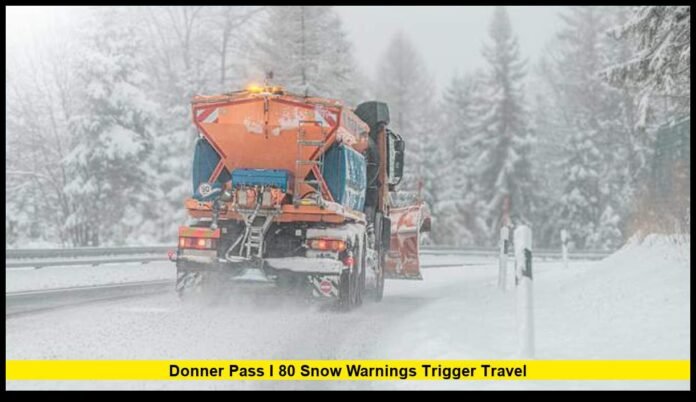

The latest donner pass i 80 snow warnings are putting drivers on alert as shifting weather conditions continue to impact one of California’s most critical mountain corridors. Interstate 80 over Donner Pass remains a vital link between Northern California and Nevada, but it is also one of the most vulnerable highways when storms move across the Sierra Nevada. With fluctuating temperatures, fresh snowfall potential, and icy overnight conditions, travelers are being urged to stay cautious and prepared.
A Critical Mountain Route Facing Renewed Weather Pressure
Donner Pass has long been known for its challenging driving conditions, particularly during colder months. Located at an elevation of roughly 7,000 feet, this section of I-80 sits directly in the path of Pacific storm systems. Even late in the season, when many expect milder weather, the pass can experience sudden snow showers and dangerous road conditions.
Recent weather patterns show a mix of rain and snow moving through the region. While daytime temperatures may rise enough to melt snow on the roadway, nighttime conditions quickly reverse that progress. Moisture refreezes, creating slick surfaces that can catch drivers off guard.
👉 If you’re planning a trip through the Sierra, now is the time to review conditions and prepare your vehicle before heading out.
Current Road Conditions and What They Mean for Drivers
At present, Interstate 80 over Donner Pass remains open, and traffic is flowing without major restrictions. However, that does not mean conditions are risk-free. Weather in the Sierra Nevada can shift rapidly, especially at higher elevations.
Drivers are currently encountering:
- Wet pavement with intermittent slushy patches
- Occasional light snow showers
- Gusty winds that reduce visibility
- Cold temperatures that hover near freezing overnight
These conditions may appear manageable, but they create a foundation for rapid deterioration. A brief drop in temperature or an incoming snow band can quickly turn wet roads into icy hazards.
Snowfall Patterns Continue to Threaten Travel
Weather forecasts for the region indicate that snow is not finished yet. Light accumulations remain possible, particularly during overnight hours and early mornings. Even small amounts of snowfall can create serious driving risks when combined with freezing temperatures.
Drivers should expect:
- Periodic snow showers throughout the week
- Sudden transitions from rain to snow
- Isolated heavier bursts of snowfall
- Blowing snow in exposed areas
These conditions can lead to reduced traction and limited visibility. In higher elevations, snow may accumulate faster than expected, covering lane markings and making navigation more difficult.
Why Donner Pass Is Especially Dangerous in Changing Weather
The geography of Donner Pass plays a major role in its unpredictable conditions. The Sierra Nevada acts as a barrier that forces moist air upward, intensifying precipitation as storms move through. This effect often leads to heavier snowfall at higher elevations compared to surrounding areas.
Key risk factors include:
- Steep grades that challenge vehicle traction
- Sharp curves that become hazardous in icy conditions
- Sudden elevation changes that affect temperature and precipitation
- Strong winds that create drifting snow and whiteout conditions
These elements combine to create a driving environment where conditions can worsen within minutes.
Chain Controls Could Return at Any Time
Although there are currently no chain requirements in place, drivers should not assume that will remain the case. Chain controls are frequently implemented when snowfall increases or when icy conditions develop.
Situations that may trigger chain requirements include:
- Snow accumulating directly on the roadway
- Ice forming during nighttime freezes
- Reduced visibility from heavy snowfall or blowing snow
When chain controls are activated, drivers may be required to install chains depending on vehicle type. Commercial vehicles often face stricter rules, and failure to comply can result in fines or being turned around.
Being prepared with chains—even if they are not immediately required—can make a significant difference if conditions change during your trip.
How Weather Timing Impacts Driving Safety
Timing is one of the most important factors when traveling across Donner Pass. Conditions can vary dramatically depending on the time of day.
Midday Travel
Warmer temperatures typically improve road conditions. Snow is less likely to accumulate, and visibility tends to be better.
Evening Travel
As temperatures begin to drop, wet roads can start freezing. Visibility may also decrease as storms intensify later in the day.
Overnight and Early Morning
These are the most dangerous periods. Ice formation is common, and fresh snowfall is more likely to stick to the roadway.
Planning your travel window carefully can reduce exposure to hazardous conditions.
Traffic Delays and Accident Risks Increase
Even minor snow events can lead to significant traffic disruptions along I-80. Drivers often slow down considerably when conditions worsen, creating bottlenecks and delays.
Common issues during snow events include:
- Spinouts caused by loss of traction
- Minor collisions on icy stretches
- Vehicles becoming stuck on inclines
- Traffic backups near chain control checkpoints
These disruptions can extend travel times by hours, especially during peak travel periods.
Essential Preparation for Drivers
Preparation is one of the most effective ways to reduce risk when traveling over Donner Pass. Drivers should take the following steps before heading out:
Equip Your Vehicle Properly
Carry tire chains and ensure your tires have adequate tread. Winter tires provide better grip in cold and snowy conditions.
Pack an Emergency Kit
Include blankets, water, non-perishable food, a flashlight, extra batteries, and a phone charger.
Fuel Up Before the Climb
Gas stations are limited at higher elevations, so it’s best to start with a full tank.
Check Weather and Road Conditions
Conditions can change quickly, so reviewing updates before departure is essential.
Allow Extra Travel Time
Rushing increases the risk of accidents. Give yourself enough time to drive safely.
Understanding the Spring Snow Pattern
While many associate snow with winter, spring in the Sierra Nevada often brings its own challenges. The region enters a transitional phase where warm and cold conditions alternate frequently.
This leads to:
- Melting snow during the day
- Refreezing at night
- Repeated cycles of wet and icy roads
- Intermittent snowfall from passing systems
These patterns can be misleading. Drivers may assume conditions are improving, only to encounter ice or snow shortly afterward.
Regional Impact Beyond the Pass
The effects of snow warnings at Donner Pass extend far beyond the immediate area. Interstate 80 is a major transportation corridor that supports:
- Commercial trucking between California and Nevada
- Tourism to Lake Tahoe and surrounding regions
- Daily commuting for local residents
When conditions worsen at the pass, delays and disruptions ripple across the entire network. This can impact supply chains, travel plans, and local economies.
Why Drivers Must Take These Warnings Seriously
The current donner pass i 80 snow warnings highlight the ongoing instability in Sierra weather patterns. Rather than a single storm event, the region is experiencing repeated systems that create continuous challenges for drivers.
This situation increases risk because:
- Conditions may appear stable before changing suddenly
- Multiple smaller storms can create cumulative hazards
- Drivers may underestimate the danger of late-season snow
Remaining alert and prepared is essential for anyone traveling this route.
What to Expect in the Days Ahead
Weather patterns suggest a mix of conditions will continue in the near term. Drivers should be ready for:
- Periods of sunshine that temporarily improve conditions
- Continued chances of light snow and rain
- Cold nights that refreeze melted snow
- Occasional gusty winds
While severe closures are not expected at this time, conditions will likely remain unpredictable.
Safe Driving Practices That Can Save Lives
Driving through mountain conditions requires a different approach than standard highway travel. Following these practices can significantly reduce risk:
- Slow down and avoid sudden braking
- Increase following distance between vehicles
- Use headlights to improve visibility
- Stay in your lane and avoid unnecessary lane changes
- Remain calm if conditions worsen
Even experienced drivers must adapt to the unique challenges of mountain weather.
Final Thoughts: Stay Alert and Plan Ahead
Donner Pass continues to present challenges for drivers as snow warnings remain in effect. The combination of changing weather, high elevation, and heavy traffic makes this stretch of Interstate 80 one of the most demanding routes in the region.
Careful planning, proper equipment, and awareness of conditions can make all the difference between a smooth trip and a dangerous situation.
👉 Before starting your journey, take a few extra minutes to prepare, check conditions, and ensure your vehicle is ready for mountain travel.
Have you driven through Donner Pass recently or planning a trip soon? Share your experience or stay updated as conditions continue to evolve.