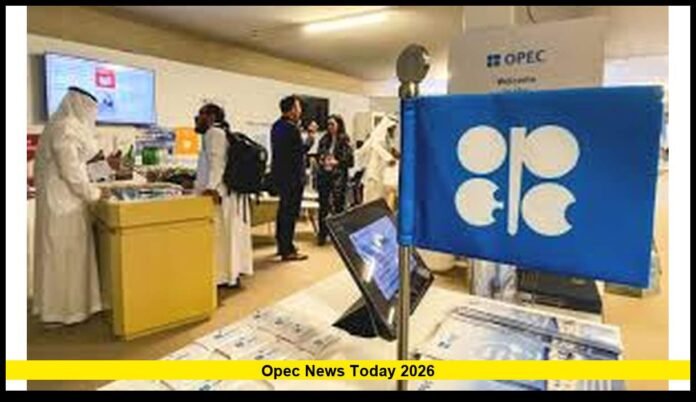

The phrase opec news today is gaining traction across the United States as new developments within the global oil alliance continue to influence prices, supply strategies, and economic outlooks. From decisions on production levels to the broader role of allied producers, OPEC remains at the center of conversations about energy stability and cost-of-living concerns.
As oil continues to power transportation, manufacturing, and global trade, any movement by major producers quickly affects markets worldwide. For American households, these shifts are often felt at the gas pump, in airline fares, and even in grocery prices.
Understanding OPEC’s Role in the Global Economy
OPEC is a group of oil-producing nations that coordinate output to manage global supply and influence pricing. Since its founding in 1960, OPEC has played a central role in shaping the oil market by adjusting production targets based on economic conditions.
In recent years, the group has worked closely with non-member countries under a broader framework often called OPEC+. This expanded alliance has strengthened its ability to manage supply across a wider share of global production.
If you want to stay informed about how these decisions impact your daily expenses, keep tracking the latest developments shaping the oil market.
Current Production Strategy and Why It Matters
One of the most important aspects of OPEC’s influence lies in its production strategy.
Rather than allowing unrestricted output, the group sets production targets for its members. These targets aim to maintain balance in the market by preventing oversupply, which could drive prices down, or undersupply, which could cause sharp increases.
Recent developments show that OPEC is maintaining a cautious approach:
- Output levels are being carefully managed rather than rapidly increased
- Decisions reflect concerns about uneven global economic growth
- The group is focused on maintaining stable price levels
This strategy reflects a careful balancing act between meeting demand and avoiding volatility.
Global Demand and Changing Consumption Patterns
Oil demand continues to evolve as economies adapt to new realities.
In developing regions, demand remains strong due to industrial growth and expanding transportation networks. In contrast, some developed economies are gradually shifting toward renewable energy sources.
However, oil still plays a dominant role in the global energy mix. Transportation, aviation, shipping, and heavy industries continue to rely heavily on petroleum products.
These demand patterns influence how OPEC approaches supply decisions, ensuring that production aligns with real-world consumption.
Geopolitical Factors Shaping Oil Policy
Global events are playing a major role in how OPEC sets its strategy.
Tensions in key regions, especially those involving critical shipping routes, have created uncertainty around oil supply. These disruptions can limit how much oil reaches global markets and increase price volatility.
OPEC’s response has been to maintain flexibility, adjusting production levels as needed to respond to changing conditions.
This approach allows the group to react quickly to unexpected developments while aiming to keep markets stable.
Impact on U.S. Gas Prices and Inflation
For Americans, OPEC decisions are closely tied to everyday costs.
Gasoline Prices
When OPEC limits production, global oil prices often rise, leading to higher gasoline prices. Conversely, increased production can help stabilize or reduce costs.
Household Expenses
Energy costs influence transportation, heating, and electricity. These factors contribute to overall inflation, affecting household budgets across the country.
Business Costs
Higher fuel prices increase costs for businesses, particularly in industries such as logistics, manufacturing, and aviation. These costs are often passed on to consumers.
As a result, OPEC developments are closely watched by policymakers, economists, and consumers alike.
The Growing Importance of OPEC+
The expansion of OPEC into a broader coalition has changed how the oil market operates.
By coordinating with additional producers, the group has increased its ability to influence global supply. This coordination allows for more comprehensive responses to market conditions.
However, managing a larger alliance also presents challenges. Different countries have unique economic needs and priorities, which can make reaching agreements more complex.
Despite these challenges, the cooperation has remained a key factor in maintaining market stability.
Why OPEC News Today Is Drawing Attention
The increased focus on opec news today reflects a combination of economic and geopolitical factors.
- Rising fuel costs have made energy issues more visible to consumers
- Global supply chain disruptions have highlighted the importance of oil
- Ongoing geopolitical tensions have added uncertainty to energy markets
These elements have brought OPEC decisions into everyday conversations, making them more relevant than ever.
Market Reactions and Price Volatility
Oil markets respond quickly to any signals from OPEC.
Announcements about production levels, policy changes, or geopolitical developments can lead to immediate price movements. Traders and investors closely monitor these updates to anticipate shifts in supply and demand.
Recent trends show increased volatility, driven by:
- Uncertainty in global economic growth
- Disruptions in supply routes
- Changes in production strategies
This volatility underscores the importance of coordinated action in maintaining market stability.
How Businesses Are Adjusting
Companies across various sectors are adapting to changing energy costs.
- Transportation firms are adjusting pricing and routes
- Airlines are managing fuel expenses through hedging strategies
- Manufacturers are optimizing production to reduce energy consumption
These adjustments reflect the broader impact of oil market dynamics on the global economy.
Energy Transition and Long-Term Outlook
The global push toward renewable energy is gradually reshaping the energy landscape.
Many countries are investing in solar, wind, and other alternative energy sources. However, the transition is expected to take time, and oil will remain a critical resource in the near future.
OPEC members are also exploring diversification strategies, investing in new industries while continuing to rely on oil revenue.
This dual approach highlights the complexity of balancing current energy needs with future sustainability goals.
Challenges Facing OPEC Moving Forward
OPEC faces several challenges as it navigates a changing energy environment:
- Maintaining unity among diverse member countries
- Adapting to shifting demand patterns
- Responding to geopolitical risks
- Balancing short-term price stability with long-term strategy
These challenges will shape how the organization evolves in the coming years.
Why OPEC News Today Matters for the Future
Revisiting the importance of opec news today, it becomes clear that these updates go far beyond the oil industry.
They influence:
- Economic growth and stability
- Inflation and cost of living
- Energy security and policy decisions
For individuals and businesses alike, understanding these developments is essential for navigating an increasingly complex economic landscape.
Key Points to Remember
- OPEC continues to manage oil supply through coordinated production
- Global demand remains strong despite shifts toward renewable energy
- Geopolitical factors are adding uncertainty to supply chains
- U.S. consumers are directly affected through fuel prices and inflation
These points highlight why OPEC remains a central player in global energy.
Looking Ahead
The oil market is expected to remain dynamic as economic conditions and geopolitical factors continue to evolve.
OPEC’s ability to adapt to these changes will play a crucial role in determining future price stability and supply levels.
As new developments emerge, the organization’s decisions will continue to shape the global energy landscape and influence everyday life.
Stay engaged with the latest updates to understand how these shifts may impact you and the broader economy.
What do you think about the current direction of global oil markets? Share your thoughts and keep checking back for more insights on major economic developments.