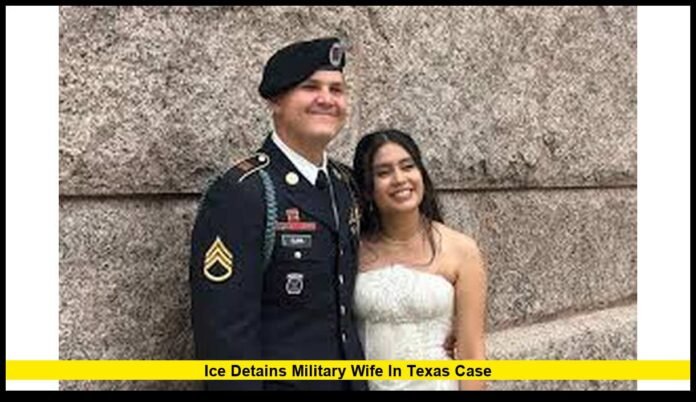

The story behind ice detains military wife has quickly become one of the most talked-about immigration developments in the United States this week. What began as a routine legal appointment for a military family in Texas has turned into a national flashpoint, drawing attention from lawmakers, veterans, and advocacy groups alike.
A Routine Appointment That Took an Unexpected Turn
In April 2026, a U.S. Army family arrived at a scheduled immigration appointment in El Paso, Texas, expecting progress in a long-running legal process. Instead, the visit ended with federal agents taking the soldier’s spouse into custody.
Deisy Rivera Ortega, who is married to an active-duty Army sergeant, was detained on the spot. According to accounts from her husband, the interaction appeared normal at first. The couple checked in, waited their turn, and were eventually called back. Moments later, agents separated them, and Ortega was placed into custody.
The sudden nature of the detention has left many questioning how a scheduled immigration check-in could result in immediate enforcement action.
Stay with us as we break down the facts, the policy context, and what this case means for thousands of military families across the country.
Background of the Military Family
Rivera Ortega has lived in the United States for nearly a decade after arriving from El Salvador. During that time, she built a life that included steady employment and a relationship with her now-husband, a soldier who has served the country for close to 30 years.
Her husband’s military career includes overseas deployments and long-term service that reflects a deep commitment to national defense. The couple married in 2022 and began pursuing legal pathways for her to remain in the United States permanently.
Like many military families, they relied on established immigration procedures and believed they were following the proper steps.
Understanding the Legal Situation
At the center of the case is a complex legal issue that affects many immigrants navigating the system. While Rivera Ortega had a valid work permit and had been allowed to stay in the country, immigration authorities maintain that she does not have lawful permanent status.
Officials point to a previous immigration violation tied to her entry into the United States. That earlier issue resulted in a standing removal order, which authorities say remains enforceable.
This distinction is critical. A work permit allows someone to live and work temporarily, but it does not erase past immigration rulings or automatically grant permanent legal status.
Why Enforcement Action Was Taken
Federal immigration authorities have emphasized that enforcement decisions are based on existing legal orders and current policy guidelines. In this case, officials determined that Rivera Ortega was still subject to removal under immigration law.
Her marriage to a U.S. service member, while significant, does not override those legal factors under current policy. Authorities have made clear that family ties alone do not prevent enforcement actions.
This approach reflects a broader emphasis on applying immigration laws consistently, regardless of personal circumstances. It also highlights how legal complexities can affect individuals who are actively trying to adjust their status.
Policy Shifts Impacting Military Families
For years, special considerations were often given to spouses of active-duty service members. Programs designed to support military families allowed certain undocumented spouses to remain in the country while working toward legal status.
These policies recognized the unique sacrifices made by service members and aimed to reduce the stress on their families.
However, recent shifts in federal policy have narrowed those protections. Military affiliation is no longer treated as a primary factor in enforcement decisions. Instead, authorities are focusing more strictly on existing immigration records and legal eligibility.
As a result, cases like this are becoming more visible and more controversial.
A Pattern Emerging Across the Country
The situation in Texas is part of a broader trend that has been unfolding in recent months. Reports from other states show similar incidents involving military spouses facing detention during routine processes.
In one case earlier this year, a spouse was detained while attempting to complete administrative requirements on a military base. That individual was later released, but the situation raised alarms among service members and their families.
These incidents are fueling concerns that military households are increasingly vulnerable to immigration enforcement actions, even when they are complying with official procedures.
Emotional and Operational Impact on Military Families
The consequences of such detentions go beyond legal questions. For military families, stability is essential. Frequent relocations, deployments, and demanding schedules already create significant challenges.
When a spouse is detained, it can disrupt family life in profound ways. Emotional stress, financial uncertainty, and logistical complications quickly follow.
For active-duty personnel, these disruptions can also affect focus and readiness. Military leaders have long recognized that family well-being plays a critical role in overall performance.
This case has reignited discussions about how immigration policies intersect with military readiness and support systems.
Legal Response and Ongoing Proceedings
Rivera Ortega’s legal team is actively working to challenge her detention and prevent her removal. Attorneys have filed motions in federal court, arguing that her case deserves reconsideration given her compliance with immigration procedures and her ties to a military family.
One key concern is the possibility of deportation to a country where she has not established a life. Legal representatives are seeking to ensure that her case is reviewed thoroughly before any final action is taken.
The outcome of these proceedings could influence how similar cases are handled in the future, particularly for individuals connected to the armed forces.
National Reaction and Political Debate
The case has sparked widespread discussion across the United States. Public reaction has been strong, with many expressing sympathy for the family and concern about the broader implications.
Some voices argue that immigration laws must be enforced consistently, regardless of personal circumstances. Others believe that military families deserve additional protections, especially when a service member has dedicated years to serving the country.
Lawmakers from both sides of the political spectrum have weighed in, reflecting the complexity and sensitivity of the issue.
Advocacy groups are also calling for clearer policies that balance enforcement with compassion, particularly in cases involving long-term residents and military households.
What the Case Reveals About the System
The ice detains military wife situation highlights several important realities about the current immigration system:
- Legal status can be more complicated than it appears, even for those with work permits
- Past immigration rulings can continue to affect individuals years later
- Policy changes can significantly alter how cases are handled
- Military families are not exempt from enforcement actions
These factors combine to create situations where individuals who believe they are following the rules can still face unexpected outcomes.
Looking Ahead
As the legal process continues, attention remains focused on how this case will be resolved. It may serve as a benchmark for future decisions involving military families and immigration enforcement.
The situation also underscores the need for clearer communication and guidance for individuals navigating the system. For many families, understanding the difference between temporary authorization and permanent status is critical.
At the same time, policymakers are likely to face increasing pressure to address the unique challenges faced by military households in immigration cases.
Conclusion
The unfolding events surrounding this case have captured national attention and raised difficult questions about law, fairness, and service. It reflects the complexities of immigration policy in the United States and the real-world impact those policies can have on families.
As discussions continue, the outcome will likely shape how similar cases are approached in the future and whether additional safeguards are introduced for military families.
For now, the story remains a powerful reminder of how quickly circumstances can change, even for those who believe they are on the right path.
If you want to stay informed as this situation develops and understand what it could mean for families across the country, keep checking back for updates and deeper insights.
What do you think should happen in cases like this? Share your thoughts and be part of the conversation.