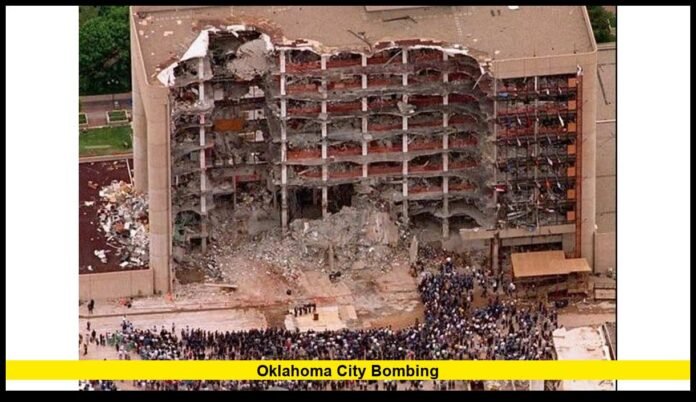

The Oklahoma City bombing continues to be remembered across the United States in April 2026, as communities mark the 31st anniversary with ceremonies honoring the victims and reflecting on the nation’s response to domestic terrorism.
On April 19, 1995, a powerful truck bomb exploded outside the Alfred P. Murrah Federal Building in Oklahoma City, killing 168 people and injuring more than 680. The attack remains the deadliest act of domestic terrorism in U.S. history and continues to influence security policies and public awareness today.
A Look Back at April 19, 1995
The explosion occurred at 9:02 a.m., instantly devastating the federal building and surrounding area. The blast destroyed much of the structure and caused widespread damage to nearby buildings.
Key details:
- Location: Alfred P. Murrah Federal Building
- Date: April 19, 1995
- Deaths: 168 victims
- Injuries: Over 680 people
- Children among victims: 19
Many of the children were inside a daycare center housed within the building, making the tragedy even more heartbreaking.
The Perpetrators and Legal Outcome
Timothy McVeigh carried out the bombing. He was later arrested, convicted, and sentenced to death. McVeigh was executed on June 11, 2001.
Terry Nichols, who helped plan the attack, is serving life in prison without parole. Michael Fortier, who knew about the plot but failed to report it, served a prison sentence and was later released.
The attack was driven by anti-government extremist beliefs, which brought national attention to the threat of domestic radicalization.
2026: How the Nation Is Remembering
In 2026, remembrance ceremonies are once again taking place in Oklahoma City and across the country. The Oklahoma City National Memorial & Museum remains the focal point of these events.
Annual observances include:
- A moment of silence at 9:02 a.m.
- Reading aloud the names of all 168 victims
- Gatherings of survivors and victims’ families
- Educational outreach programs for students
These events ensure that the memory of the victims remains alive and that future generations understand the significance of the tragedy.
Impact on U.S. Security and Policy
The Oklahoma City bombing reshaped how the United States approaches internal threats and public safety.
Major changes include:
- Increased security at federal buildings
- Expanded intelligence efforts focused on domestic extremism
- New laws aimed at preventing terrorism
- Stronger coordination between law enforcement agencies
These measures were designed to reduce vulnerabilities and improve response capabilities nationwide.
The Memorial That Honors 168 Lives
The site of the attack is now home to the Oklahoma City National Memorial, a place dedicated to remembrance and healing.
Key features of the memorial:
- 168 empty chairs, each representing a life lost
- A reflecting pool marking the footprint of the building
- The Survivor Tree, symbolizing strength and resilience
- A museum that tells the story of the bombing and its aftermath
Visitors from across the U.S. come each year to pay their respects, especially on April 19.
Why This Tragedy Still Matters in 2026
More than three decades later, the Oklahoma City bombing remains relevant. It continues to serve as a warning about the dangers of extremism and the importance of vigilance.
In today’s environment, the lessons from 1995 are still discussed in:
- Public safety training
- Educational programs
- National security planning
The attack is often referenced in discussions about preventing violence and strengthening communities.
Timeline of Key Events
| Year | Event |
|---|---|
| 1995 | Bombing occurs on April 19 |
| 1997 | McVeigh found guilty |
| 2000 | National Memorial dedicated |
| 2001 | McVeigh executed |
| 2026 | 31st anniversary commemorations |
Honoring the Victims and Survivors
Behind every number is a story. Families and survivors continue to honor the lives lost, keeping their memories alive through annual ceremonies and personal tributes.
The reading of the victims’ names each year remains one of the most powerful moments of remembrance.
Education and Awareness Efforts Today
In 2026, education remains a key part of the legacy. Schools and institutions continue to teach the history and impact of the bombing.
Focus areas include:
- Understanding domestic terrorism
- Promoting unity and resilience
- Encouraging awareness and prevention
These efforts aim to ensure that such a tragedy is never repeated.
Conclusion
The Oklahoma City bombing is more than a historical event—it is a lasting reminder of the importance of unity, awareness, and resilience in the face of tragedy. As the nation reflects in 2026, the focus remains on honoring the victims and strengthening the future.
How do you think events like this should be remembered today? Share your thoughts and stay connected for more updates.