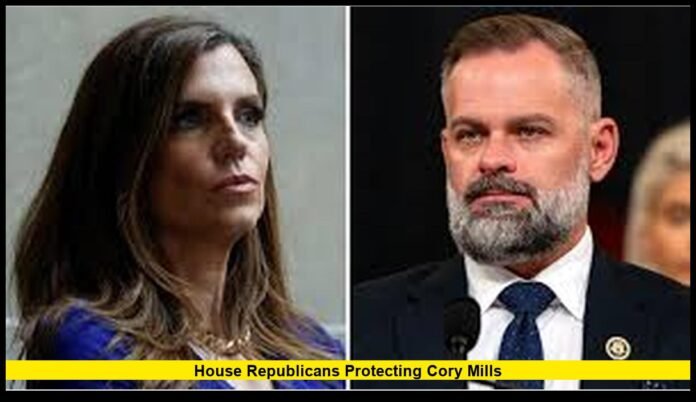

House Republicans protecting Cory Mills has emerged as a widely discussed issue in 2026, but the most current verified information shows no confirmed House action to shield Rep. Cory Mills from any formal investigation or disciplinary process. The conversation continues to grow, yet it remains rooted in political interpretation rather than documented congressional procedure.
Cory Mills and His Rising National Profile
Rep. Cory Mills of Florida has become a recognizable figure in Washington through his positions on national security and foreign policy. His public visibility has increased through frequent media appearances and outspoken commentary on global issues.
This heightened profile has also brought increased scrutiny. In modern politics, visibility often leads to amplified criticism, especially in a sharply divided environment.
Despite that attention, there is no confirmed record of an active ethics investigation or formal complaint against him in the House of Representatives as of now.
How the Narrative Gained Momentum
The phrase “house republicans protecting cory mills” has gained traction across digital platforms, driven largely by political discourse rather than institutional developments.
Several factors explain its rapid spread:
- Strong partisan engagement online
- Opinion-driven commentary from political analysts
- Increased attention on accountability in Congress
In today’s media environment, narratives can form quickly. When no immediate action follows public criticism, some interpret that silence as intentional protection.
What Is Actually Confirmed
Amid the speculation, the verified facts remain straightforward:
- Cory Mills continues to serve as a sitting member of Congress
- No formal ethics proceedings have been publicly initiated
- House Republican leadership has not announced any review or disciplinary action
- There has been no procedural vote or intervention tied to his conduct
These facts indicate that no official mechanism exists that would require or demonstrate protection at this stage.
Understanding the Accountability Process in Congress
To assess claims like house republicans protecting cory mills, it’s important to understand how oversight works in the House.
A standard process typically includes:
- A formal complaint submission
- Review by the House Ethics Committee
- A preliminary inquiry or dismissal decision
- Public disclosure if the case advances
Without these steps, there is no active case to investigate or block. This is a key distinction often lost in fast-moving political conversations.
Political Interpretation vs. Institutional Reality
The gap between perception and reality plays a central role in this story.
Critics suggest:
- Lack of action signals reluctance to investigate
- Party leadership may be avoiding internal conflict
Supporters counter:
- No verified allegations justify formal proceedings
- Acting without evidence would undermine due process
Both sides reflect broader partisan divides. However, neither position changes the current procedural reality—no official action has been taken.
The Role of Media Amplification
Media coverage and online trends have significantly shaped the narrative. As discussions intensify, they often reinforce themselves.
This cycle typically follows a pattern:
- A political claim gains attention
- Media commentary expands on the claim
- Social platforms amplify the discussion further
The result is a widely recognized narrative, even in the absence of formal developments.
Why the Lack of Action Matters
In Congress, action usually follows evidence and formal triggers. Leadership rarely initiates proceedings without:
- Documented complaints
- Internal committee review
- Clear procedural justification
Because none of these elements have surfaced, the absence of action is consistent with standard congressional practice.
This context is essential. It shows that inaction does not automatically equal protection—it often reflects process requirements.
Key Takeaways
- The phrase house republicans protecting cory mills reflects ongoing political debate, not confirmed congressional action
- No verified ethics investigation or complaint has been publicly documented
- House Republicans have not taken steps to block or influence any formal process
- The situation remains a narrative driven by perception rather than procedure
What Comes Next
If this issue develops further, the most important indicators will include:
- Official Ethics Committee announcements
- Verified filings or complaints
- Public statements from House leadership
- Any documented investigative steps
Until then, the discussion will likely remain active, even without new procedural developments.
Is this a case of political framing or the beginning of a real accountability story? Share your thoughts and keep watching how this unfolds.