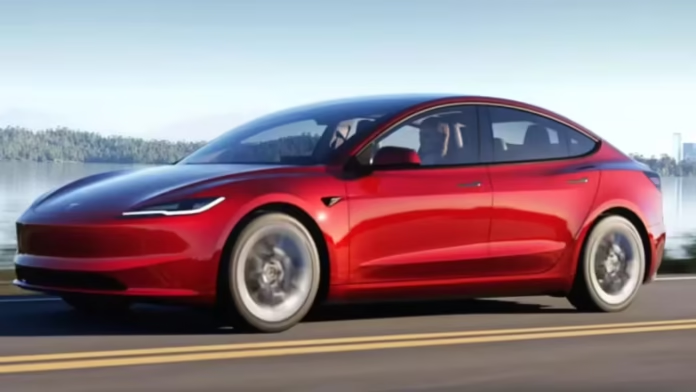

The tesla model 3 has entered a new phase in 2026, one shaped less by innovation alone and more by shifting economics, rising competition, and a rapidly maturing electric vehicle market in the United States. What once symbolized the future of accessible EV ownership is now being recalibrated to meet a different kind of buyer—one who is more price-sensitive, more informed, and facing more choices than ever before.
This year’s developments signal a turning point not just for Tesla’s most popular sedan, but for how the company approaches volume, value, and long-term positioning in a crowded segment.
A New Pricing Structure Signals a Strategic Shift
Tesla has adjusted the entry point of its sedan lineup, introducing a lower-cost version designed to attract a broader audience. With a starting price positioned below many competitors in the same category, the company is clearly prioritizing accessibility.
However, this pricing adjustment comes with notable trade-offs.
The entry-level configuration includes:
- A reduced driving range compared to higher trims
- Slower acceleration metrics
- Simplified interior features
- Limited customization options
These changes are not accidental. They reflect a deliberate effort to create a clearer separation between budget-conscious buyers and those willing to pay more for performance and luxury.
The Post-Incentive Reality Is Reshaping Demand
The U.S. EV market in 2026 is no longer supported by the same financial incentives that previously boosted Tesla’s appeal. With key federal benefits no longer applying in the same way, the effective cost of ownership has increased for many buyers.
This shift has had a direct impact on purchasing behavior.
Consumers are now:
- Comparing EVs more aggressively across brands
- Paying closer attention to upfront pricing
- Evaluating long-term ownership costs with greater scrutiny
Tesla’s response—lowering base prices while adjusting features—aligns with this new reality.
Core Features Still Define the Experience
Despite the repositioning, the Model 3 continues to deliver the core elements that made it popular in the first place.
Drivers can expect:
- A streamlined, minimalist interior layout
- Integrated software controls via a central touchscreen
- Advanced driver-assistance systems
- Seamless connectivity through mobile integration
- Access to a nationwide fast-charging network
These features ensure that even the most affordable version maintains the essential Tesla identity.
Performance Variants Maintain Their Edge
While the base model focuses on affordability, higher trims continue to emphasize performance and range.
These versions offer:
- Significantly quicker acceleration
- Extended driving range suitable for long-distance travel
- Enhanced interior materials and comfort features
- Additional technology upgrades
This dual approach allows Tesla to serve both entry-level buyers and performance enthusiasts without overlap.
Interior Design Continues Its Minimalist Direction
Tesla has doubled down on its minimalist philosophy.
The cabin remains largely free of traditional buttons, relying instead on a central display for nearly all controls. This approach creates a clean, modern aesthetic but also requires drivers to adapt to a different interaction style.
Recent refinements have improved:
- Cabin quietness
- Material quality in higher trims
- Passenger experience through rear-seat display additions
The result is an interior that feels more refined than earlier iterations, while still maintaining its distinctive identity.
Range and Charging Remain Key Advantages
Range continues to be a critical factor for EV buyers, and the Model 3 remains competitive in this area.
Depending on configuration:
- Entry-level versions offer over 300 miles of range
- Higher trims extend beyond that threshold
Equally important is charging accessibility.
Tesla’s fast-charging infrastructure continues to play a central role in ownership convenience. For many drivers, the reliability and availability of this network remains a deciding factor when choosing an EV.
Total Ownership Costs Require Closer Attention
Although the initial purchase price has decreased, the overall cost of ownership requires a more detailed evaluation in 2026.
Buyers must now consider:
- Financing rates and monthly payment structures
- Insurance costs
- Charging expenses based on usage patterns
At the same time, electric vehicles still provide cost advantages in key areas:
- Lower maintenance requirements
- Fewer mechanical components
- Reduced dependence on fuel
The balance between upfront affordability and long-term savings is now more nuanced than in previous years.
Market Competition Is Redefining Expectations
The electric sedan category in the United States has become significantly more competitive.
Automakers are introducing vehicles that emphasize:
- Premium interior materials
- Traditional control layouts
- Competitive pricing strategies
In this environment, Tesla is no longer competing solely on innovation. Instead, it must balance performance, pricing, and brand strength against a growing list of alternatives.
Even so, the Model 3 continues to stand out in areas such as:
- Software integration
- Performance efficiency
- Brand recognition
These factors help maintain its position despite increasing pressure.
Consumer Behavior Is Evolving Rapidly
Today’s EV buyer is different from the early adopters who helped Tesla rise to prominence.
Modern consumers are:
- More informed about available options
- Less brand-loyal
- Focused on value and practicality
This shift is influencing how vehicles are designed, priced, and marketed.
Tesla’s adjustments to the Model 3 reflect an understanding that the next wave of buyers will prioritize affordability and usability over novelty.
Where the Model 3 Fits in Tesla’s Broader Strategy
The role of the Model 3 within Tesla’s lineup has evolved.
It is no longer just an entry-level product—it is a volume driver that supports the company’s broader growth objectives.
By lowering the cost of entry, Tesla aims to:
- Expand its customer base
- Increase total vehicle deliveries
- Strengthen its presence in the mid-range EV segment
This approach positions the Model 3 as a key component of Tesla’s long-term strategy rather than a standalone success.
Balancing Simplicity and Value
One of the defining characteristics of the 2026 lineup is the balance between simplicity and value.
The base version offers a streamlined experience at a lower price, while higher trims deliver additional features for those willing to pay more.
This structure allows buyers to choose a configuration that aligns with their priorities without unnecessary overlap between trims.
A Brief Look at Tesla Model S
The Tesla Model S remains the flagship sedan in Tesla’s portfolio, offering higher performance capabilities, extended range, and a more luxurious interior environment. It caters to a different segment of buyers who prioritize top-tier specifications and advanced features. While the Model 3 emphasizes accessibility and efficiency, the Model S continues to represent the premium end of Tesla’s lineup.
Looking Ahead
The developments surrounding the Model 3 in 2026 highlight a broader transformation within the electric vehicle industry.
Pricing strategies are evolving. Consumer expectations are shifting. Competition is intensifying.
In this context, Tesla’s decisions reflect both adaptation and ambition.
The company is navigating a market that no longer rewards innovation alone—it demands value, consistency, and accessibility.
Conclusion
The Model 3’s latest evolution illustrates how quickly the EV landscape is changing.
What was once a symbol of disruption is now part of a more complex, competitive environment where every decision—from pricing to features—carries greater weight.
For buyers, this creates both opportunity and responsibility.
Understanding these changes is essential to making an informed decision in a market that continues to move at a rapid pace.