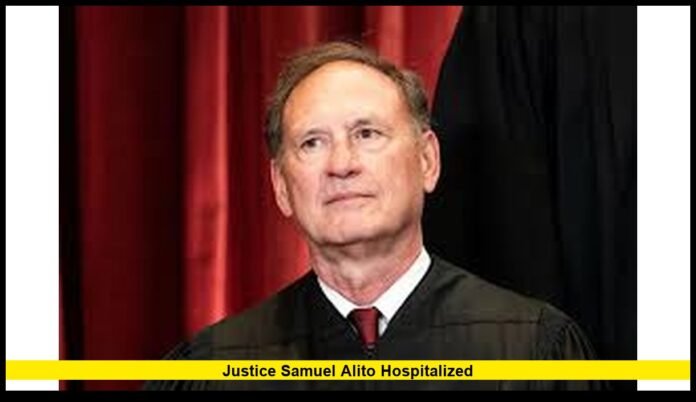

Justice Samuel Alito hospitalized after a sudden health episode in March 2026 quickly became a major national story, but current verified updates confirm the Supreme Court justice has recovered and is back on the bench.
What Happened During the March Incident
On March 20, 2026, Justice Samuel Alito attended a Federalist Society event in Philadelphia when he began to feel unwell. Witnesses reported that he appeared lightheaded, prompting immediate concern from those around him.
Security personnel acted quickly and arranged for him to be transported to a nearby hospital for evaluation. Medical staff treated him for dehydration, a condition that can cause dizziness and fatigue, especially during long public engagements.
Doctors determined that the issue was not severe. He received fluids and routine care, and he did not require overnight hospitalization. He returned home later that same evening.
Timeline of the Health Scare
A clear timeline helps explain how quickly the situation unfolded and resolved:
- March 20, daytime: Participated in official duties
- March 20, evening: Felt unwell during public event
- Same night: Transported to hospital and treated
- Within hours: Released after stabilization
- Following week: Resumed full Supreme Court responsibilities
The short duration of the hospital visit reassured many observers.
Current Health Status: Back to Full Duty
As of April 2026, Justice Alito has fully resumed his responsibilities at the Supreme Court. He has been present for oral arguments and continues to participate in deliberations without any visible limitations.
His quick return suggests that the episode was temporary and not linked to any ongoing medical condition. No additional health concerns have been publicly reported since the incident.
Why This News Drew National Attention
The hospitalization of any sitting Supreme Court justice carries outsized importance. The court consists of only nine members, each holding a lifetime appointment. Even a short absence can influence how cases are heard or decided.
Several factors contributed to the widespread attention:
- The limited number of justices on the court
- The long-term impact of any potential vacancy
- The public interest in the health of senior government figures
At 76, Alito remains an active member of the court, but his age places additional focus on his health.
Renewed Discussion Around Retirement
After news spread that justice samuel alito hospitalized briefly, conversations about his future intensified. Legal analysts and political observers began debating whether the incident could signal a possible retirement timeline.
Key reasons behind this discussion include:
- His decades-long tenure on the court
- The political significance of replacing a justice
- The timing of the health scare
Despite this speculation, there has been no indication that Alito plans to step down. He continues to carry out his duties without interruption.
Transparency Questions Resurface
The timing of the public disclosure raised concerns about transparency. The hospitalization was not widely reported until after it had already occurred, prompting questions about how much information should be shared with the public.
Unlike other branches of government, the Supreme Court does not follow strict rules requiring detailed health updates from justices. This leaves room for limited and delayed disclosures.
Critics argue that greater transparency would improve public trust, while others believe privacy should be preserved unless a justice’s ability to serve is affected.
No Impact on Court Operations
Despite initial concern, the court’s work continued without disruption. Justice Alito returned quickly and has remained active in ongoing cases.
His participation ensures that:
- The court maintains its full nine-member bench
- Case decisions proceed without delay
- The balance of judicial perspectives remains unchanged
This stability is especially important during a term that includes high-profile legal issues.
Broader Political Implications
Health concerns involving Supreme Court justices often lead to broader political discussions. A vacancy on the court would allow the sitting president to nominate a successor, potentially shifting the court’s ideological balance.
For now, those implications remain hypothetical. Alito’s recovery and continued service mean there is no immediate change to the court’s composition.
Public Reaction and Ongoing Interest
Public reaction was initially marked by concern, followed by relief once details confirmed the minor nature of the incident. Many Americans were surprised by how quickly the situation resolved.
The story continues to attract attention because it highlights:
- The importance of judicial health
- Questions about institutional transparency
- The long-term stability of the Supreme Court
Looking Ahead
There are no signs of lingering health issues, and Justice Alito continues to perform his duties at a high level. His swift recovery has reassured both legal observers and the public.
Still, the episode serves as a reminder of how closely the nation watches the well-being of its highest judicial officials.
What do you think about transparency around Supreme Court health updates? Share your thoughts and stay tuned for any new developments.