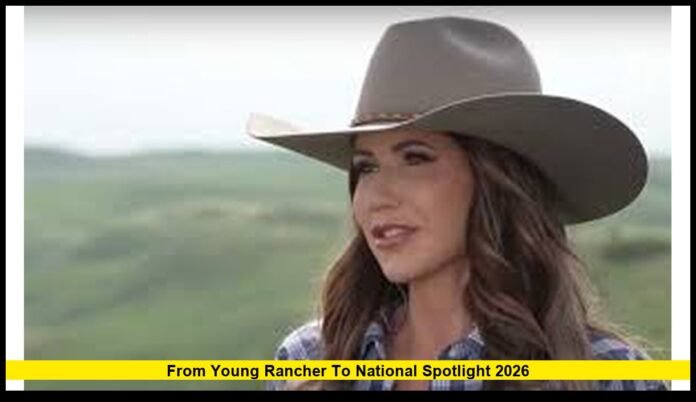

The growing interest in kristi noem young reflects a broader effort to understand the roots of a political figure who remains at the center of national attention in 2026. As Kristi Noem navigates a period of major transition in her public career, many Americans are looking back at her early life to better understand the experiences that shaped her leadership style, decision-making approach, and political identity.
Her story is not just about rising through political ranks. It is about responsibility at a young age, resilience through personal loss, and the transformation of rural values into a national platform. Those early chapters continue to influence how she leads, communicates, and responds to challenges today.
Growing Up in Rural South Dakota
Kristi Noem was raised on a family ranch in South Dakota, where daily life revolved around agriculture, livestock, and long hours of physical work. Her upbringing was rooted in a rural environment where every member of the family contributed to the operation.
From an early age, she learned what it meant to be accountable. Feeding animals, maintaining equipment, and helping manage the land were not optional tasks—they were part of everyday life. This environment instilled discipline and a strong work ethic that would later become central to her public image.
Rural communities also shaped her perspective on government and economy. Living in a region where industries depend heavily on land, weather, and market conditions gave her a practical understanding of risk and self-reliance.
Want more in-depth profiles of influential leaders and the experiences that shaped them? Keep reading as we break down the defining moments behind today’s biggest political figures.
A Life-Altering Loss at a Young Age
One of the most significant turning points in Noem’s early life came when her father died in a farming accident. At the time, she was attending college, but the tragedy forced her to return home and step into a leadership role within her family.
This moment changed the trajectory of her life. Instead of continuing a traditional college path, she took on the responsibility of helping run the family ranch and supporting her family during a period of grief and uncertainty.
Managing a business at such a young age required quick learning and tough decision-making. She had to deal with financial obligations, operational planning, and the emotional weight of loss—all at once.
This experience is often cited as a defining factor in her resilience. It also shaped her understanding of the challenges faced by small business owners and farmers, which later became central themes in her political messaging.
Balancing Education, Work, and Family
Although her college education was interrupted, Noem did not abandon her academic goals. Over time, she returned to her studies while balancing family responsibilities and business operations.
She attended South Dakota State University, completing coursework over several years. This nontraditional path reflects the realities faced by many Americans who pursue education while managing other obligations.
During this period, she also became involved in business ventures, including operating a hunting lodge. These experiences allowed her to develop skills in entrepreneurship, customer relations, and financial management.
Balancing multiple roles—student, business operator, and family member—required adaptability and determination. These qualities would later become part of her leadership style.
First Steps Into Public Service
Noem’s entry into politics began at the state level, where she ran for a seat in the South Dakota House of Representatives. Her campaign focused on issues that directly affected her community, including agriculture, taxation, and regulatory policies.
Her background helped her connect with voters. She presented herself as someone who understood their daily challenges because she had lived them. This authenticity became a key part of her appeal.
Once elected, she gained experience in legislative processes and policy discussions. Her work at the state level laid the foundation for her future political career.
Rise to the National Stage
After serving in the state legislature, Noem successfully ran for the U.S. House of Representatives. This transition marked her entry into national politics and significantly increased her visibility.
In Congress, she focused on economic issues, government spending, and regulatory reform. She often emphasized the importance of reducing burdens on small businesses and supporting rural communities.
Her communication style helped her stand out. She was known for delivering clear, direct messages and connecting policy discussions to real-life experiences.
This period established her as a recognizable figure within her party and positioned her for future leadership roles.
Becoming Governor of South Dakota
Noem’s election as Governor of South Dakota represented a major milestone in her career. As governor, she implemented policies aligned with her political philosophy, emphasizing individual responsibility and limited government intervention.
Her leadership style drew national attention, particularly during periods of national challenge. Supporters praised her for maintaining a consistent approach, while critics raised concerns about certain decisions.
Regardless of perspective, her time as governor solidified her position as a prominent political figure and expanded her influence beyond her home state.
Transition to Federal Leadership and National Spotlight
Her appointment to a top federal position brought new responsibilities and challenges. As Secretary of Homeland Security, she oversaw critical areas including border security, immigration enforcement, and national safety operations.
The role placed her at the center of major national debates. Decisions made under her leadership had wide-reaching implications, both domestically and internationally.
However, the position also brought increased scrutiny. Policy decisions, budget allocations, and public statements were closely examined, reflecting the high level of accountability associated with the role.
Recent Developments Reshape Public Narrative
In 2026, Noem’s career entered a new phase following her removal from the Homeland Security leadership role and reassignment to a diplomatic position focused on regional cooperation.
At the same time, personal developments involving her family have drawn significant public attention, adding complexity to her public image.
These events have led to renewed interest in her background, with many revisiting the kristi noem young story to better understand the person behind the headlines.
This renewed focus highlights how early life experiences often become central to public discussions during periods of change.
Leadership Traits Rooted in Early Experience
Several key traits that define Noem’s leadership can be traced back to her early life:
Resilience
Taking on major responsibilities at a young age helped her develop the ability to navigate difficult situations.
Work Ethic
Growing up on a ranch instilled a commitment to hard work and persistence.
Practical Thinking
Managing a family business required making decisions based on real-world constraints.
Communication Skills
Her ability to connect with audiences reflects her background and personal story.
These traits have shaped how she approaches leadership and responds to challenges throughout her career.
Changing Public Perception Over Time
Public perception of Noem has evolved significantly over the years. Early in her career, she was often seen as a relatable figure with a compelling personal story.
As her influence grew, so did the level of scrutiny. National roles brought increased attention to her decisions and leadership style.
Today, opinions are more divided. Some view her as a strong leader shaped by real-life experience, while others focus on recent controversies and policy debates.
This shift reflects the broader dynamics of modern politics, where visibility often leads to heightened criticism and debate.
Why Her Early Story Matters Now
The focus on Noem’s early years is about more than biography. It provides context for understanding her actions and decisions.
Her background helps explain:
- Her approach to leadership
- Her policy priorities
- Her communication style
- Her response to challenges
In times of political transition, these insights become especially important for those evaluating her future role.
Looking Ahead
As Noem continues in her current role and navigates ongoing challenges, her future remains a topic of national interest.
Her ability to adapt to changing circumstances and respond to public scrutiny will play a key role in shaping the next phase of her career.
At the same time, her early life story will continue to influence how she is perceived, serving as both a foundation and a point of reference.
A Journey Defined by Change and Responsibility
The path from a young rancher in South Dakota to a national political figure is marked by significant milestones, challenges, and transformation.
It is a story of responsibility taken on at a young age, opportunities seized over time, and the complexities that come with public leadership.
As her story continues to unfold, those early experiences remain a central part of the narrative—offering insight into both her past and her future.
Stay connected for more in-depth coverage of the leaders shaping today’s political landscape and the stories behind their rise.
How much do you think early life experiences influence political decisions later on? Share your thoughts and keep following for more updates.